Do you want to create fog effects for your next performance or party, but don’t want to use glycerin? This blog post will teach you how to make fog juice without glycerin. We will provide a recipe and some tips on how to get the best results.
For glycerin-free fog juice in a regular fog machine, use a glycol-based fog fluid; most store-bought fog fluids are glycol and distilled water. Dry ice is a separate method: it makes thick, low fog in warm water with no machine fluid at all. You can buy dry ice from most grocery stores or online retailers. When using dry ice, always wear gloves and safety goggles.
This article covers both options: dry ice fog for a machine-free effect, and glycol fluid for your fog machine.
Why Make Fog Juice without Glycerin?
Sometimes you may not have access to glycerin or you may want to avoid using it for some reason. Maybe you’re looking for a more environmentally-friendly option, or you need a fog juice that will work with a specific type of machine.
No matter what your reasons are, it’s good to know that there are other ways to make fog. Dry ice is not a fog juice, but it is the easiest way to make fog with no glycerin and no fog machine. Dry ice fog has no glycol or glycerin in it, but it is mostly carbon dioxide and cold water vapor, so it still needs good ventilation to be safe to breathe.
How to Make Glycerin-Free Fog with Dry Ice
Dry Ice
To make dry ice fog, you will need the following supplies. This is not a fluid for a fog machine; it all happens in an open container:
- A container that can hold at least two liters of liquid
- Distilled Water
- Dry ice
You will also need safety goggles and gloves to protect your eyes and hands from the dry ice. To make the fog, proceed as follows:
Heat the water to about 180 degrees Fahrenheit
Hot water makes thicker fog but uses up the dry ice faster. Keep it below boiling and handle it carefully so it can’t splash or scald anyone.
Pour the water into the container
Add the dry ice to the distilled water. It is best to break up the dry ice into small pieces before adding it, as this will help it to vaporize more quickly
Add the dry ice to the water a pound or two at a time
More or less can be used depending on how thick you want the fog to be. You will immediately see the fog start to form as the dry ice vaporizes. You can direct the fog to the area you want with a fan.
Dry Ice Fog: The Science
You may be wondering: how does dry ice produce fog? Here is some science behind it;
Dry ice consists of solid frozen carbon dioxide. When it hits warm water, it changes straight from a solid to a gas. That very cold gas chills the moist air above the water, and the water vapor condenses into the tiny droplets you see as fog.
This process works better with warmer water because it turns the dry ice to gas faster and puts more water vapor into the air to condense. If you use colder water, you will get less fog.
Safety Tips for Working with Dry Ice
When working with dry ice, it is important to take some safety precautions:
Always wear gloves and safety goggles when handling dry ice
It is important that the dry ice is not in contact with your skin, as it can cause frostbite.
Be sure to keep the dry ice out of reach of children and pets
As I have mentioned, dry ice is solidified frozen carbon dioxide and when it vaporizes, it can cause suffocation. Keep it in a place where children and pets cannot get to it.
Use dry ice fog in a ventilated area
The fog produced by the dry ice will contain carbon dioxide gas. Make sure to use it in a place where there is plenty of ventilation, as too much exposure to carbon dioxide can be dangerous.
Dispose of any leftover dry ice properly
You want to make sure to dispose of any leftover dry ice properly. Never seal it in a container or put it in a trash can, sink or toilet. Let it sublimate in a well-ventilated spot where children and pets cannot get to it.
Can I Use Dry Ice in a Fog Machine?
Not in a regular fog machine. A heater-type fog machine needs proper fog fluid, and dry ice only works in a dedicated dry ice fog machine, which is a heated water tank you lower the dry ice into.
If you want machine-made dry ice fog, check the manufacturer’s instructions to make sure the machine is built for dry ice. Never pour dry ice or dry ice water into a standard fog machine.
Our guide to the dry ice fog machine explains how these machines work. Always follow the manual for how much dry ice and water to use.
Is Dry Ice Fog Better than Glycerin Fog?
Each method has its own pros and cons. Dry ice needs no fog machine and no fluid, but you have to buy it fresh for each event because it keeps sublimating, even in a cooler.
Dry ice fog stays low and fades quickly, and dry ice can be dangerous if handled carelessly. Glycerin or glycol fog from a fog machine fills a room and lasts longer, but it needs a machine and the right fluid.
Dry ice fog is also simple to set up. All you need is a container, warm water, and dry ice, with nothing to mix.
To make glycerin fog juice, you will need to measure and mix the ingredients correctly, which can be a little more difficult.
Glycerin-Free Fog Juice for a Fog Machine: Glycol
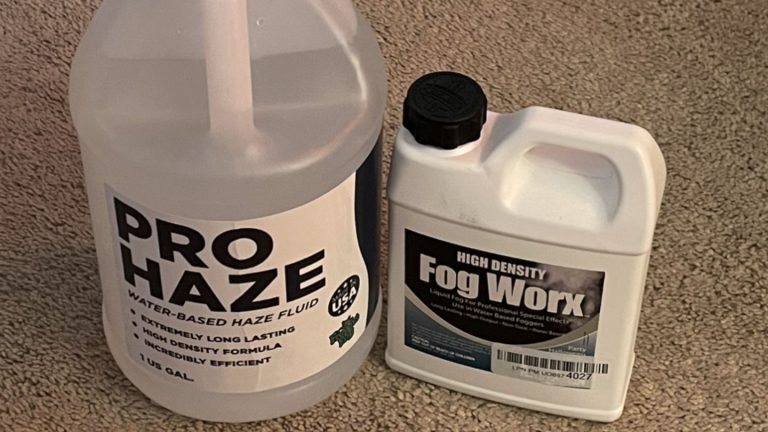
If you want glycerin-free fluid for a regular fog machine, glycol is the answer. Most store-bought water-based fog fluids are glycols mixed with distilled water, so buying one is the easiest option.
You can purchase glycol online, but use only USP-grade propylene glycol, never antifreeze or anything containing ethylene glycol. Mix it with distilled water in a ratio of one part glycol to five parts water.
However, glycol fog juice is not always recommended for various reasons:
Some types of glycol can be poisonous
Glycol products such as ethylene glycol are known to be poisonous and can be harmful if ingested.
Glycol can cause skin irritation
If you come into contact with glycol, it can cause skin irritation. It is important to wear gloves and safety goggles when working with glycol.
Glycol can be flammable
Some types of glycol are flammable, so it is important to take precautions when using them.
Glycol fog can cause respiratory issues
Heavy or long exposure to glycol fog can irritate the throat and airways, especially for people with asthma. Use it in a well-ventilated area.
Can I Use My Home-made Fog Juice in my Fog Machine?
Homemade fog juice can work in a fog machine as long as you use the right ingredients and mix it correctly. However, there are a few things you need to consider.
First, make sure the fog machine uses the juice you made. As I mentioned earlier, different fog machines use different juices.
You don’t want to use dry ice in a fog machine that uses water-glycerin juice. You will end up damaging the machine.
Second, be aware that using homemade fog juice may void your warranty. Most manufacturers specify that you can only use their fog juice in the machine.
If something goes wrong with the machine after using homemade juice, you may not be able to return it or get it fixed under warranty.
Finally, make sure your fog juice is mixed correctly and is of the correct strength. Using too much or too little fog juice can cause problems with your machine.
Glycerin Fog Juice FAQs
Final Thoughts
For a fog machine, the glycerin-free option is glycol-based fluid, store-bought or mixed from USP propylene glycol and distilled water. For a machine-free effect, dry ice in warm water makes low fog with no fluid at all.
Remember, safety is key when working with fog juice, so always take caution and read all safety instructions. Keep in mind how long you can keep the fog juice before it expires.

Please be careful and use at your own risk
None of the authors, contributors, administrators, or anyone else connected with Wild Fog, in any way whatsoever, can be responsible for your use of the information contained in or linked from these web pages.