While fog machines create stunning visual atmosphere, their mechanical noise can cut through your mix and distract dancers from losing themselves in the beat. You’re facing a technical challenge that separates amateur setups from professional productions—balancing dramatic effects with seamless sound quality. The key isn’t choosing between fog and audio clarity, but implementing strategic solutions that’ll keep your crowd immersed while your visuals pop. Your next gig’s success depends on mastering this balance.
Choose Low-Noise Fog Machine Models
When you’re dropping beats that demand crystal-clear audio, your fog machine’s motor noise can cut through the mix like unwanted static. You need machines engineered for silent operation that won’t compete with your basslines or vocal drops.
Look for models with brushless motors and sound-dampening housing. These units typically operate below 40dB, keeping motor hum beneath your crowd’s awareness threshold.
Professional-grade machines like Antari’s Z-series or Chauvet’s Hurricane lineup feature whisper-quiet pumps that won’t bleed through your monitors. Ensure that you also consider noise level specifications for decibel ratings before purchasing. Budget units often use loud diaphragm pumps that’ll destroy your mix’s clarity.
Invest in gear that matches your audio standards – your crowd deserves fog effects that enhance the atmosphere without compromising sonic precision.
Position Equipment Away From Audience and Microphones

Even with a whisper-quiet fog machine, strategic placement amplifies your noise reduction efforts. Position your fog machine where its mechanical sounds won’t interfere with your set’s dynamics or audience experience.
Optimal placement strategies:
- Behind DJ booth barriers – Use your existing setup as a natural sound barrier, keeping compressor noise away from vocal mics and crowd-facing speakers.
- Minimum 8-foot mic distance – Maintain this buffer zone to prevent fog machine cycling sounds from bleeding into announcements or live vocals.
- Elevated rear positioning – Mount units on stands behind your setup, allowing fog to flow forward while directing mechanical noise away from the dancefloor.
Smart positioning transforms your fog machine from a potential audio distraction into an invisible atmosphere enhancer that works with your mix.
Build Sound Dampening Enclosures
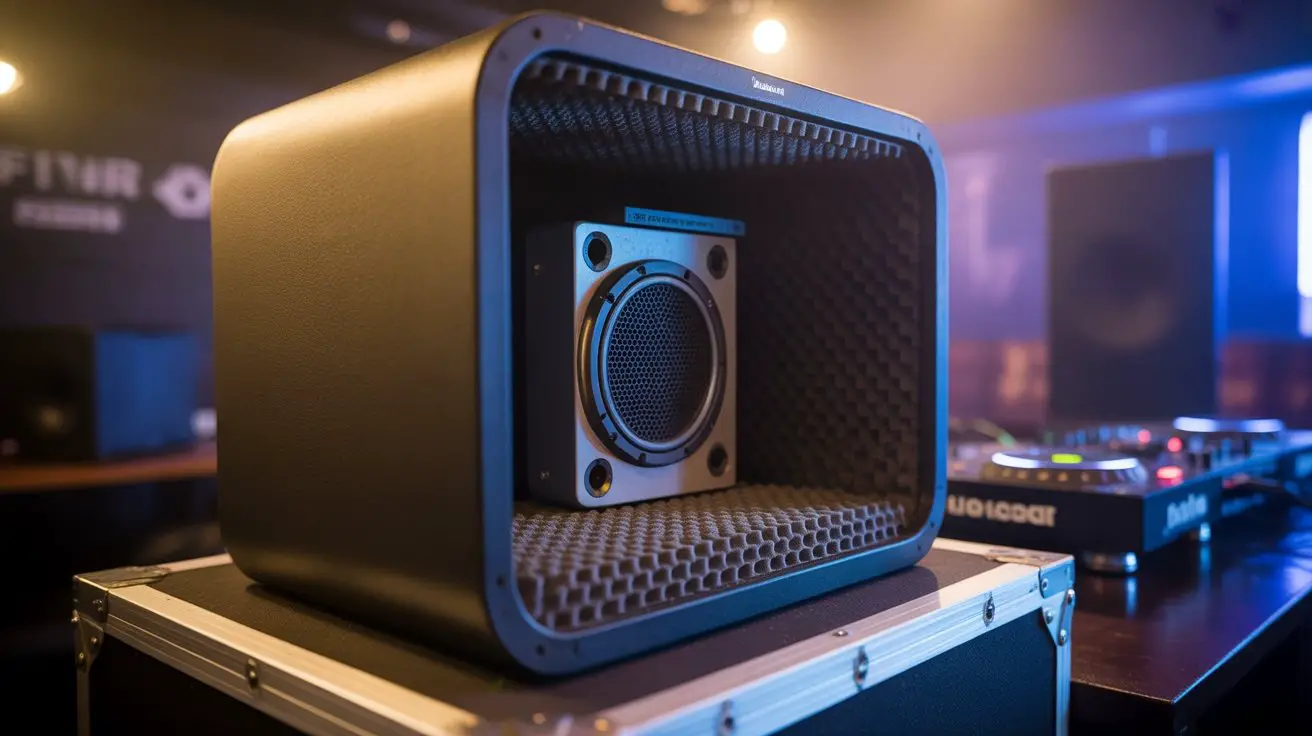
For custom builds, construct a plywood box lined with mass-loaded vinyl and acoustic batting.
Leave strategic gaps for fog output and air intake—your machine needs breathing room to prevent overheating. Keep batting and foam well away from the hot nozzle and heater block, and use fire-rated materials, since a fog machine’s heater runs hot enough to scorch them. Position intake fans away from the audience-facing side.
Professional DJ booths benefit from permanent enclosures with removable access panels.
Install rubber gaskets around seams to prevent sound leakage.
Remember: what dampens your fog machine’s noise won’t dampen your crowd’s energy when they can actually hear your drops clearly.
Use Remote Control and Timer Functions

Since timing fog bursts with your track’s buildups creates maximum impact, remote controls let you trigger effects from behind the decks without leaving your mix position. Timer functions eliminate constant machine operation, reducing overall noise exposure during quieter breakdown sections. Strategic remote operation delivers these advantages:
- Precision timing – Sync fog bursts with drops, shifts, and peak moments without disrupting your mix flow
- Selective activation – Run machines only during high-energy sections when crowd noise masks mechanical sounds
- Distance control – Position noisy units away from booth while maintaining full operational access
Program timers to activate during anticipated peak moments, then manually override for spontaneous crowd reactions. Additionally, be aware that fog machines can trigger fire alarms due to smoke particles, so it’s essential to test your setup beforehand. This approach minimizes unnecessary runtime while maximizing atmospheric impact when bass lines hit hardest and dancefloor energy peaks.
Sync Fog Release With Loud Musical Moments

Building on precise remote timing, you’ll want to coordinate fog bursts with your track’s loudest sections where kick drums hit hardest and synths reach peak frequencies.
Drop fog during bass drops, breakdowns, and climactic build-ups when the crowd’s energy peaks and ambient noise naturally masks your machine’s hiss. You’ll effectively camouflage mechanical sounds within the mix’s dynamic range.
Study your setlist beforehand, marking ideal release points on each track. Time fog bursts with snare hits, cymbal crashes, or vocal shouts that exceed 85dB.
Avoid releasing during quiet breakdowns or ambient interludes where machine noise becomes apparent.
Use your DJ software’s waveform display to identify peak amplitude moments. Practice triggering fog precisely as these loud sections hit, creating seamless integration between atmospheric effects and your mix’s natural sound dynamics. Additionally, ensure proper ventilation during operation to further minimize any operational noise from the fog machine.
Install Vibration Isolation Pads

Beneath your fog machine, vibration isolation pads transform harsh mechanical vibrations into silent operation by absorbing the pump’s rhythmic pulsing before it transmits through tables, stages, or booth surfaces.
These dense foam or rubber pads create a barrier between your machine and the structure it’s mounted on, preventing the internal pump’s vibrations from amplifying through resonant surfaces.
When your fog machine’s compressor kicks in during those vital breakdowns, the isolation pads guarantee mechanical noise won’t compete with your mix. Additionally, using water-based glycerin mixes can further ensure the fog produced is safer for breathing, minimizing health risks during your performance.
Choose the right pads for maximum noise reduction:
- Dense neoprene pads – Professional-grade material that handles heavy machines while dampening low-frequency vibrations
- Anti-vibration mounts – Adjustable rubber isolators that accommodate uneven surfaces and provide superior dampening
- Foam composite pads – Budget-friendly option offering decent isolation for lighter fog machines
Position pads under each corner for best stability and vibration control.
Regular Maintenance to Minimize Operating Noise

While isolation pads handle external vibration transfer, maintaining your fog machine’s internal components prevents the mechanical noise that kills your mix’s clarity. You’ll keep your crowd locked into the beat when your fog output stays whisper-quiet. Regularly cleaning fog machines ensures optimal performance and reduces unwanted noise during operation. Run cleaning fluid through it as the manual recommends, and have a technician replace worn pumps or seals before they start squealing during drops. Always unplug the machine and let it cool before opening it.
| Component | Maintenance Frequency |
|---|---|
| Pump seals | Every 3 months |
| Fan bearings | Every 6 months |
| Heating coils | Monthly cleaning |
| Fluid lines | Bi-weekly flush |
Check your fluid reservoir regularly. Low levels force pumps to work harder, creating mechanical stress that translates into audible noise bleeding through your monitors.
Alternative Fog Effects and Hybrid Solutions

When traditional fog machines still create too much noise despite proper maintenance, you can achieve stunning atmospheric effects through quieter alternatives that won’t compete with your basslines.
1. Low-Lying Dry Ice Systems
Strategic dry ice placement creates dense floor fog without pump noise. Position containers near stage edges where CO2 settles naturally, maintaining visual impact while preserving your mix’s clarity. Keep the room ventilated and the floor fog thin where people dance, since CO2 pushes breathable air away near the floor.
2. Ultrasonic Mist Generators
These silent units produce fine water vapor perfect for intimate venues. They’re virtually noiseless but require proper ventilation and work best during breakdown sections where subtle atmosphere enhances emotional shifts.
3. Hybrid Timing Strategies
Combine quiet hazer baseline with strategic traditional fog bursts during peak crowd moments. Time heavy fog releases during bass drops when audience energy masks mechanical sounds, creating maximum visual impact without compromising your set’s sonic integrity.
Frequently Asked Questions
Can I Use a Fog Machine Indoors Without Setting off Smoke Alarms?
You’ll likely trigger smoke alarms since fog machines create dense particles that photoelectric sensors detect. Position machines away from detectors, use water-based fog fluid, and ventilate properly to minimize crowd disruption from false alarms.
How Much Fog Fluid Should I Budget for a 4-Hour DJ Set?
You’ll absolutely devour fog fluid during peak dance moments! Budget one liter for continuous atmospheric coverage. Run bursts during drops and breakdowns only – you’ll stretch fluid longer while keeping that crowd hyped and immersed.
Will Fog Machines Cause Condensation Damage to My DJ Equipment?
You’ll face minimal condensation risk if you position fog machines away from your gear and use proper ventilation. Keep decks, mixers, and controllers elevated above fog levels, and you’ll protect your equipment while maintaining that crowd-hyping atmosphere.
Are There Health Concerns for Guests With Asthma or Breathing Issues?
Fog cuts through the air like a double-edged sword—you can trigger asthma attacks and respiratory distress in sensitive guests. Always warn your crowd beforehand, use water-based fluids only, and maintain proper ventilation throughout your set.
What’s the Ideal Room Temperature for Optimal Fog Machine Performance?
You’ll get ideal fog density at 65-75°F room temperature. Cooler air helps fog settle and linger longer, creating those dramatic low-lying effects your crowd loves while preventing rapid dissipation that wastes fluid.
Conclusion
You can’t let fog machine noise kill your set’s energy flow. Yeah, these solutions require upfront investment and setup time, but dead crowds cost you more bookings than equipment upgrades ever will. Your audience won’t notice perfect fog timing when they’re distracted by mechanical grinding cutting through your drops. Implement these noise reduction techniques now – position strategically, dampen sound, sync with peaks, and maintain religiously. Keep the focus on your beats, not machine noise.