When you’re selecting fog equipment for your DJ setup, room dimensions directly determine your CFM requirements and fluid consumption rates. You’ll need to match your machine’s output capacity to your venue’s cubic footage, factoring in ceiling height and HVAC interference. Small clubs demand different specifications than wedding halls or outdoor events, and miscalculating these parameters results in either underwhelming effects or overwhelming your audience. The relationship between space and equipment becomes critical when your reputation depends on atmospheric precision.
Understanding Fog Machine Output Specifications
How precisely can you predict your fog machine’s performance in a given space? You’ll need to decode three critical specifications: output volume, hang time, and dispersion rate.
Output volume, measured in cubic feet per minute (CFM), determines your fog density per unit time. Hang time indicates how long particles remain suspended before settling, typically ranging from 30 seconds to several minutes depending on fluid viscosity and heating element efficiency.
Dispersion rate governs coverage patterns—horizontal versus vertical spread angles. Professional units specify these metrics at standardized temperatures and humidity levels.
However, real-world performance varies considerably based on HVAC systems, ceiling height, and ambient conditions. You’ll achieve ideal results by calculating your room’s cubic footage, then selecting machines with CFM ratings that match your desired density levels while accounting for air circulation patterns. Understanding proper fog fluid consumption is also essential for maximizing your machine’s effectiveness in your setup.
Small Venue Considerations: 200-800 Square Feet
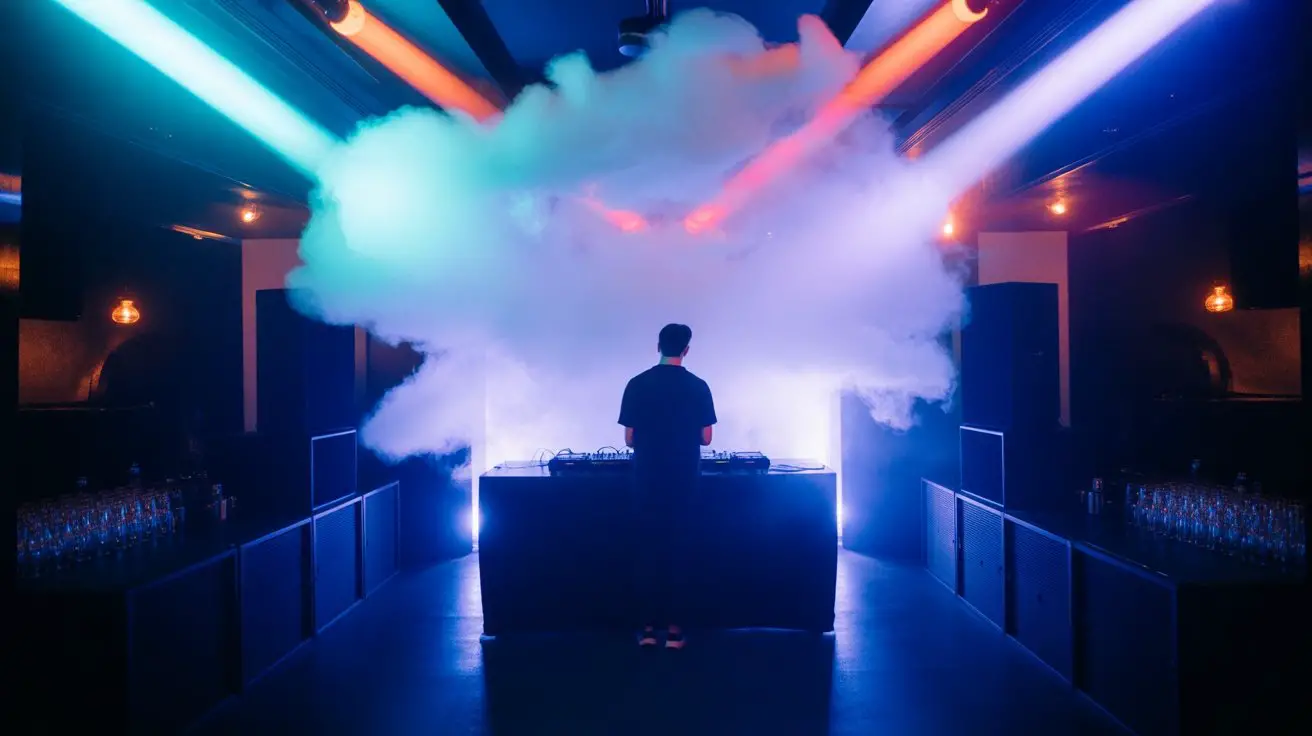
Small venues between 200-800 square feet present unique challenges that require strategic equipment placement and output management.
You’ll need low-output machines producing 500-1,500 cubic feet per minute to avoid overwhelming your space. Position units at floor level near exhaust points, maintaining 6-8 feet from dancers to prevent respiratory discomfort.
Your timing becomes critical—deploy 10-15 second bursts with 30-45 second intervals between activations. Monitor ambient temperature carefully, as confined spaces trap heat and reduce dissipation rates. Install adequate ventilation systems running continuously during operation.
Consider water-based fluids exclusively in tight quarters, as they dissipate faster than oil-based alternatives. Mount your machines on adjustable stands for precise directional control, ensuring even distribution without creating dead zones or oversaturated areas that compromise visibility and safety. Additionally, prioritize proper ventilation to enhance air quality and prevent overheating during use.
Medium Venue Requirements: 800-2000 Square Feet
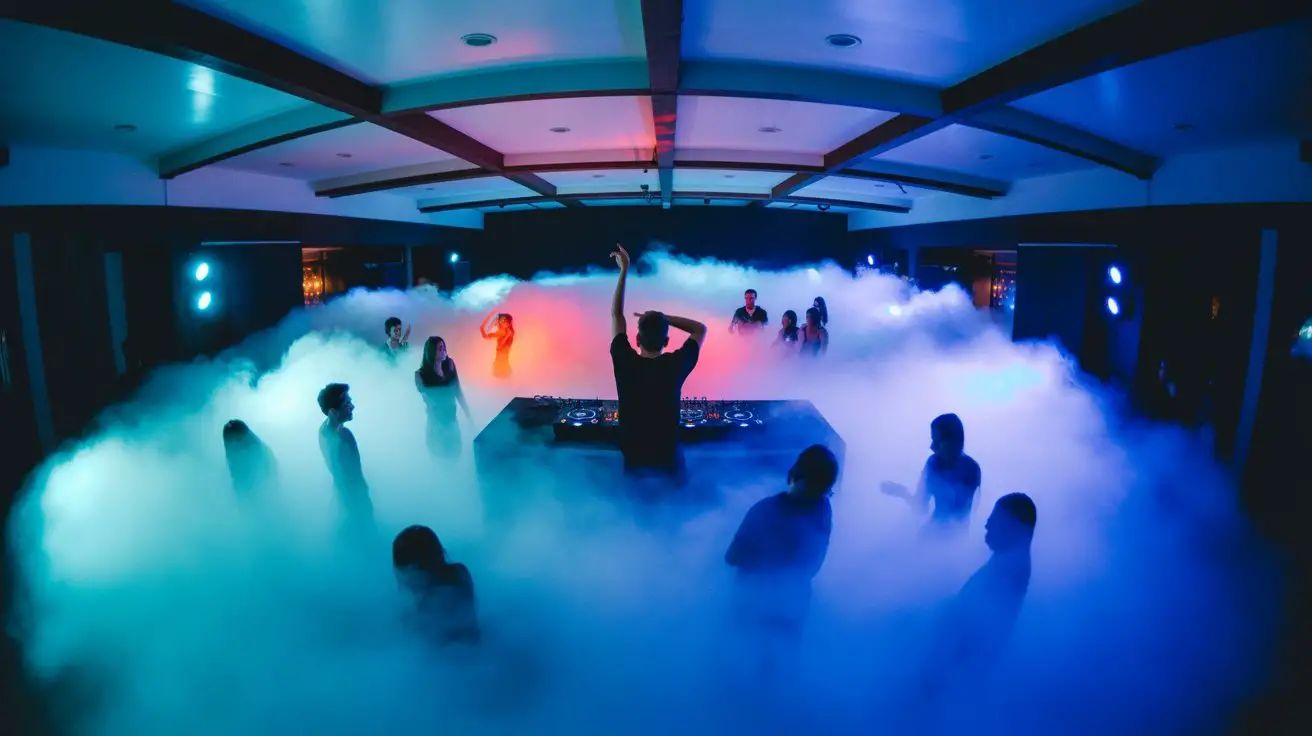
As venues expand into the 800-2000 square foot range, your fog machine requirements shift dramatically toward higher-capacity units generating 2,000-4,000 cubic feet per minute.
You’ll need machines with larger fluid tanks (minimum 2.5 liters) and robust heating elements delivering 1,000-1,500 watts for consistent output during extended sets.
Position your primary unit center-stage with supplementary machines at quarter-points to achieve uniform atmospheric coverage.
Install proper ventilation systems—exhaust fans rated for venue cubic footage prevent oversaturation while maintaining ideal haze density.
Your fluid consumption increases substantially; budget 3-5 liters per four-hour event.
DMX-controlled units become essential for precision timing and density management.
Consider dual-zone configurations allowing independent control over dance floor and perimeter areas.
Remote monitoring prevents mid-performance failures in these larger spaces where equipment access becomes challenging. Additionally, be aware that fog machines can trigger fire alarms if not managed properly, especially in venues with sensitive smoke detectors.
Large Space Optimization: 2000+ Square Feet
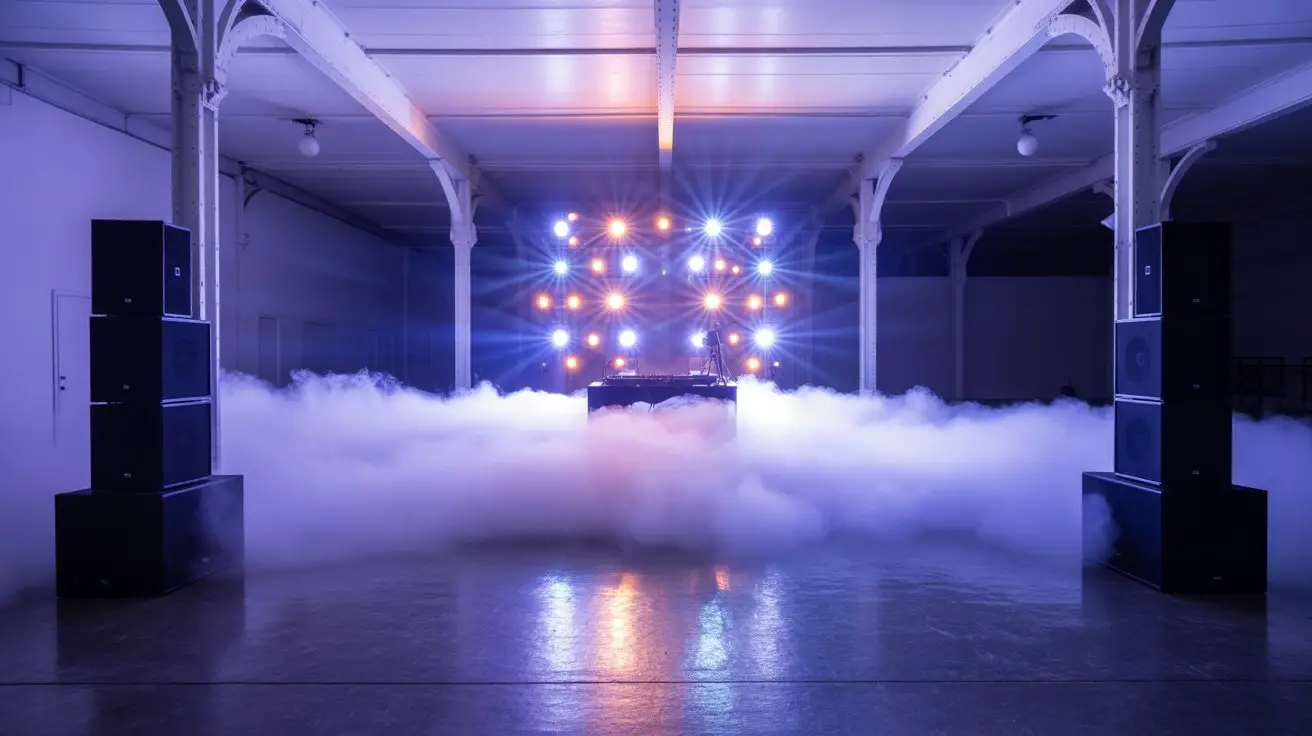
When managing venues exceeding 2000 square feet, you’ll require industrial-grade fog systems capable of producing 5,000-10,000 CFM output with tank capacities of 5+ liters and heating elements rated at 2,000+ watts.
Position multiple units strategically across the venue’s perimeter to guarantee uniform distribution. You’ll need DMX-controlled hazers with variable output settings to maintain consistent atmospheric density throughout extended sets.
Install centralized fluid distribution systems to prevent frequent refilling interruptions. Configure your units with timer-based activation sequences, cycling every 45-60 seconds to maintain ideal fog levels without overwhelming ventilation systems.
Monitor ambient temperature and humidity levels closely, as large spaces create microclimates affecting fog behavior. Deploy wireless monitoring systems to track fluid levels remotely.
Consider backup units for critical events, positioning them at key focal points where fog density directly impacts lighting effectiveness and crowd engagement. Additionally, evaluate fog output capacity to ensure optimal coverage and performance in expansive environments.
Ceiling Height Impact on Fog Distribution
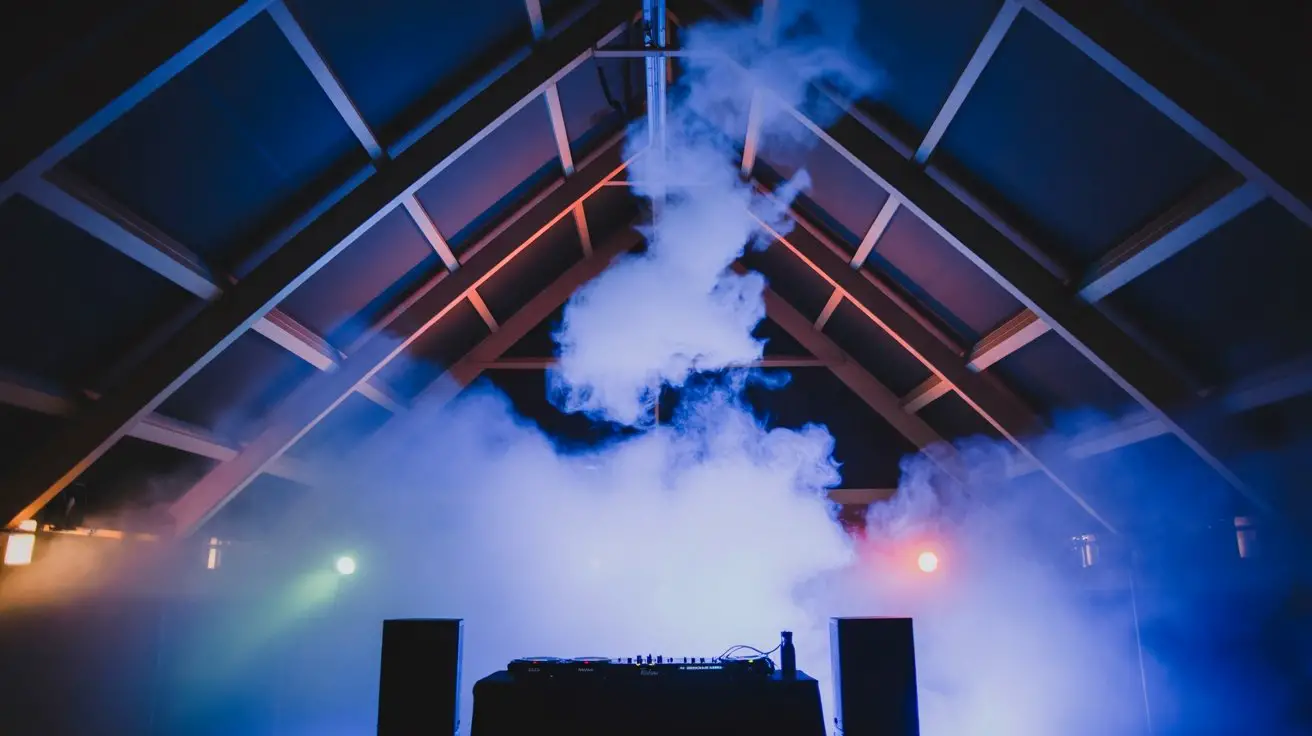
Understanding ceiling height fundamentals proves critical for achieving ideal fog dispersion patterns in your DJ setup. Low ceilings under 8 feet create concentrated fog layers that settle quickly, reducing atmospheric effect duration.
You’ll experience rapid thermal stratification as warm fog meets cooler air masses near the floor.
Standard 8-10 foot ceilings provide excellent mixing zones where fog disperses evenly throughout your performance area. This height range allows proper convection currents while maintaining dense visual coverage.
High ceilings above 12 feet cause fog to rise and dissipate before reaching audience level, wasting machine output.
You’ll need increased fluid consumption rates and higher-capacity machines for tall spaces. Consider ceiling-mounted distribution fans to control fog movement patterns and prevent unwanted accumulation in upper zones. Additionally, using a fog chiller can help maintain low-lying fog effects even in larger spaces.
Ventilation Systems and Air Circulation Effects
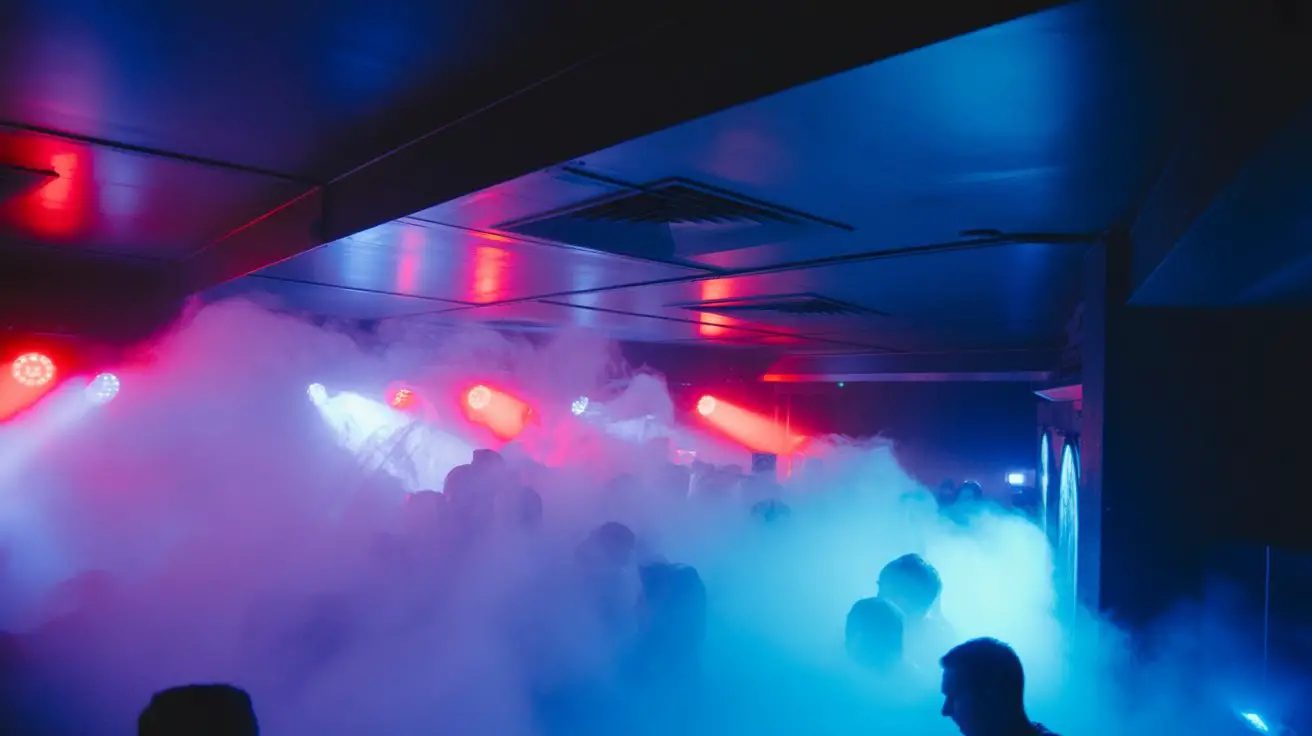
Proper ventilation systems considerably influence fog behavior and longevity in your DJ environment. HVAC airflow patterns directly affect fog density distribution and persistence duration. You’ll need to balance ventilation rates with fog production to maintain ideal atmospheric effects without excessive dissipation.
| Ventilation Type | Air Changes/Hour | Fog Retention |
|---|---|---|
| Natural/Minimal | 0.5-2 | Excellent |
| Standard HVAC | 4-8 | Moderate |
| High-Velocity | 12+ | Poor |
Strategic vent positioning prevents unwanted fog evacuation while maintaining air quality standards. Cross-ventilation creates turbulent airflow that rapidly disperses fog layers, particularly problematic for low-lying effects. You’ll achieve better results by temporarily reducing ventilation during peak fog sequences, then increasing airflow between sets. Install dampers or variable-speed controls to adjust circulation dynamically based on performance requirements and occupancy levels.
Calculating Fog Density for Different Room Volumes
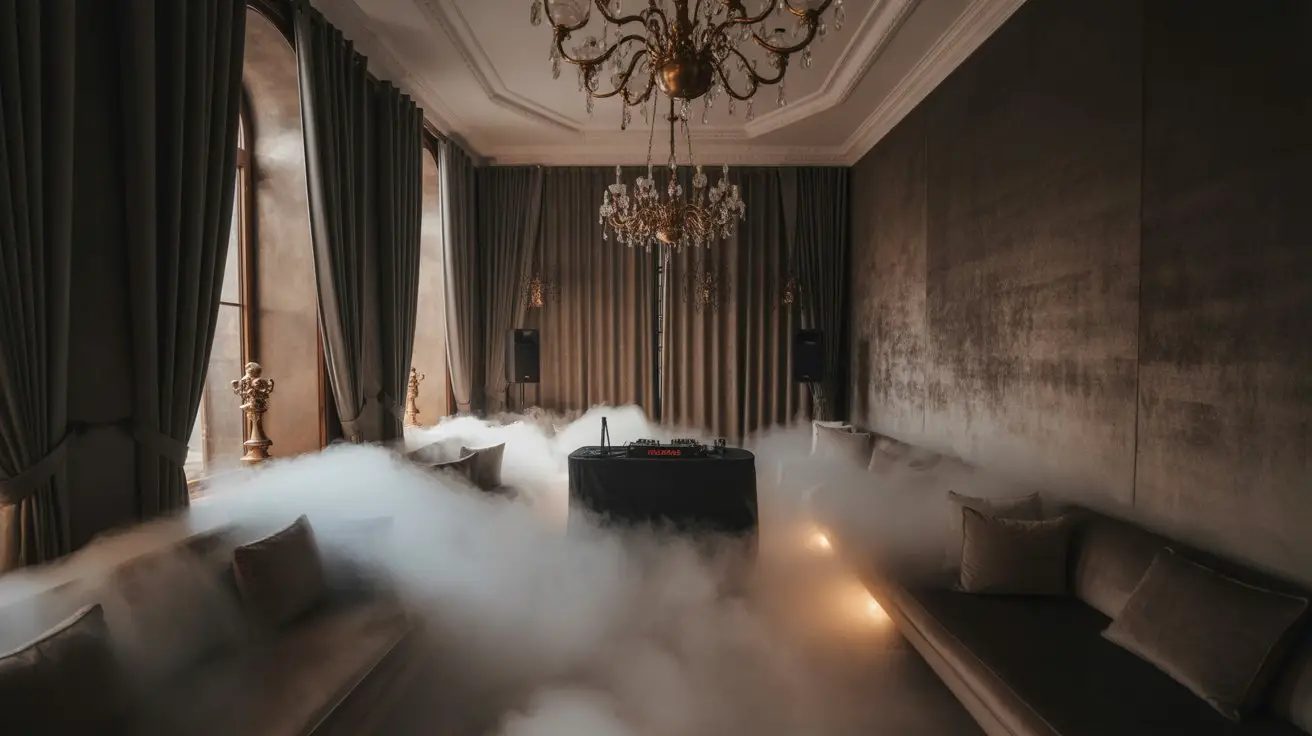
Since fog dispersion follows predictable fluid dynamics principles, you can calculate ideal fog machine output based on cubic volume and desired atmospheric density.
Start with your room’s cubic footage—multiply length × width × height. For best visibility effects, target 0.3-0.5 grams of fog fluid per cubic meter for light haze, or 0.8-1.2 grams for dense theatrical fog.
Calculate output timing using this formula: (Room Volume ÷ Machine CFM Rating) × Density Factor = Burst Duration. Most professional foggers produce 3,000-8,000 cubic feet per minute.
You’ll need shorter, more frequent bursts in smaller venues to prevent oversaturation. Monitor particulate density with a nephelometer for precision, or use visual reference points—dancers should remain clearly visible at 15-foot distances for safe crowd movement.
Event Type Factors: Parties vs. Clubs vs. Weddings
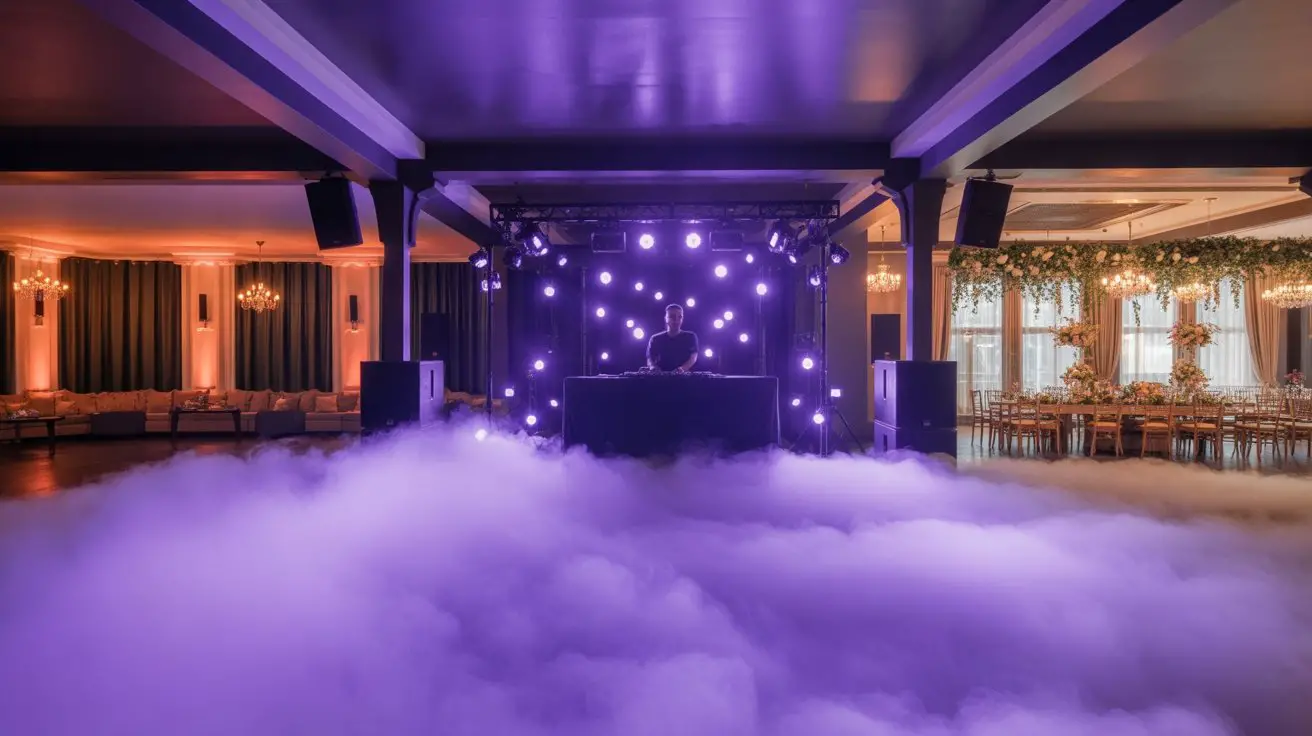
While fog calculations provide the technical foundation, different event types demand distinct atmospheric approaches that’ll greatly alter your room size requirements.
Private parties need subtle fog distribution in 200-400 sq ft spaces, requiring lighter output to maintain conversational comfort without overwhelming guests.
Club environments demand aggressive fog deployment across 800-1200 sq ft dance floors, utilizing high-output machines with rapid dispersion patterns to create immersive atmospherics.
Wedding receptions present unique challenges, requiring zone-specific fog control across varied spaces—minimal output during dinner service in 600-800 sq ft areas, then shifting to dance-focused distribution.
You’ll need different machine capacities and positioning strategies for each venue type, as guest density, ceiling height, and ventilation systems considerably impact fog behavior and room size optimization.
Positioning Your Fog Machine for Maximum Coverage
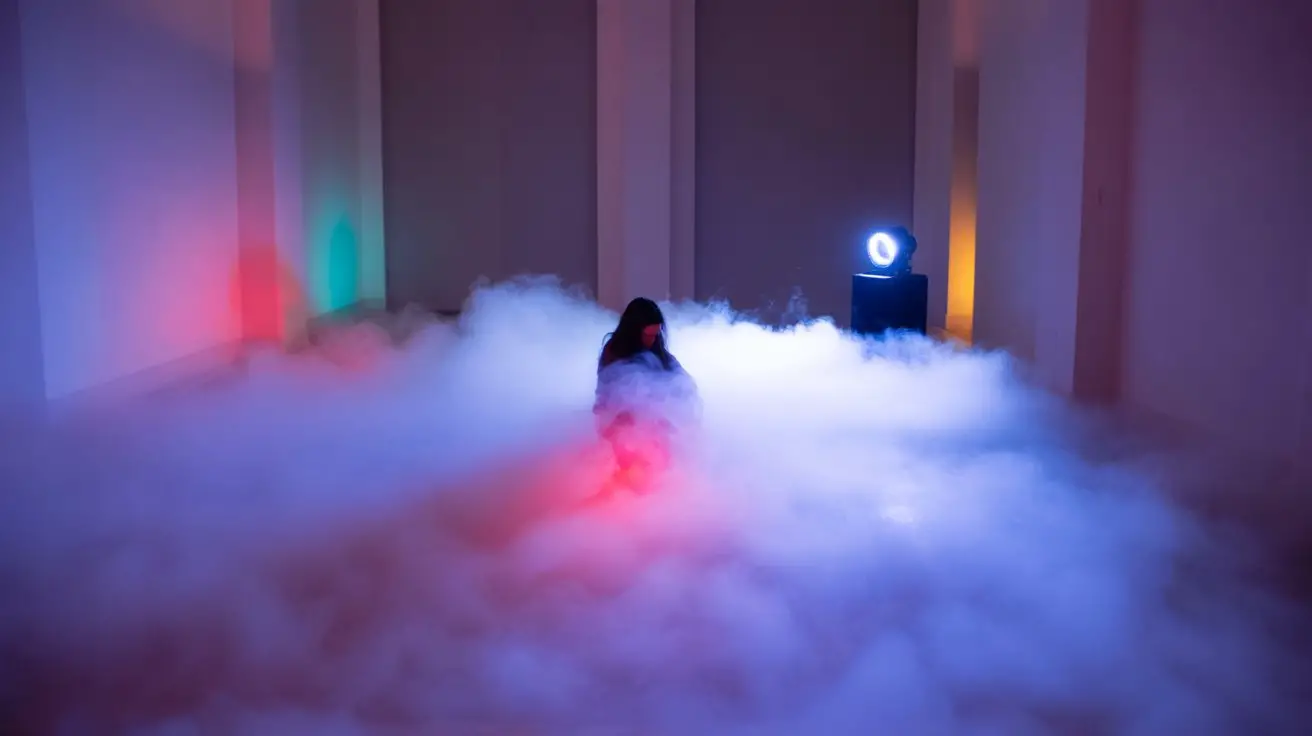
Three fundamental positioning strategies determine fog machine effectiveness: elevation placement, directional output, and airflow integration. You’ll achieve ideal coverage by mounting your unit 6-8 feet above the dance floor, allowing gravity to distribute fog evenly downward. Position the output nozzle perpendicular to dominant air currents, preventing premature dissipation.
| Position | Coverage Pattern | Recommended Height |
|---|---|---|
| Center-mounted | 360° radial spread | 8-10 feet |
| Wall-mounted | 180° directional | 6-8 feet |
| Floor-positioned | Upward dispersion | 2-3 feet |
| Truss-integrated | Controlled zones | 10-12 feet |
Consider HVAC placement when positioning—avoid direct ventilation paths that’ll pull fog away from your target area. You’re maximizing density retention by creating fog pockets in low-airflow zones while maintaining visibility corridors for safe patron movement.
Frequently Asked Questions
How Long Does Fog Fluid Last During a Typical DJ Set?
You’ll consume approximately 1-2 liters of fog fluid during a typical 4-6 hour DJ set, depending on your output settings, atmospheric conditions, and crowd density requirements for ideal haze distribution.
Can Fog Machines Trigger Smoke Detectors or Fire Alarms?
Yes, fog machines can trigger photoelectric smoke detectors, which detect light scattering from particles. Talk to the venue first: only its staff or fire alarm contractor should ever bypass a detector, usually with a fire watch in place. Lighter output and thin haze fluid lower the risk but don’t remove it.
What’s the Average Cost Difference Between Consumer and Professional Fog Machines?
You’ll find consumer fog machines range $50-300, while professional units cost $500-3000+. Pro models feature higher fluid output rates, DMX control, faster heat-up times, and commercial-grade components versus basic consumer heating elements.
Are There Health Concerns With Breathing Fog Machine Vapor?
Like walking through a chemical cloud, you’ll face respiratory irritation from glycol-based fog fluids. Prolonged exposure causes throat irritation, coughing, and potential bronchial sensitivity. Guarantee proper ventilation and consider low-residue formulations for safer operation.
How Do You Clean and Maintain a Fog Machine Properly?
You’ll need to flush the tank with distilled water after each use, clean the heating element with manufacturer-approved solutions, and replace internal tubing annually to prevent residue buildup and maintain ideal fluid viscosity output.
Conclusion
You’ve mastered the technical matrix where CFM ratings dance with cubic footage, creating atmospheric poetry through precise calculations. Your fog machine’s output specifications now align perfectly with venue dimensions, transforming empty spaces into immersive soundscapes. Watch as your carefully positioned unit breathes life into dead air, while proper ventilation systems become your silent partners in crafting the perfect haze density that elevates every beat drop into pure sensory magic.