You’ve mastered beat matching and crowd control, but your visual game determines whether you’re just another DJ or an unforgettable experience. The difference between playing music and creating magic lies in strategic special effects deployment. While most DJs rely on basic lighting setups, professionals understand that specific combinations of fog, lasers, and synchronized effects can transform any venue into an immersive environment that keeps dancers locked in and promoters calling back.
LED Light Bars and Wash Lights
When you’re building your lighting arsenal, LED light bars and wash lights form the backbone of any professional DJ setup.
These fixtures deliver broad, even coverage that transforms venues from mundane spaces into dynamic environments. You’ll want units with RGBW color mixing for full spectrum control and smooth changes between hues.
Look for fixtures offering 40-60 degree beam angles for best wash coverage.
DMX-512 compatibility guarantees seamless integration with your lighting controller, while built-in programs provide backup options when manual control isn’t feasible.
Power consumption matters—modern LEDs generate minimal heat while delivering maximum output.
Choose fixtures with silent operation for intimate venues where fan noise becomes problematic.
Quality units feature robust housing that withstands transport abuse and consistent performance gig after gig.
Fog and Haze Machines
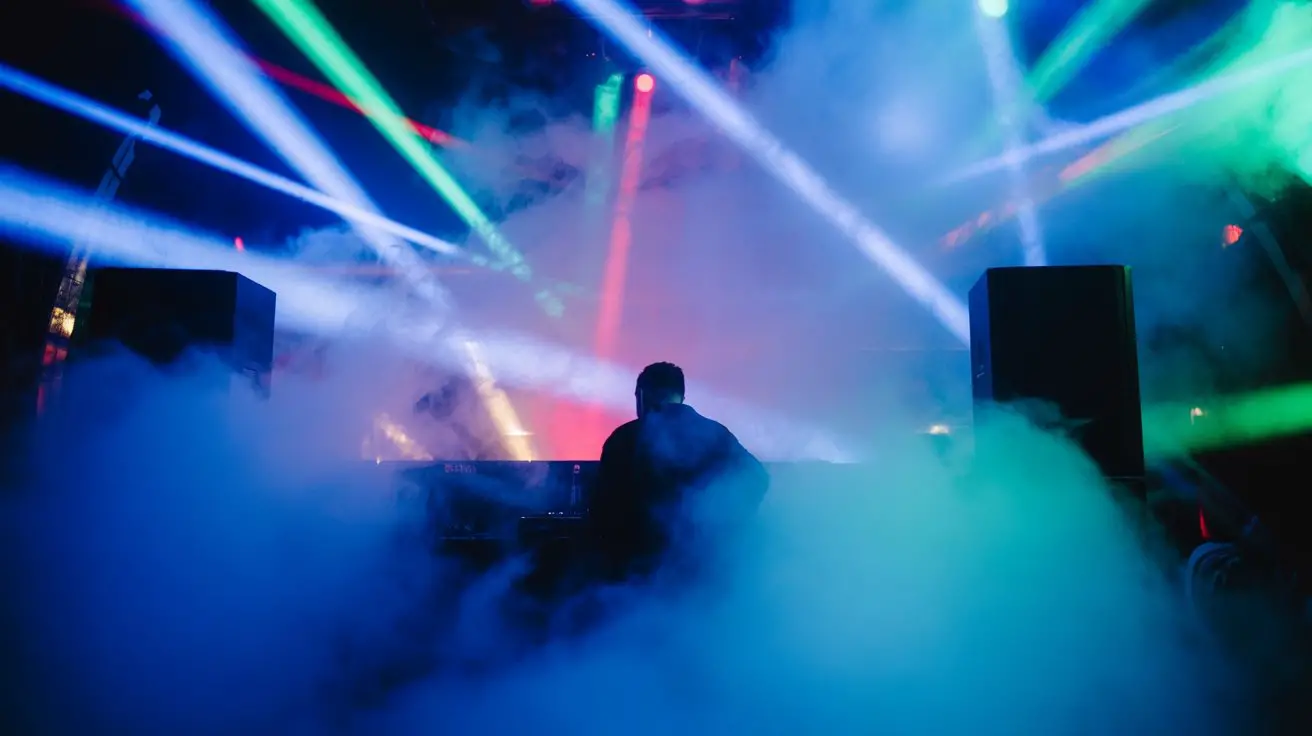
Your carefully positioned wash lights won’t reach their full potential without atmospheric enhancement to make those beams visible and dramatic. Fog and haze machines transform invisible light beams into striking visual elements that cut through darkness and create depth in your lighting design.
Professional-grade haze machines provide consistent, fine particles that hang in the air longer than traditional fog, giving you better beam definition without obscuring your audience’s view.
Water-based fluid produces cleaner output than oil-based alternatives, but any fog or haze machine can trigger fire alarms due to smoke particles, so precautions should be taken.
Key atmospheric effect applications:
- Beam enhancement – Makes laser lines and moving head beams clearly visible to the audience
- Depth creation – Adds dimensional layers to your lighting design for more immersive environments
- Color saturation – Intensifies colored lighting effects by providing particles to reflect and scatter light
Laser Projectors and Scanner Lights
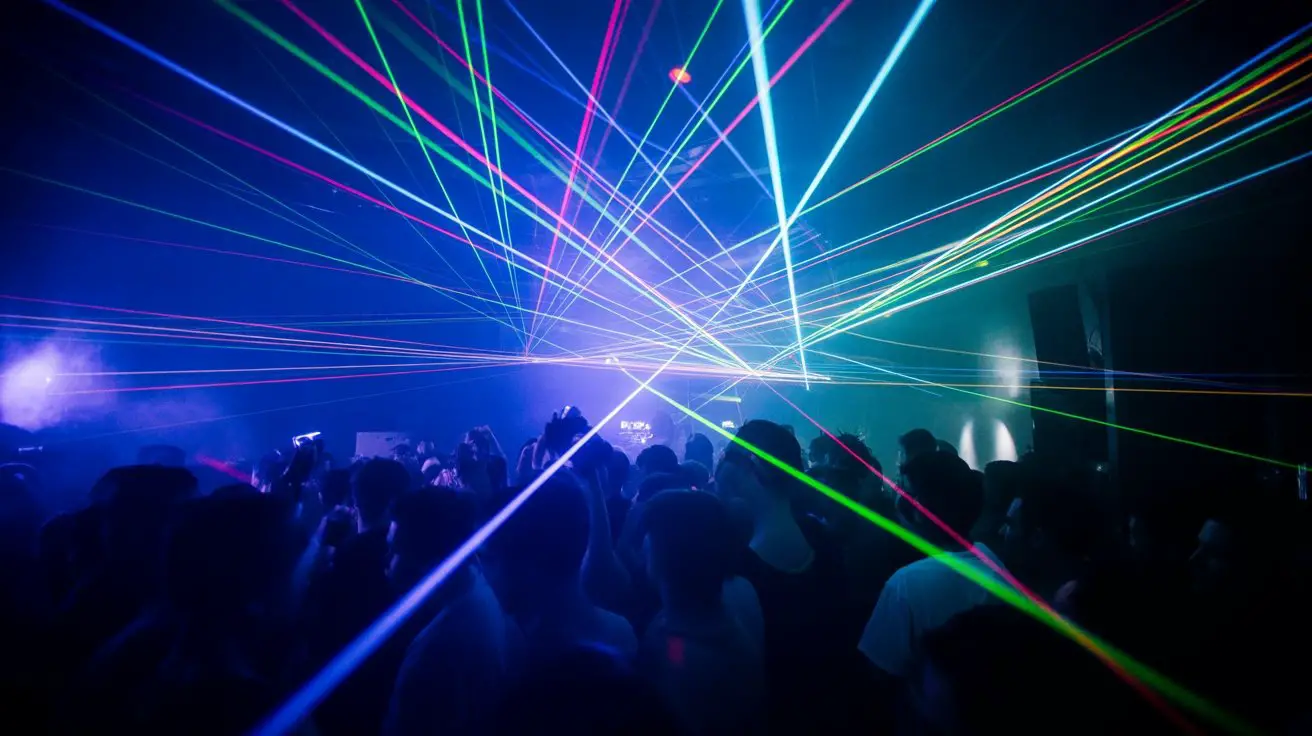
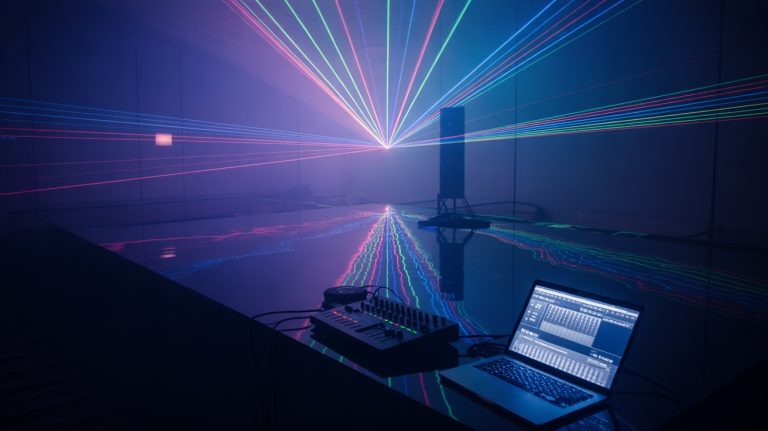
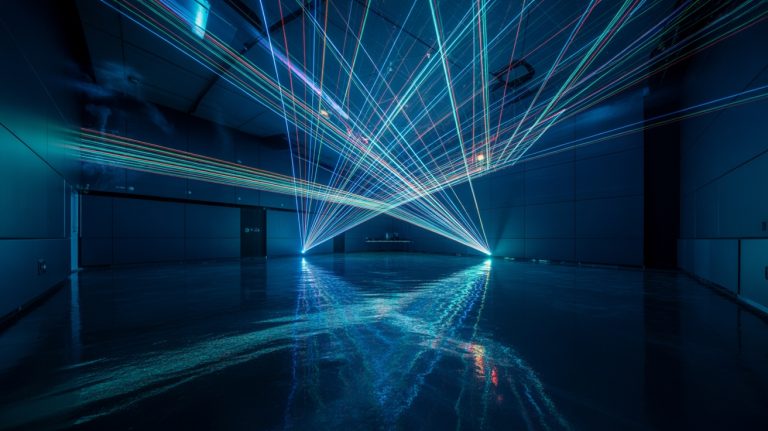
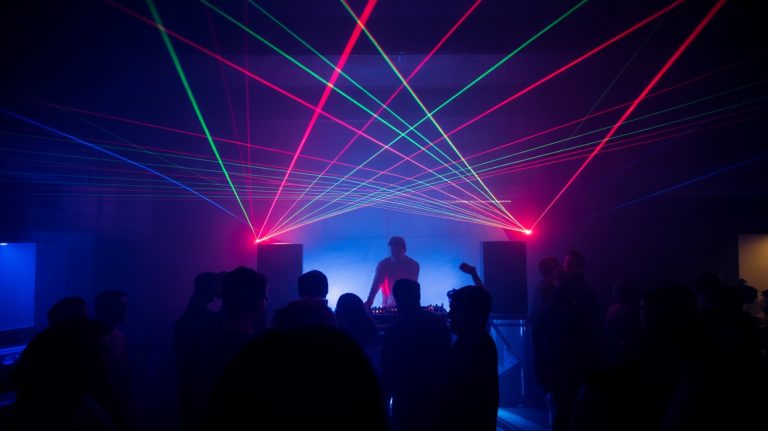
While atmospheric effects provide the foundation for visible light beams, laser projectors and scanner lights deliver the precision and intensity that separate professional DJ setups from amateur installations.
You’ll need ILDA-compatible laser projectors for custom pattern control and synchronized show programming. Scanner lights provide rapid movement and precise beam positioning that static fixtures can’t match. If you’re a hobby or mobile DJ, stick with consumer party lasers of 5mW or less. Anything stronger is a Class 3B or 4 show laser that needs an FDA variance and a trained operator, so leave those to licensed laser show companies.
| Light Type | Power Range | Coverage Area |
|---|---|---|
| Laser Projector | 5mW or less (hobby use) | 50-200 ft |
| DMX Scanner | 200-700W | 30-150 ft |
| Beam Scanner | 350-1000W | 40-180 ft |
Position scanners at different heights to create layered effects. Always verify local laser safety regulations—in the US, any show laser over 5mW needs an FDA variance, and beams must never be scanned into the audience’s eyes.
Strobe Lights and Blinders
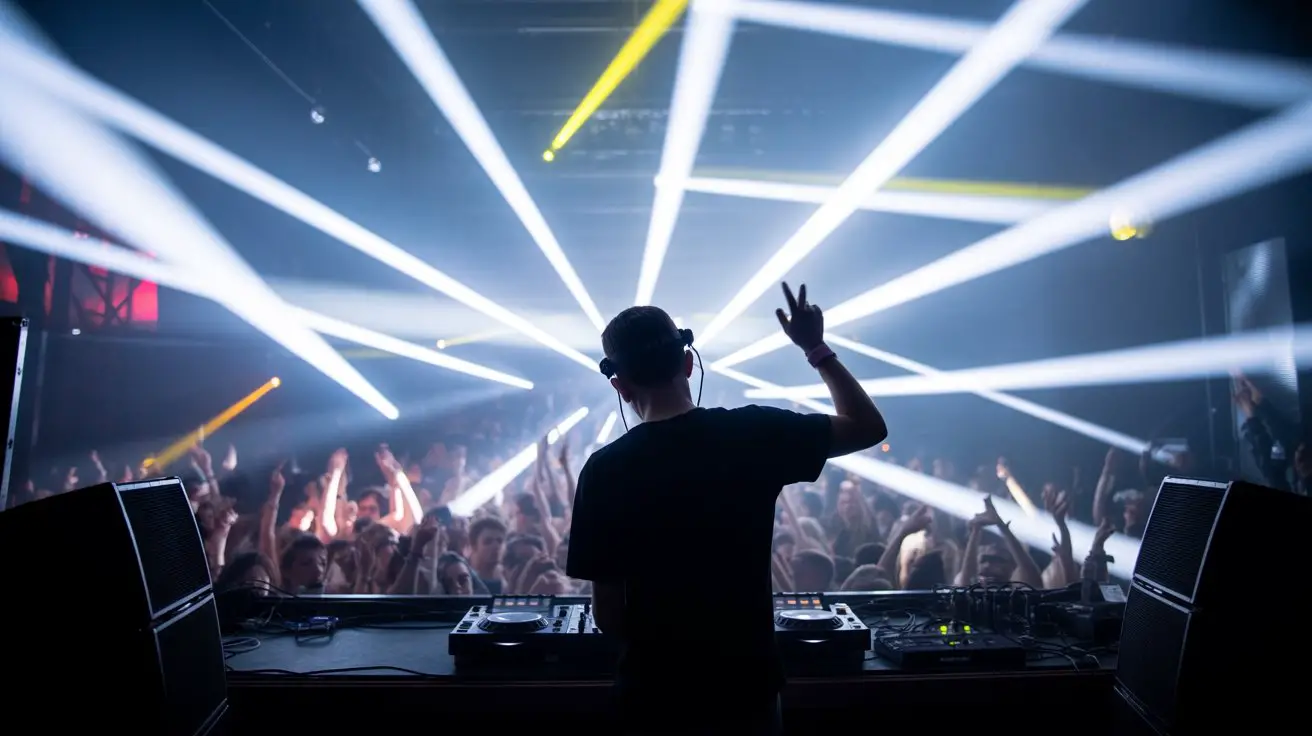
The controlled burst of intense white light from strobes creates the foundation for peak-energy moments in your sets, while blinders deliver wall-to-wall illumination that can transform entire venues in milliseconds.
Strobes operate through xenon discharge technology, producing 1000+ lumen bursts at rates from 1-30 Hz. You’ll want variable speed control and sound-activation capabilities for seamless integration with your tracks.
Position strobes above head height rather than at eye level, and post a strobe warning, since rapid flashing can trigger seizures in people with photosensitive epilepsy.
Blinders utilize high-wattage tungsten or LED arrays, delivering sustained brightness exceeding 50,000 lumens. They’re essential for “white-out” effects and venue-wide illumination changes.
- Mount strobes on stands behind your booth for backlighting that silhouettes dancers
- Use blinders as upstage washes to eliminate shadows and create uniform lighting fields
- Combine both effects during climactic moments for overwhelming sensory bombardment
Moving Head Spotlights
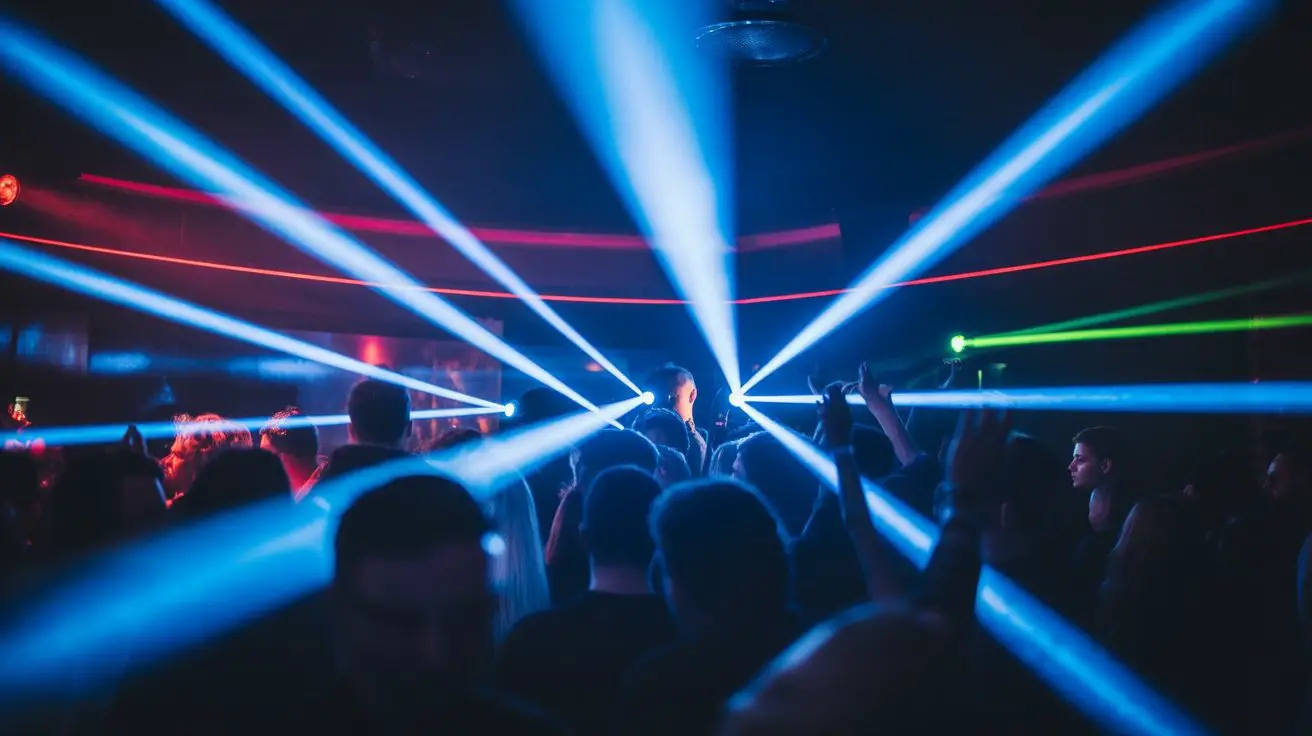
Precision beam control separates professional DJ setups from amateur installations, and moving head spotlights deliver surgical accuracy for highlighting performers, creating aerial effects, and directing crowd attention exactly where you need it.
These fixtures typically offer 540-degree pan and 270-degree tilt capabilities, enabling dynamic movement patterns that track performers or sweep across venues. You’ll get sharp gobos, color mixing, and beam shaping through built-in prisms and frost filters.
| Feature | Club Standard | Professional |
|---|---|---|
| Pan/Tilt Speed | 540°/270° in 2.5s | 540°/270° in 1.8s |
| Beam Angle | 15°-40° zoom range | 5°-50° zoom range |
| Color System | Fixed wheel (7 colors) | CMY mixing + CTO |
Program chase sequences that complement your music’s energy. Position key lights during vocal drops, then sweep beams during buildups. Your moving heads become choreographed performers.
CO2 Cannons and Jet Systems
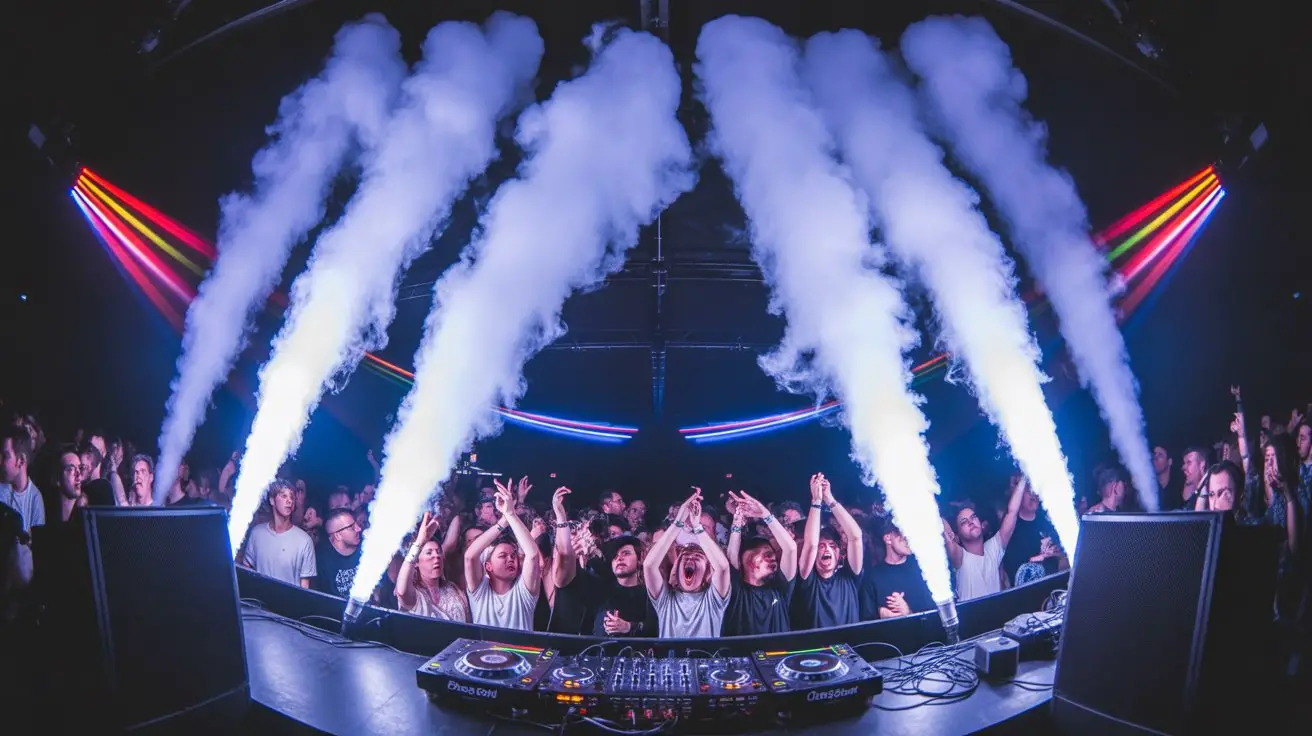
Massive plumes of fog erupting from the stage floor transform peak moments into unforgettable spectacles, and CO2 cannons deliver the most dramatic punctuation available in your effects arsenal.
These systems produce dense white plumes that dissipate quickly without leaving residue, making them ideal for indoor venues with sensitive smoke detection systems.
Professional CO2 cannons operate through liquid CO2 conversion, creating instant atmospheric bursts triggered via DMX control or manual activation.
You’ll achieve maximum impact by timing releases with bass drops and climactic changes.
- Timing precision: Sync cannon bursts with beat drops using DMX controllers for seamless integration with your lighting rig
- Coverage patterns: Position multiple units strategically across stage width to create wall-of-fog effects spanning entire dance floors
- Safety protocols: Maintain proper ventilation and operator distance during activation to prevent CO2 concentration hazards in confined spaces. Additionally, users should consider ongoing CO2 expenses as they can accumulate for frequent use venues.
UV Blacklights and Reactive Paint
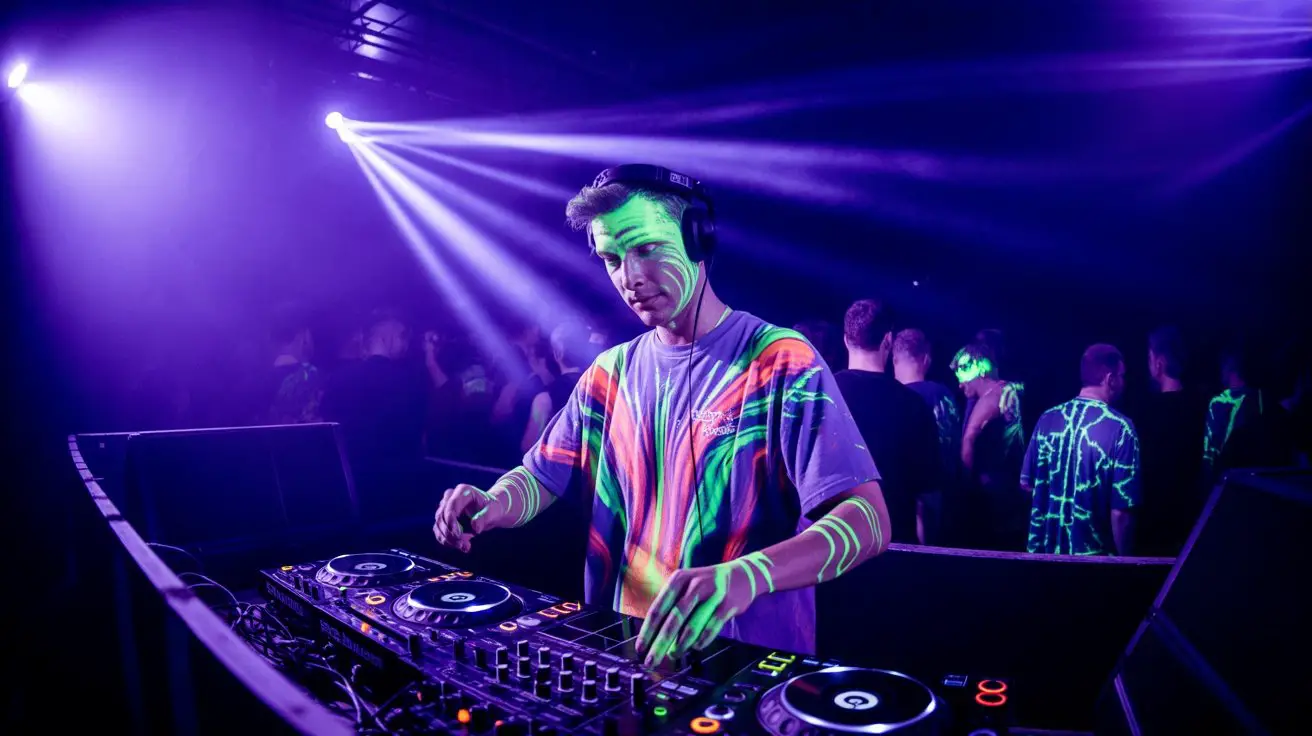
When darkness falls across your venue, UV blacklights create an entirely different visual dimension that transforms ordinary environments into glowing wonderlands.
You’ll want 365-400nm wavelength fixtures for ideal fluorescent activation. Position your blacklights strategically—overhead trusses work best for even coverage without harsh shadows.
UV-reactive paint becomes your secret weapon. Apply it to walls, props, or designated dance areas using non-toxic, skin-safe formulations. Water-based paints wash off easily, while permanent versions create lasting installations.
Your crowd’s white clothing will instantly glow, creating an interactive element without additional equipment.
Combine blacklights with haze machines for enhanced beam visibility. The UV spectrum cuts through ambient lighting, maintaining effectiveness even with house lights partially active.
This versatility makes UV effects perfect for multi-stage events where lighting changes demand seamless visual continuity.
Confetti and Streamer Cannons
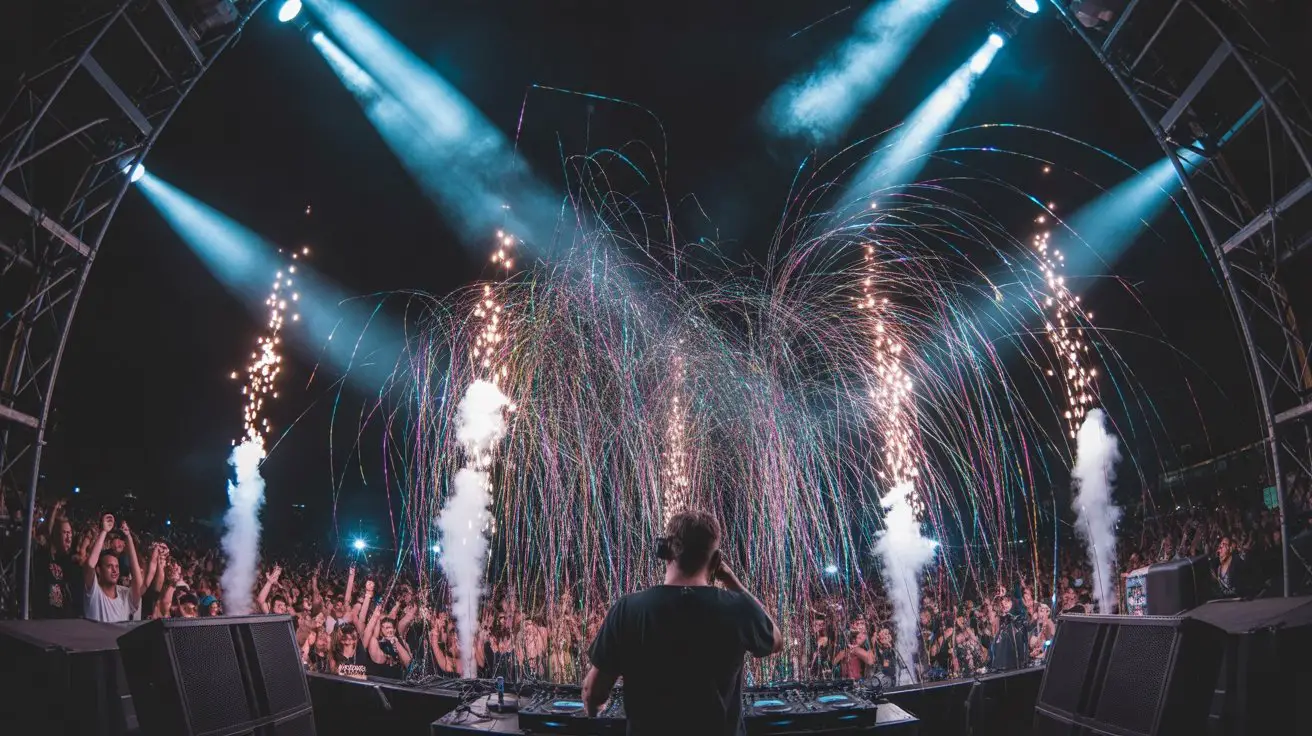
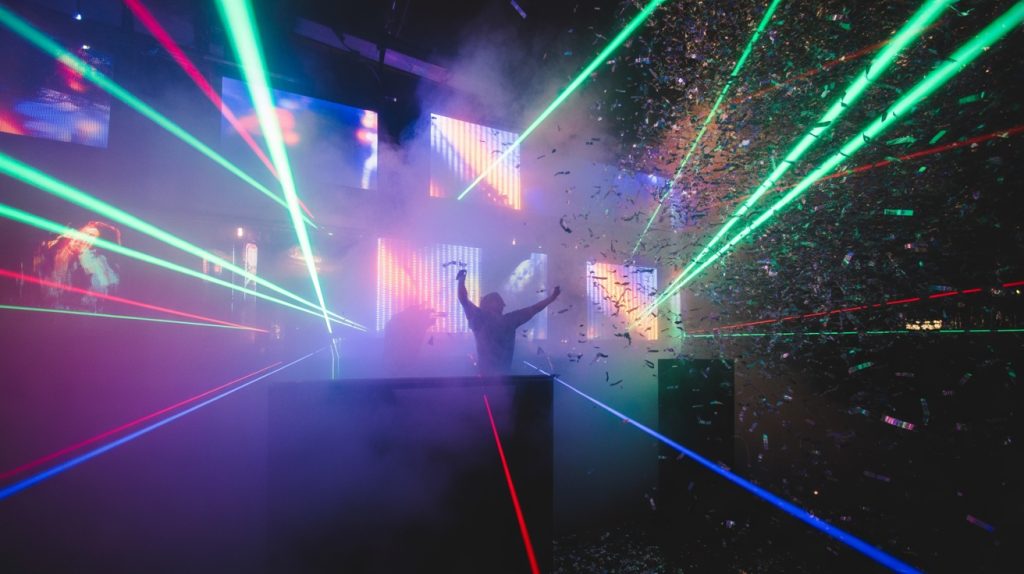
Nothing delivers peak crowd euphoria quite like confetti and streamer cannons firing at precisely the right moment.
You’ll want electromagnetic or CO2-powered units that synchronize with your DMX controller for seamless integration. Manual trigger systems work for smaller venues, but automated timing creates professional-grade spectacle.
Position cannons at strategic angles—45 degrees provides ideal coverage without hitting ceiling fixtures. Load biodegradable materials to satisfy venue requirements and environmental concerns. Test firing angles during soundcheck to avoid equipment damage.
Essential cannon considerations:
- Range and spread patterns – Calculate coverage zones based on venue dimensions and crowd positioning
- Reload mechanisms – Choose between single-shot cartridges or continuous-feed systems for extended sets
- Safety protocols – Maintain clear firing zones and coordinate with venue security for crowd management
Timing separates amateur dramatics from unforgettable peak moments.
Fire and Flame Effects
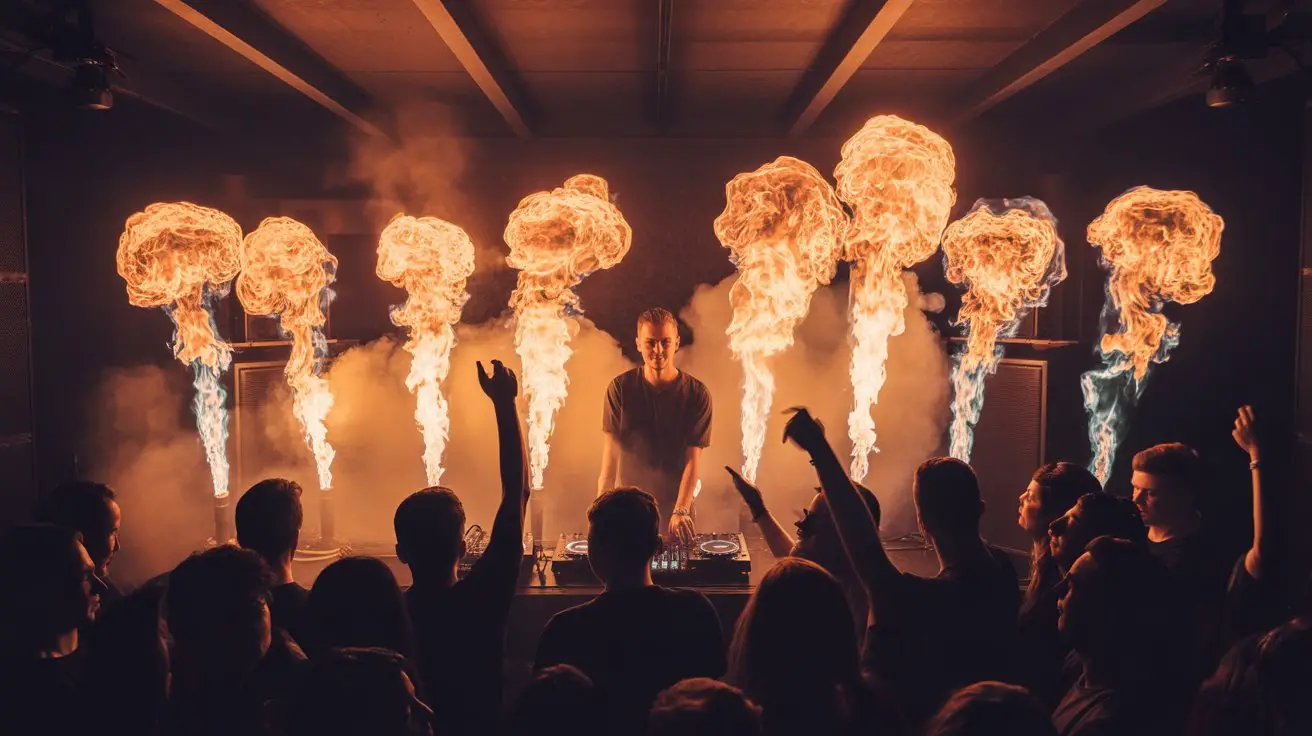
Fire and flame effects look spectacular, but they are not a DIY effect. Real flame projectors and poofers fall under fire codes (NFPA 160 in the US) and need a licensed operator, fire marshal approval and insurance, so hobby and mobile DJs should skip them.
If you want the look without the flame, rent a cold spark machine (only where the venue allows it) or a CO2 jet. For real fire, hire a licensed special effects company.
Even flame-free effects need clear space around them. Follow the manufacturer’s clearance distances and keep an operator at the controls with an emergency stop.
Interactive Floor and Wall Projections
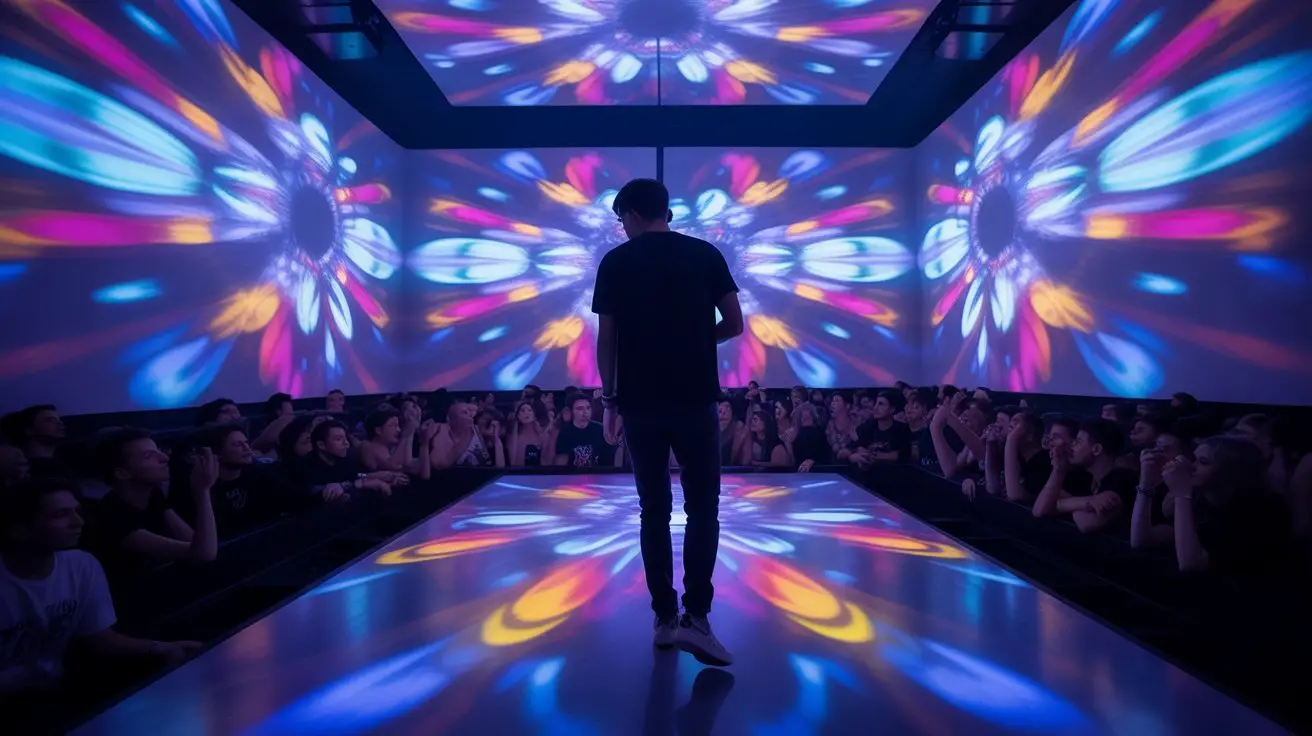
Interactive floor and wall projections transform your venue into a responsive canvas that reacts to movement, sound, and touch. You’ll create immersive experiences where your audience becomes part of the visual performance.
These systems use motion sensors, infrared cameras, and advanced mapping software to track dancer positions and project real-time graphics beneath their feet or surrounding surfaces.
Modern projection mapping hardware delivers 4K resolution with ultra-short throw lenses, eliminating shadows and maintaining crisp imagery even in crowded spaces.
You’ll need robust processing power to handle real-time rendering without latency issues that break immersion.
- Dancers create rippling water effects as they move across projected ocean surfaces
- Footsteps trigger explosive particle bursts synchronized to bass drops
- Walls display pulsating geometric patterns that respond to crowd density and energy levels
Frequently Asked Questions
What’s the Average Budget Needed for a Complete DJ Special Effects Setup?
You’ll need $2,000-5,000 for a professional setup including fog machines, LED lighting, lasers, and hazers. Entry-level configurations start around $800, while high-end systems exceed $10,000 depending on venue requirements.
How Do I Transport and Set up Heavy Special Effects Equipment Safely?
You’ll need proper flight cases, heavy-duty dollies, and lifting straps for transport. Always use two-person lifts, secure all connections, test equipment before events, and map your setup layout beforehand to minimize repositioning heavy units.
What Insurance Coverage Do I Need When Using Pyrotechnics and Special Effects?
Coincidentally, most DJs discover insurance gaps right after incidents occur. You’ll need thorough liability coverage, pyrotechnic-specific policies, equipment protection, venue requirements compliance, and professional indemnity insurance covering fire damage and injury claims.
Which Special Effects Work Best for Outdoor Versus Indoor DJ Events?
You’ll want wind-resistant effects like CO2 cannons and low-lying fog outdoors, while indoor venues handle haze machines, confetti cannons, and (with permits) cold sparks better. Consider power availability, ceiling height, and ventilation requirements when selecting your arsenal.
How Do I Synchronize Multiple Special Effects With My DJ Software?
Though it seems complex, you’ll master effect synchronization through MIDI mapping your controller’s outputs to fog machines, strobes, and lasers, then program cue points within your software’s timeline for seamless automated triggering.
Conclusion
You’ve mastered the technical specs and safety protocols for ten essential effects, yet you’re still missing the most critical element—restraint. While you can blind audiences with strobes and fog every drop, seasoned pros know the real power lies in strategic deployment. Your arsenal means nothing if you can’t read the room. The irony? Less experienced DJs often create more memorable moments by knowing when not to use their expensive gear.