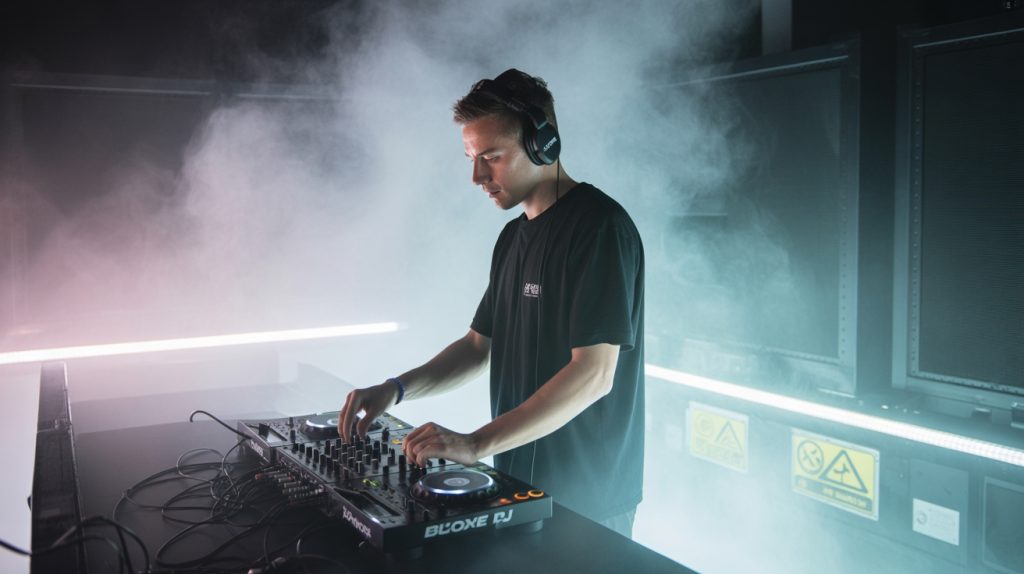
A fog machine that sets off a venue’s fire alarm can stop an event cold and get you banned from the venue. You’re dealing with electrical hazards, reduced visibility, and potential respiratory risks every time you activate that fog machine in your booth. Understanding proper safety protocols isn’t just about protecting your gear—it’s about preventing lawsuits, venue bans, and serious injuries that could end your career before the next set.
Electrical Safety Precautions for Fog Equipment
Before connecting any fog equipment to your DJ booth’s power supply, you must verify that all electrical components meet proper safety standards and carry appropriate certifications. Check for UL, CE, or equivalent markings on all devices.
Inspect power cords for damage, fraying, or exposed wiring before each use. Don’t daisy-chain multiple fog machines through extension cords or power strips—this creates fire hazards and voltage drops that can damage equipment.
Install GFCI protection when operating near water or humid environments. Calculate total amperage requirements and confirm your circuit can handle the load without overheating.
Use only manufacturer-recommended fuses and breakers. Keep spare fuses accessible but confirm they match exact specifications. Never bypass safety switches or modify electrical connections.
Establish proper grounding for all equipment to prevent shock hazards. Additionally, ensure that adequate air circulation is maintained in the area to minimize inhalation of fog machine emissions.
Proper Fog Machine Placement and Positioning
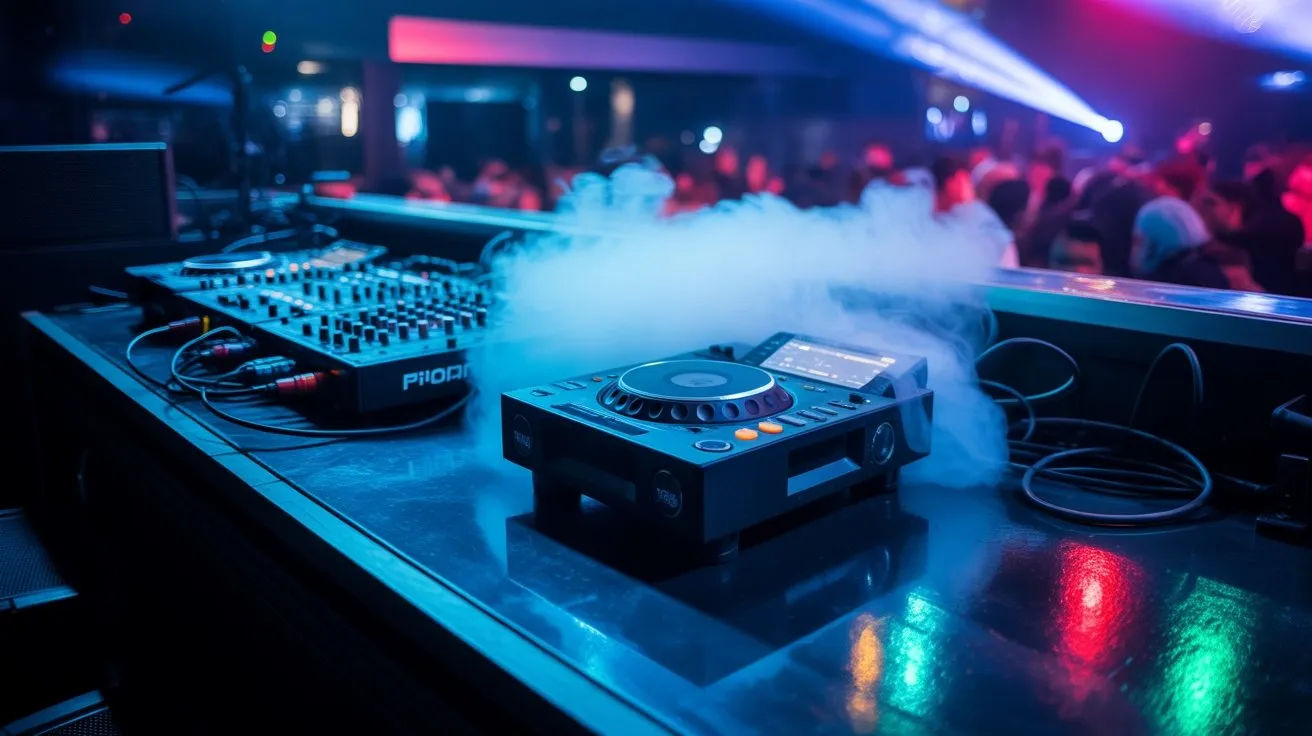
When positioning fog machines in your DJ booth setup, you’ll need to maintain minimum clearance distances from heat-sensitive equipment, audience areas, and emergency exits to prevent equipment damage and guarantee safe evacuation routes.
Position fog machines at least three feet from mixing consoles, amplifiers, and computers to prevent moisture damage to sensitive electronics. Mount units securely on stable platforms or approved brackets to eliminate tipping hazards.
Don’t place machines directly above audience areas where hot fog fluid could drip onto people. Ensure fog output doesn’t obstruct exit signs, emergency lighting, or evacuation pathways.
Position units to direct fog flow away from HVAC intakes, which can distribute fog beyond intended areas and set off smoke detectors. Install machines where they’re accessible for immediate shutdown during emergencies while remaining protected from accidental contact.
Ventilation Requirements and Air Circulation
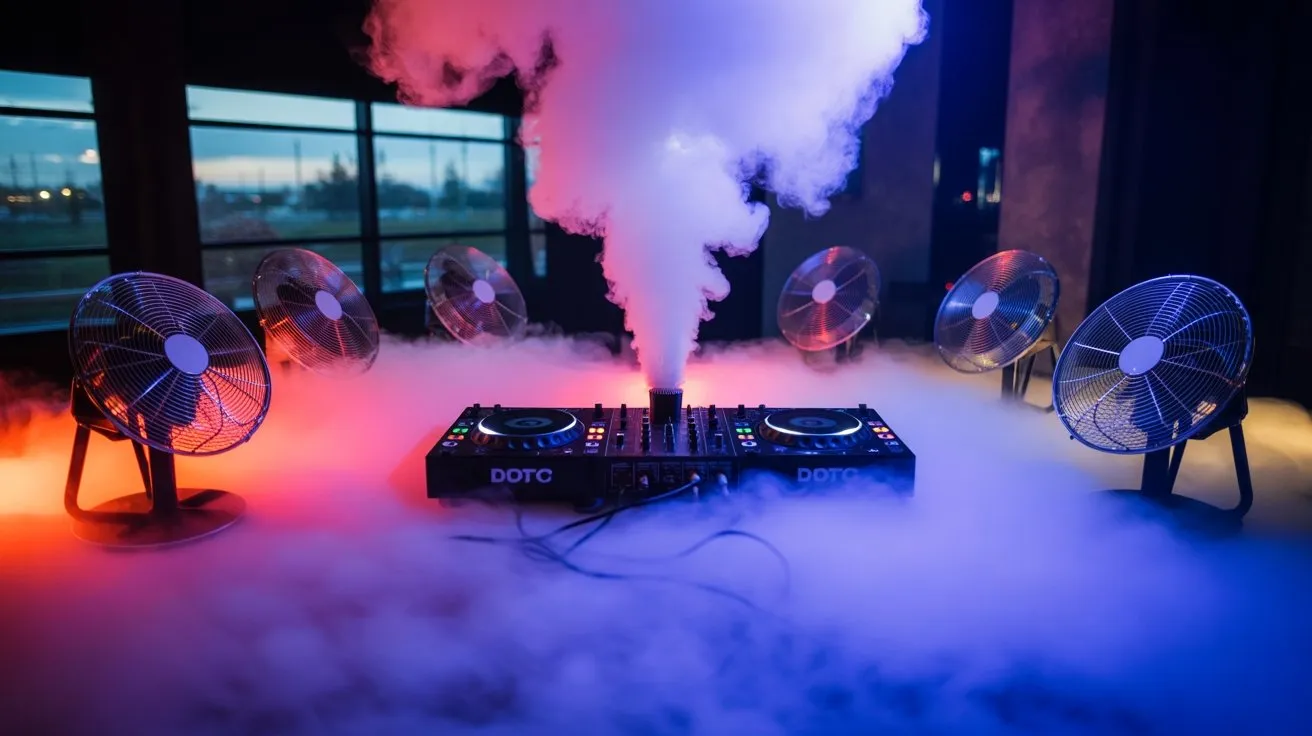
Proper fog machine placement directly impacts your venue’s ventilation requirements, as inadequate air circulation can create hazardous accumulations of fog fluid vapors and reduce visibility below safe operating levels.
You must guarantee minimum air exchange rates of 6-8 changes per hour in enclosed spaces when operating fog machines. Install exhaust fans at ceiling level to remove heated fog vapor, while intake vents should remain at floor level to maintain proper air circulation patterns.
Don’t operate fog machines in venues without mechanical ventilation systems. Monitor CO2 levels if using dry ice effects, as carbon dioxide displacement poses asphyxiation risks in poorly ventilated spaces. Additionally, ensure that any fog fluids used are compliant with local regulations to minimize health risks associated with their chemical content.
Always maintain clear emergency exit visibility and comply with local fire marshal ventilation requirements for your specific venue type.
Fog Fluid Selection and Health Considerations
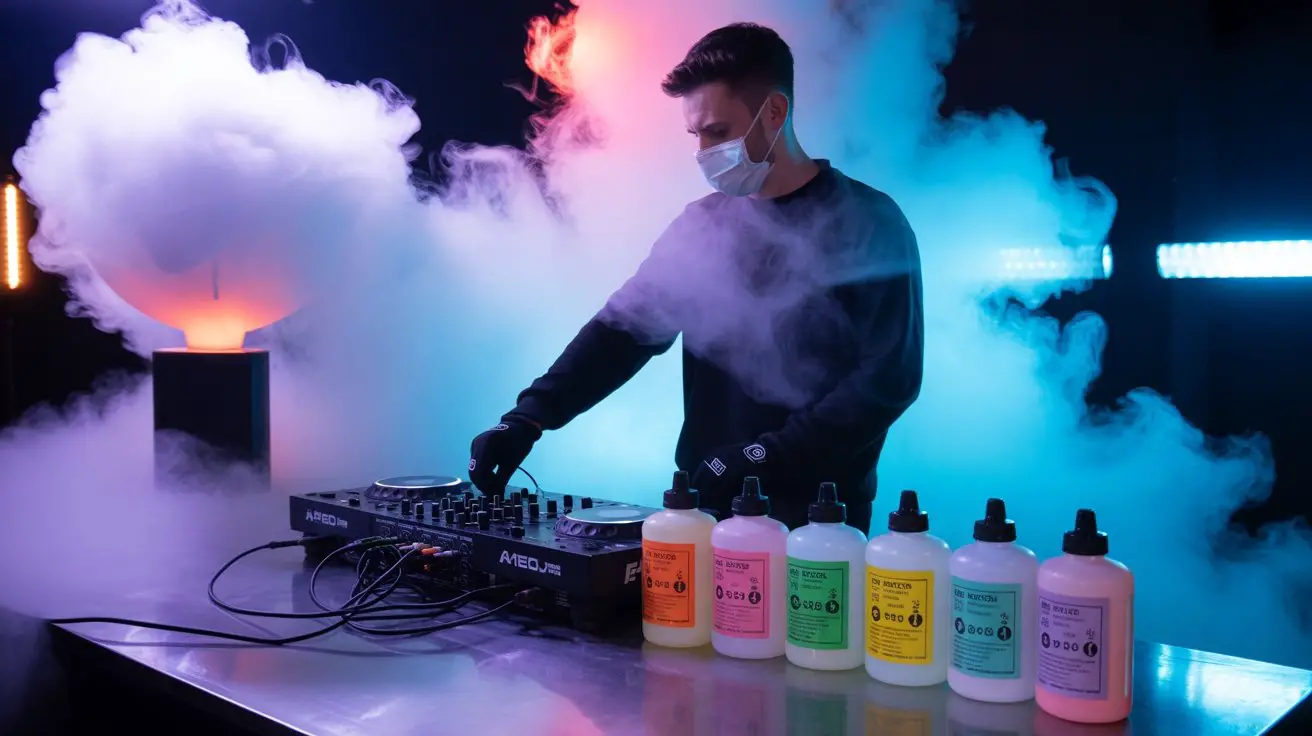
Since fog fluid composition directly affects respiratory health and equipment performance, you must select water-based glycol or glycerin formulations that meet entertainment industry safety standards rather than oil-based alternatives that pose fire hazards and lung irritation risks.
Professional-grade fog fluids undergo rigorous testing for toxicity levels and particle size distribution. You’ll need to verify MSDS documentation confirms non-toxic classification and appropriate viscosity ratings for your specific fog machine model.
Key selection criteria include:
- Chemical composition: Choose fluids made from propylene glycol, triethylene glycol, or glycerin, and avoid any fluid containing ethylene glycol or diethylene glycol, which are toxic.
- Particle density: Select medium-density formulations that dissipate within 10-15 minutes to prevent accumulation.
- Certification compliance: Verify ANSI E1.5 standard compliance for theatrical fog effects.
Always store fluids in sealed containers below 80°F and replace opened containers every six months to maintain ideal safety performance. Additionally, ensure that the fog fluid is free of harmful chemicals to further reduce health risks associated with fog machine use.
Equipment Maintenance and Pre-Show Inspections

Although regular maintenance enhances the longevity of the fog machine, it is crucial to perform proper maintenance to ensure optimal performance before events.
Emergency Protocols and Visibility Management
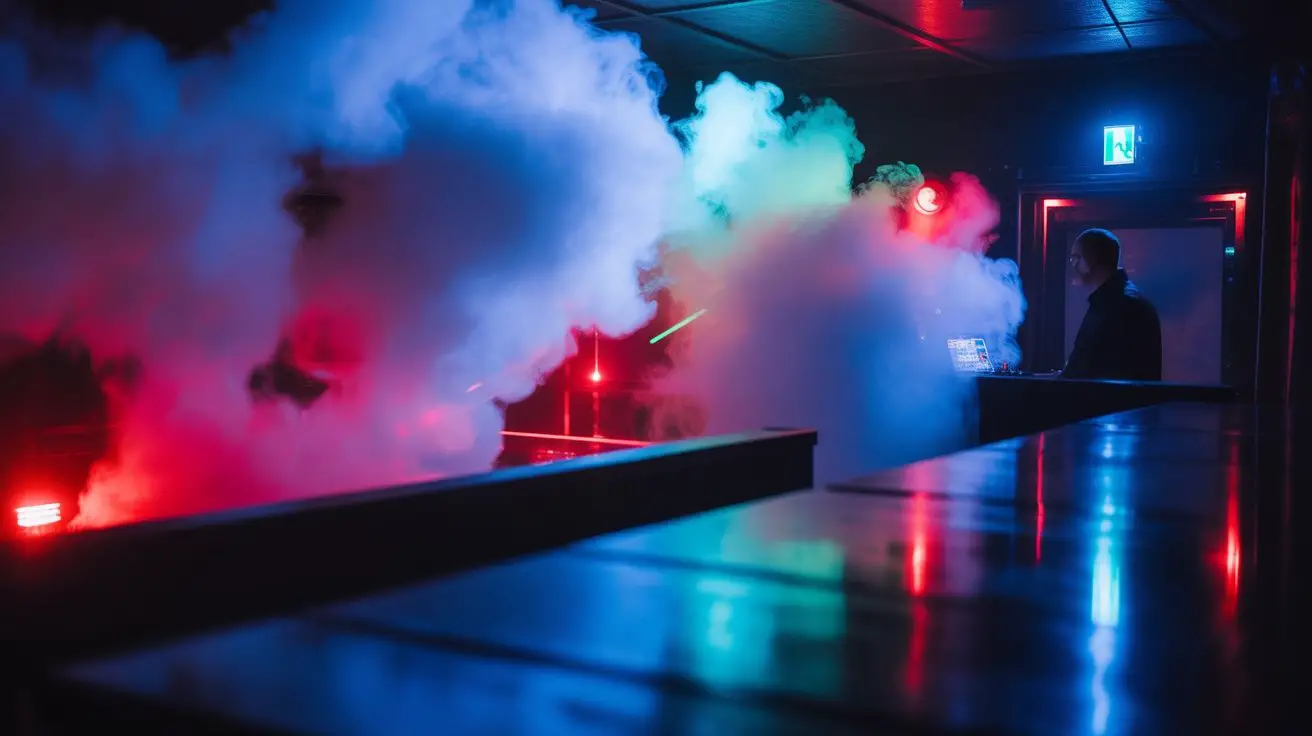
Although regular equipment checks form your first line of defense, you must prepare for situations when systems fail or environmental hazards threaten performer and audience safety.
Establish clear emergency shutdown procedures for all fog machines, including master power cutoffs accessible from multiple booth locations. Install emergency lighting systems that activate automatically when visibility drops below safe operating levels.
Your emergency response protocol must include:
- Immediate fog machine deactivation and venue ventilation activation
- Clear evacuation route marking with backup lighting systems
- Direct communication channels to security and emergency personnel
Monitor visibility conditions continuously using predetermined reference points throughout your performance space.
Train all booth personnel on emergency procedures and designate specific roles during crisis situations. Maintain emergency contact information readily accessible and guarantee backup operators understand complete shutdown sequences.
Venue-Specific Safety Compliance and Regulations
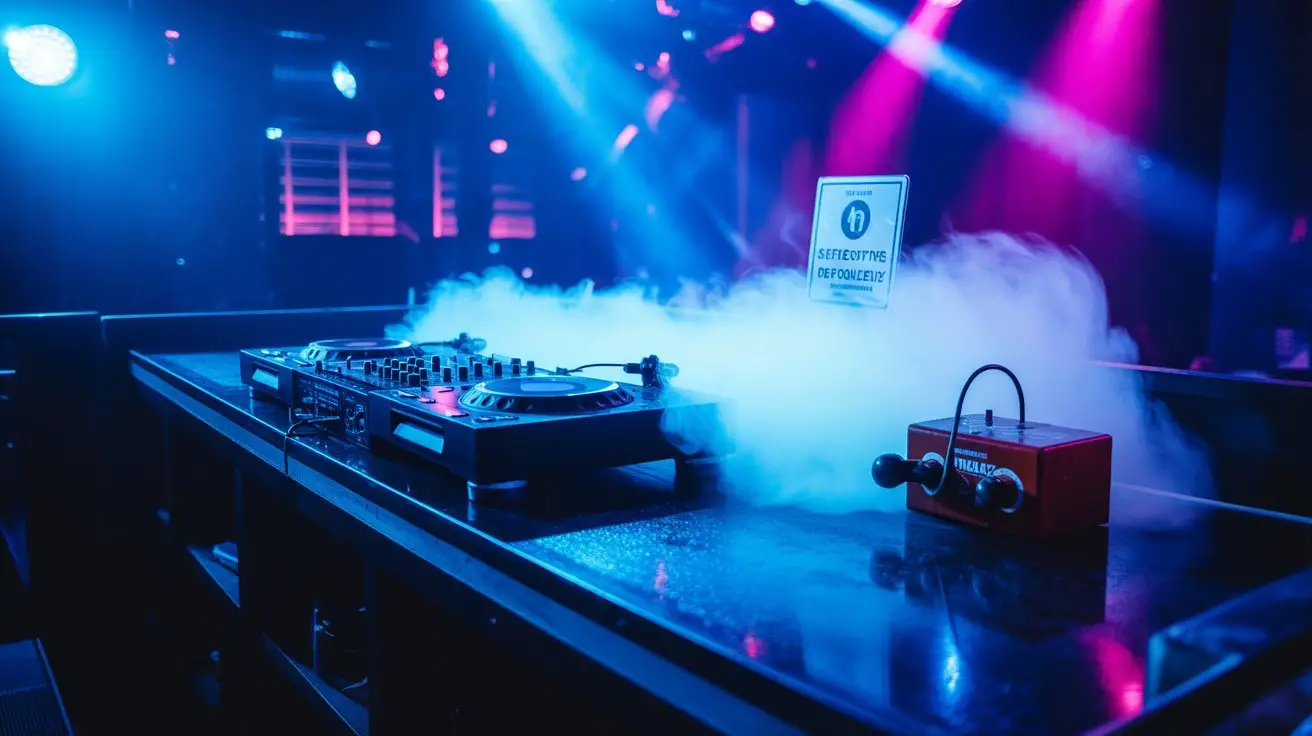
When operating DJ equipment across different venues, you must understand that each location operates under distinct safety regulations, fire codes, and occupancy requirements that directly impact your booth setup and fog machine usage.
Research local fire marshal requirements before each gig, as fog density restrictions vary greatly between jurisdictions. Verify venue insurance policies cover fog machine operations and confirm you’re listed as an additional insured party.
Check building ventilation systems and exit sign visibility requirements. Some venues prohibit fog machines near emergency exits or require specific clearance distances.
Document your compliance measures through photos and safety checklists. Contact venue management 48 hours prior to verify electrical capacity, HVAC integration, and any recent regulatory changes.
Non-compliance can result in immediate shutdown, fines, or permanent venue bans.
Frequently Asked Questions
Can Fog Machines Trigger Fire Alarms or Smoke Detectors?
You’ll trigger photoelectric smoke detectors with fog machines since they detect light obstruction, not heat. Ionization detectors rarely activate from fog alone. You must verify detector types and consult facility management before operating fog equipment indoors.
How Long Should I Wait Between Fog Bursts During Performances?
You’ll need 2-3 minutes between fog bursts to prevent excessive accumulation that risks triggering fire detection systems. Monitor venue ventilation rates and maintain visibility compliance for emergency egress requirements during performances.
What’s the Maximum Safe Fog Density for Maintaining Crowd Visibility?
Maintain maximum fog density where you can clearly see fifteen feet ahead. Dense distributions diminish safety—you’ll compromise crowd movement, emergency egress routes, and security visibility. Keep density below venue-obscuring levels to guarantee regulatory compliance and risk mitigation.
Are There Specific Insurance Requirements When Using Fog Machines at Events?
You’ll need liability coverage specifically covering atmospheric effects, as standard policies often exclude fog-related incidents. Check venue requirements, local fire codes, and notify insurers before events to ascertain proper coverage.
Can Fog Machines Damage Musical Instruments or DJ Equipment Nearby?
Like moisture creeping through cracks, fog residue can infiltrate your equipment’s circuitry, corroding contacts and damaging sensitive electronics. You’ll risk voiding warranties, compromising sound quality, and facing costly repairs if you don’t implement proper protective barriers.
Conclusion
You’ve covered all your bases when it comes to fog machine safety in your DJ booth. Don’t cut corners on electrical protection, ventilation requirements, or equipment inspections. You’ll maintain compliance with venue regulations while protecting your gear and audience. Remember, you’re responsible for emergency protocols and visibility management during shows. Stay vigilant about fluid selection, positioning requirements, and pre-show safety checks. Your proactive approach prevents incidents and guarantees regulatory adherence every time you perform.