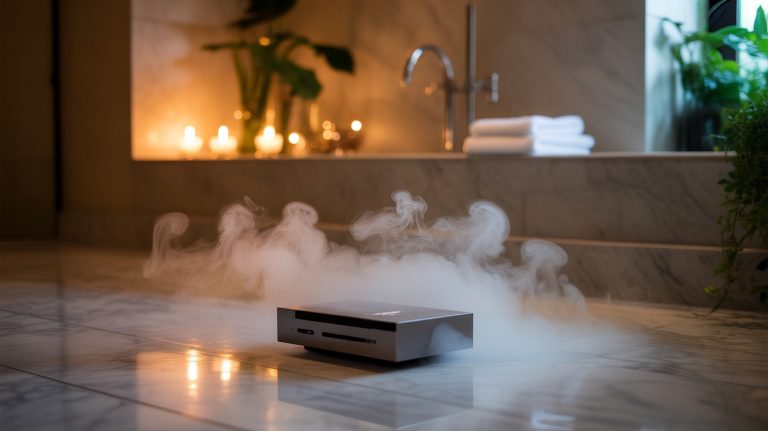
Do you know the difference between a fogger and a mister? If not, you’re not alone, because the two words often get used for the same thing.
So, what’s the difference between a fogger and a mister? It comes down to droplet size. A fogger makes much finer droplets that float and evaporate before they land, while a mister makes larger droplets that fall and wet the surfaces around them.
That one difference changes how each one cools, adds humidity, and how easily you breathe it in. Below I compare the two for plants, reptiles, patios, and pest control.
Fogger VS Mister Compared: What’s the Difference?
What Foggers and Misters Have in Common
Both break water into small droplets to cool the air or raise humidity. Unlike sprinklers or drip lines, they aren’t meant to soak the soil.
You’ll find them in greenhouses, nurseries, reptile enclosures, and on patios. The word “fogger” is also used for pest-control machines, which are covered further down.
How Foggers Work
Foggers make droplets fine enough to hang in the air like natural fog. Ultrasonic foggers do it with a vibrating disc under the water, and high-pressure fog systems force water through very small nozzles.
Because the droplets are so small, most evaporate before they settle. That raises humidity and cools the air without leaving everything wet.
How Misters Work
Misters spray larger droplets through nozzles fed by a hose, a pump, or a pressurized tank. Many run on ordinary water pressure, which keeps them simple and cheap.
Those bigger droplets fall onto leaves, soil, and floors. That’s useful when you want surfaces wet, and a problem when you don’t.
Fogger vs. Mister Compared
Here are the main differences between foggers and misters.
The Size of Droplets
Fog droplets are much finer than mist droplets. Exact sizes depend on the nozzle and the pressure, and makers use the words loosely, so check the droplet size in the specs if it matters to you.
Finer droplets stay in the air longer and spread further. Coarser droplets drop out of the air quickly and land close to the nozzle.
Wet Surfaces
A fogger adds humidity with little wetting, which is why greenhouses often use fog for cuttings and seedlings. A mister wets leaves and floors, which some plants and animals need and others don’t tolerate well.
Leaves that stay wet for long periods can encourage fungal disease in some plants. Match the system to what you’re growing.
Cooling
Both cool by evaporation, so both work best in hot, dry air. In humid weather, the air can’t take up much more water, so you get less cooling and more dampness.
Fine fog evaporates faster than coarse mist, so it cools with less wetting. That’s why high-pressure patio systems feel cooler and drier than a hose-end mister; our backyard mist cooling station guide shows a simple setup.
The Cost
Simple misters are usually the cheaper option. High-pressure fog systems need a pump and special nozzles, and ultrasonic foggers need replacement discs over time.
Both need clean water. Hard water leaves mineral deposits that clog nozzles and coat surfaces.
Breathing Safety: Why Droplet Size Matters
Because fog droplets are finer and stay airborne longer, they are easier to breathe in than mist. With plain, clean water that is rarely a problem, but whatever is in the water ends up in the air too.
Keep fogger tanks and discs clean, since standing water can grow bacteria and mold. Use distilled or filtered water if your manual calls for it.
Chemical (Insecticide) Foggers Are Different
Pest-control foggers, from bug bombs to cold and thermal foggers, put pesticide into the air as very fine droplets. Those droplets are easy to inhale, which is why labels tell you to leave the area and stay out until it has aired out.
Follow the product label exactly, because the EPA treats the label as the law for pesticide use. Many bug bombs are flammable, so turn off pilot lights and other ignition sources as the label directs.
Foggers vs. Misters | Pros and Cons
Foggers
Pros:
- Raise humidity with little wetting of leaves and floors.
- Fine droplets spread evenly through a space.
- Strong cooling in hot, dry air without soaking people or furniture.
- Ultrasonic foggers run almost silently.
Cons:
- Can push humidity up fast, so rooms and enclosures need airflow and a hygrometer to keep it in range.
- Tanks and discs need regular cleaning to stop bacteria and mold.
- High-pressure fog systems need a pump and fine nozzles that clog with hard water.
- Fine droplets are easy to breathe, so never put anything but clean water in a fogger meant for humidity.
Misters
Pros:
- Simple and cheap, and many run on normal water pressure.
- Easy to automate with a timer.
- Wet leaves for plants that like it, and give drinking droplets for animals such as chameleons.
- Easy to aim at one zone and leave the rest dry.
Cons:
- Wet floors, furniture, and leaves, which can make things soggy or slippery.
- Give less cooling in humid weather and can leave people damp.
- Small nozzles clog with hard water and need regular cleaning.
How to Choose the Right One
For Plants and Greenhouses
Choose fog for propagation, cuttings, and raising humidity without soaking leaves. Choose misting for plants that like wet foliage, or when you want a simple, low-cost setup.
For Reptile and Amphibian Enclosures
Many keepers use a mister for the daily wet-down and drinking droplets, and a fogger only as a humidity boost. Too much fog without airflow can leave an enclosure stale and damp, so follow your species’ care guide and watch a hygrometer.
For Patio Cooling
In dry heat, a high-pressure fog system cools best with the least wetting. A low-pressure mister is cheaper and fine for small spaces, but expect some dampness.
For Pest Control
Use only a product and machine labeled for your pest, and follow that label. The fogger-or-mister question matters far less than the chemical and how you apply it.
Fogger VS Mister FAQs
What’s the difference between a fogger and a mister?
The main difference is droplet size. Foggers make finer droplets that float and evaporate, while misters make larger droplets that fall and wet surfaces.
Which is better, a fogger or a mister?
It depends on the job. A fogger is better for raising humidity or cooling without wet surfaces, and a mister is better when you want leaves wet or need a simple, cheap setup.
Why do you hang misters?
Misting lines usually run overhead so the droplets have time to evaporate before they reach people and the ground. The right height depends on the nozzles and pressure, so follow the kit’s instructions.
Are foggers safe to breathe?
A humidity fogger running clean water is generally fine, as long as you keep the tank clean. Pesticide foggers are different: stay out of the area until the label says it’s safe to go back in.
Final Thoughts
The main difference between a fogger and a mister is the size of the droplets they release. Foggers make finer droplets that hang in the air, while misters make larger droplets that fall and wet surfaces.
Pick fog for humidity and cooling with little wetting, and a mister when you want things wet or need a simple setup. I hope this article has helped you understand the difference between a fogger and a mister.

Please be careful and use at your own risk
None of the authors, contributors, administrators, or anyone else connected with Wild Fog, in any way whatsoever, can be responsible for your use of the information contained in or linked from these web pages.