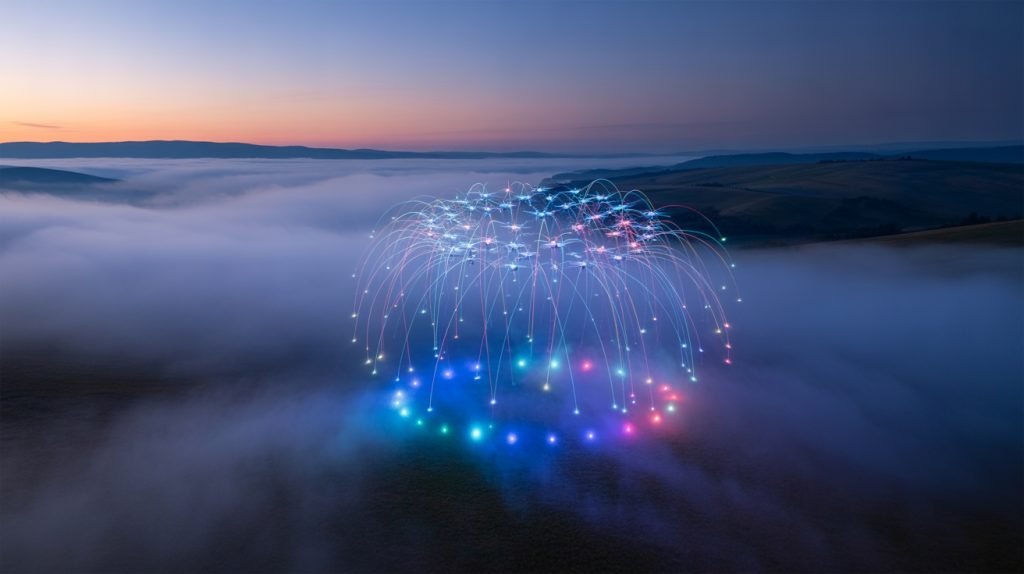
You’ll need to coordinate multiple systems simultaneously when integrating fog machines with drone formations—your flight controllers must communicate with fog deployment units while maintaining precise altitude control through variable visibility conditions. The technical complexity increases exponentially as you’re managing RF interference, battery consumption rates, and fog dispersal patterns that can blind the drones’ optical sensors. Your success depends on understanding how atmospheric moisture affects both drone performance and fog density, but there’s a critical timing element most operators overlook.
Planning Your Fog and Drone Integration Strategy
Before you deploy any fog-generating equipment alongside your drone fleet, you’ll need to establish precise flight corridors that account for fog density patterns and wind dispersal rates.
Map your venue’s airspace into distinct zones, designating fog-heavy areas and clear flight paths for drone maneuvers. Calculate your fog machines’ output rates and dispersal timing to synchronize with choreographed sequences.
You’ll want to position fog units at ground level or elevated platforms, considering their effective range and coverage patterns.
Install wind sensors to monitor real-time conditions that affect fog drift. Establish communication protocols between fog operators and drone pilots, using timed cues rather than visual signals once fog density increases.
Create backup flight paths for emergency situations when fog obscures critical navigation points or exceeds safe operational parameters. Additionally, be aware that fog machines do not set off sprinkler systems, though fog can still trip smoke detectors, so check with the venue first.
Essential Equipment and Technical Requirements
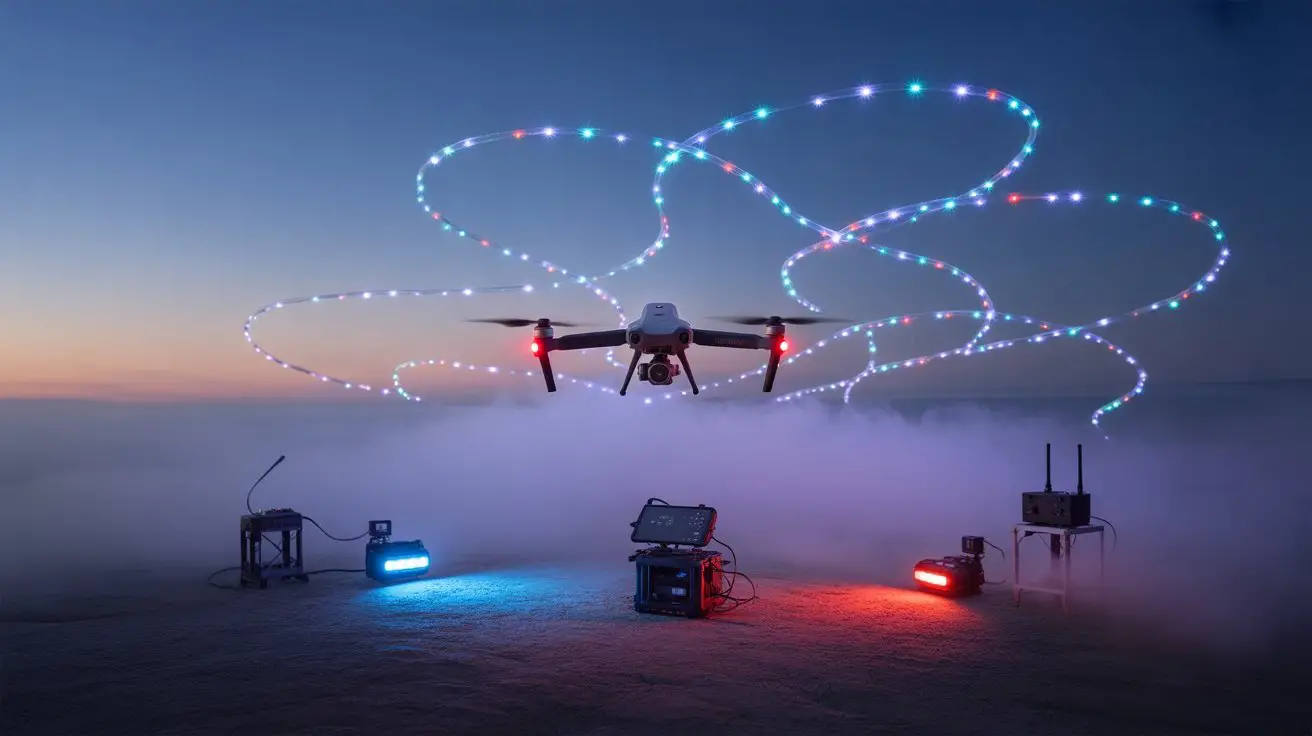
Your fog and drone integration setup demands specialized equipment that meets both aviation safety standards and theatrical fog production requirements.
You’ll need industrial-grade fog machines capable of consistent output control, positioning systems with GPS precision for coordinated timing, and communication protocols that synchronize fog release with drone formations.
Essential components for successful integration include:
- Professional fog machines with variable output controls and remote activation capabilities for precise timing coordination
- Weather monitoring stations featuring real-time wind speed, humidity, and temperature sensors to optimize fog dispersal patterns
- Synchronized control systems that integrate drone flight controllers with fog machine triggers through wireless protocols
Your equipment selection directly impacts safety margins and performance quality. Furthermore, consider investing in water-based fog machines that produce non-toxic fog, ensuring a safe environment for both performers and spectators.
Invest in redundant communication systems, backup power supplies, and professional-grade fixtures designed for outdoor operations to guarantee reliable coordination between aerial choreography and atmospheric effects.
Safety Protocols and Risk Management
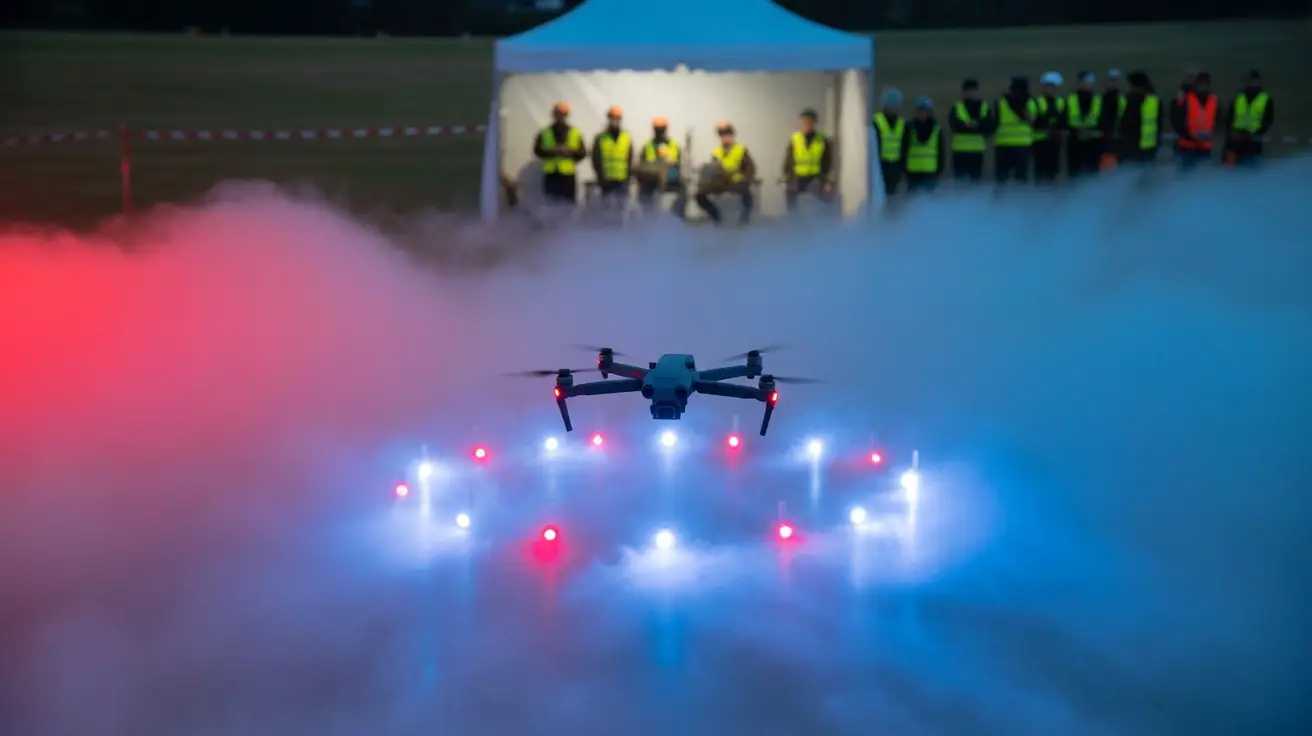
While fog machines create stunning visual effects for drone performances, they introduce significant operational hazards that require thorough risk assessment and mitigation strategies.
You’ll need to establish clear flight corridors and maintain minimum separation distances between drones when operating in fog-reduced visibility conditions. Install redundant positioning systems including GPS backup units and implement real-time telemetry monitoring to track each aircraft’s location continuously.
You must designate fog-free emergency landing zones and establish immediate shutdown protocols for both fog machines and drone fleet operations.
Conduct pre-flight visibility tests using standardized measurement tools to determine safe operating parameters. Train your ground crew on emergency procedures specific to fog-impaired operations, including manual override capabilities and rapid fog dispersal techniques to guarantee pilot visibility remains adequate throughout the performance. Additionally, ensure all operators are aware of the health risks associated with fog machines to minimize potential respiratory issues during events.
Timing and Synchronization Techniques
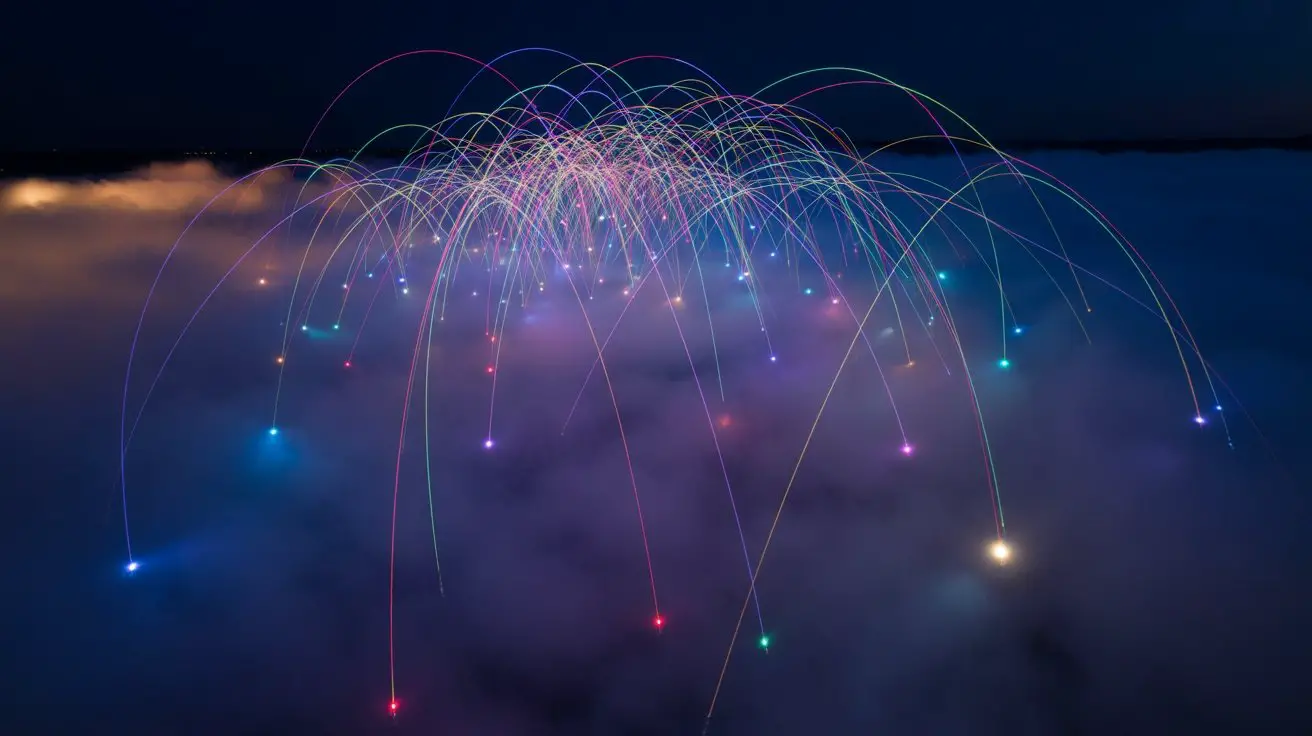
Executing a flawless fog-enhanced drone show demands precise coordination between fog output cycles and aircraft positioning sequences.
You’ll need specialized software that integrates both systems through synchronized timecode protocols. Your flight controller must communicate with fog machine triggers to guarantee vapor density peaks align with choreographed movements.
Critical synchronization elements include:
- Pre-programmed trigger delays – Account for fog dispersal time (typically 2-4 seconds) before drone entry into designated zones.
- Wind compensation algorithms – Adjust fog timing based on real-time meteorological data to maintain visual consistency.
- Failsafe protocols – Implement automatic fog cessation if drones deviate from predetermined flight paths.
You’ll achieve ideal results using DMX512 control systems that simultaneously manage fog output intensity, duration, and drone positioning commands through unified show control software. Additionally, ensure your fog machine is compatible with different types of fog machines to optimize the visual effects for your drone show.
Environmental Factors and Weather Considerations
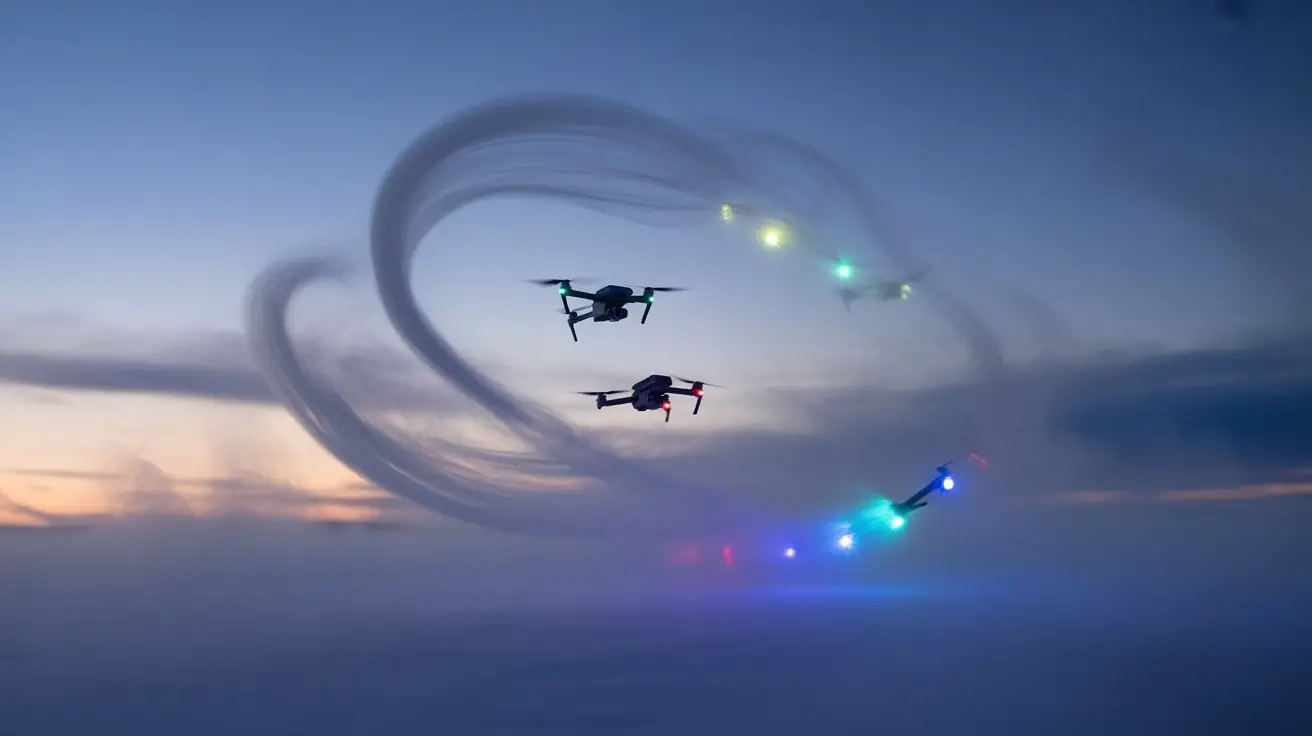
Weather conditions greatly impact both fog performance and drone flight safety, requiring extensive environmental monitoring before and during your show. Wind speeds above 15 mph will disperse fog too quickly and destabilize drone formations. Temperature affects fog density—cold air creates denser fog patterns, while warm conditions reduce visibility duration. Humidity levels below 40% cause rapid fog dissipation, compromising your visual effects. Monitor barometric pressure changes, as dropping pressure indicates incoming weather that could ground your operation. Rain immediately cancels performances due to equipment damage risks. Additionally, understanding the differences between cold fogging and thermal fogging can help in selecting the appropriate fogging method for your event. Install weather stations at multiple venue points to track microclimates. Set predetermined wind thresholds for fog machine activation—typically 8-12 mph maximum for ideal effect maintenance. Always maintain backup indoor venues and establish clear weather-related cancellation protocols with clients.
Troubleshooting Common Performance Issues
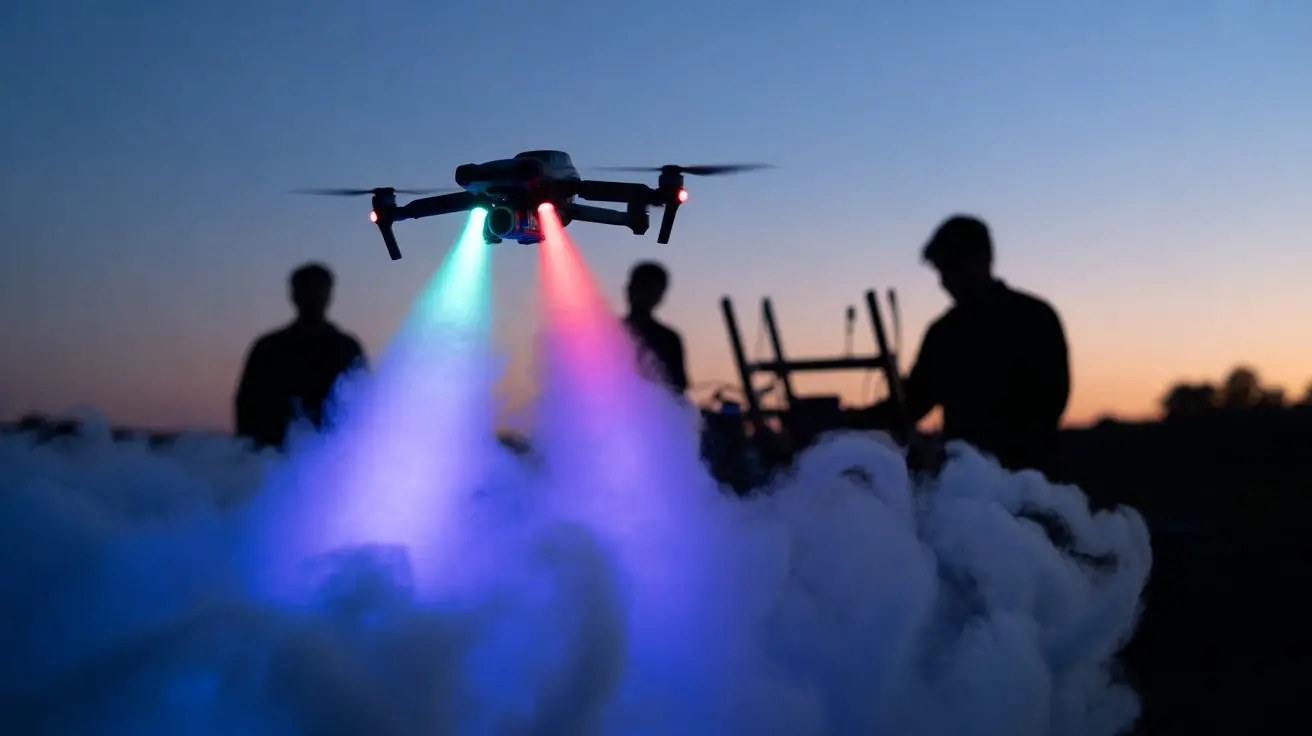
Even with meticulous planning and ideal weather conditions, fog-drone combinations will present technical challenges that require immediate diagnosis and resolution.
You’ll encounter three primary failure modes that demand swift corrective action:
- Fog dispersal irregularities – Check fluid levels, heating element temperature, and nozzle blockages. Verify your DMX signal integrity and adjust output pressure settings accordingly.
- Drone positioning drift – Recalibrate GPS modules, inspect propeller balance, and verify battery voltage under load. Dense fog can interfere with optical positioning systems.
- Timing synchronization failures – Validate your master clock signal, check network latency between controllers, and confirm all devices maintain proper buffer levels.
Keep backup fog machines pre-heated and standby drones flight-ready.
Monitor real-time telemetry data continuously to anticipate system degradation before complete failure occurs.
Frequently Asked Questions
What Permits or Licenses Are Required for Fog Machine Drone Shows?
You’ll need FAA Part 107 drone certification plus FAA waivers for flying multiple drones and flying over people, local airspace authorization, fire department permits for fog effects, environmental permits for chemical dispersal, and entertainment/event licenses. Contact your aviation authority and municipal offices for specific requirements.
How Much Does It Typically Cost to Set up This Type of Show?
You’ll face astronomically high costs! Professional-grade fog machines cost $2,000-$10,000, drone fleets run $50,000-$200,000, plus insurance, permits, certified pilots, and safety equipment. Budget $100,000-$500,000 for thorough fog-drone productions.
Can Fog Machines Be Mounted Directly Onto Drones During Flight?
You shouldn’t mount fog machines directly onto drones during flight. The added weight affects flight stability, fluid spillage creates electrical hazards, and heat generation poses fire risks to drone components and batteries.
What Insurance Coverage Is Needed for Combined Fog and Drone Performances?
Standard liability versus specialized aviation coverage creates stark contrasts in protection levels. You’ll need extensive drone insurance covering payload operations, aerial work endorsements, third-party liability, and equipment coverage for fog machines during combined performances.
How Long Can a Typical Fog and Drone Show Last Continuously?
You’ll typically achieve 15-20 minutes continuous runtime with standard fog fluid capacity and drone battery limitations. Monitor thermal buildup in fog machines, track battery levels closely, and maintain visual observers throughout extended performances for safety compliance.
Conclusion
You’ve now mastered the intricate dance between fog and flight, where precision meets poetry in the sky. Your technical arsenal—from industrial-grade fog machines to synchronized flight controllers—transforms ordinary airspace into an ethereal canvas. Remember, safety isn’t just your anchor; it’s your wings. Weather remains your silent partner, and troubleshooting skills are your safety net. Execute with military precision, and you’ll orchestrate aerial symphonies that’ll leave audiences breathless beneath your fog-kissed drone choreography.