You probably don’t realize that fog machines can develop crystalline buildup within their heating chambers after just a few events, causing reduced output and potential component failure. This isn’t just about emptying the fluid tank—it’s about understanding the thermal cycling process that creates microscopic deposits in your machine’s critical pathways. Most mobile DJs skip the essential flushing procedure, unknowingly shortening their equipment’s lifespan while compromising performance when they need it most.
Essential Cleaning Procedures After Each Event
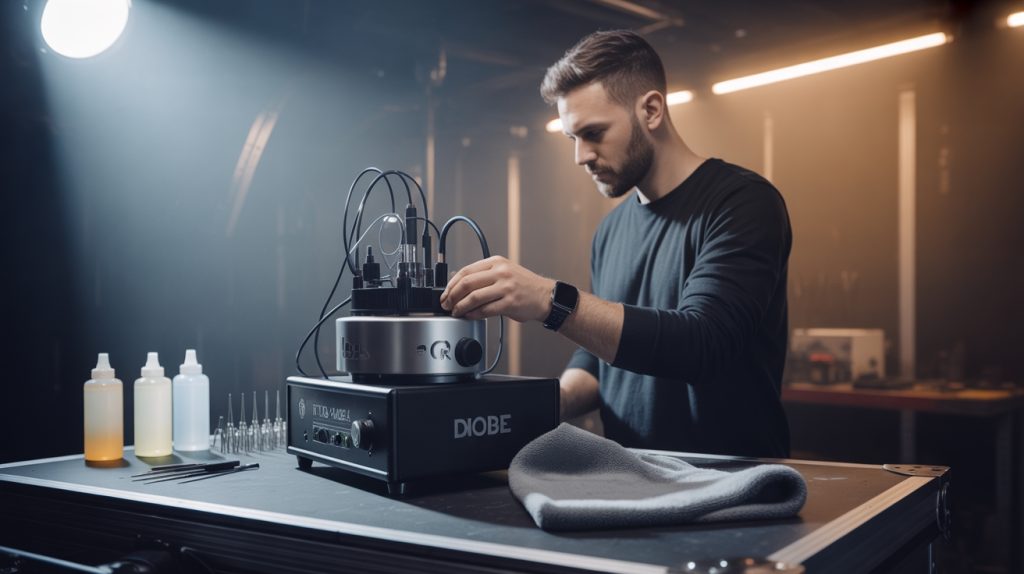
After each performance concludes, you’ll need to begin the cleaning sequence immediately while the machine remains warm. First, disconnect the power and allow the heating element to cool for ten minutes.
Remove any residual fog fluid from the tank using a clean syringe or pump. Fill the tank with distilled water and run a complete cycle to flush internal components. This prevents fluid crystallization that blocks nozzles and damages pumps. Regular cleaning enhances the longevity of the fog machine and ensures it operates at peak performance.
Next, drain the water completely and wipe down all external surfaces with a damp microfiber cloth.
Check the fog output nozzle for clogs—clear any obstructions with compressed air. Inspect fluid lines for leaks or residue buildup. If you notice reduced output or unusual sounds, these indicate internal contamination requiring deeper maintenance before your next event.
Proper Fluid Selection and Storage Guidelines
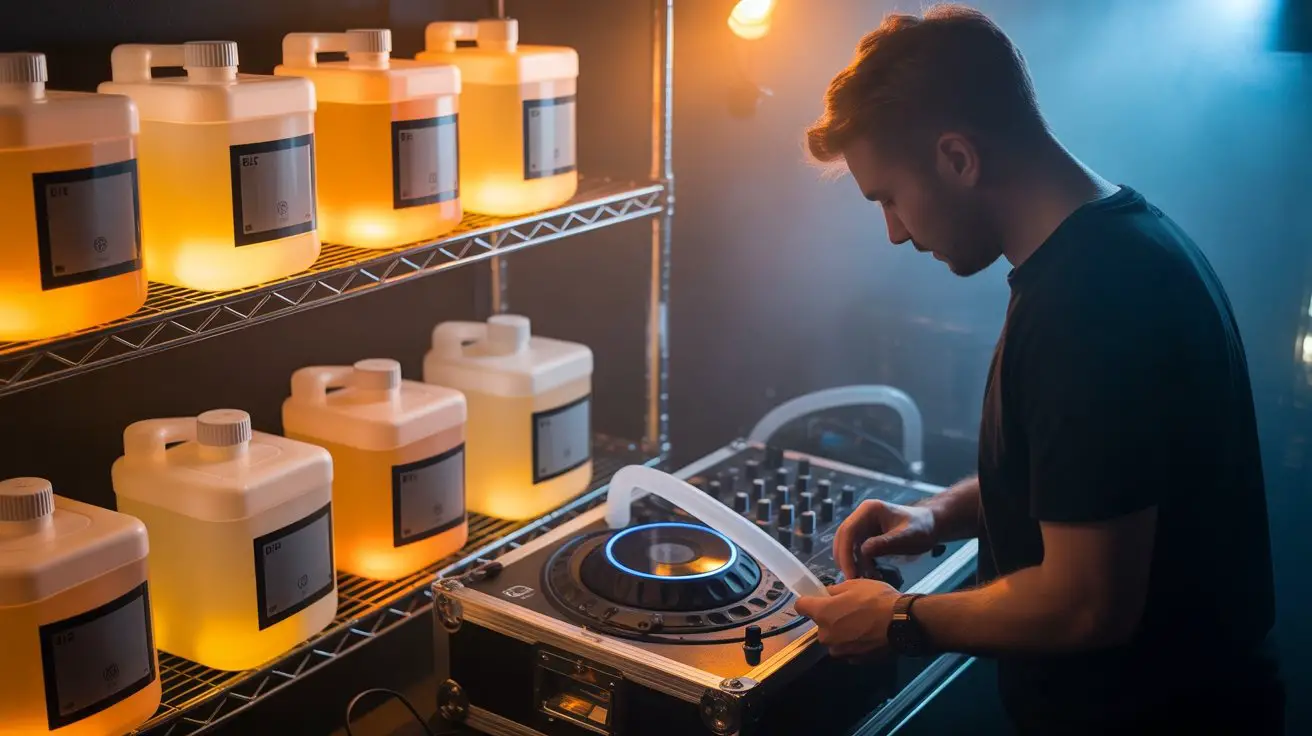
Since fog fluid composition directly affects machine performance and longevity, you must select the correct formula for your specific equipment model.
Water-based fluids contain glycol and distilled water, while oil-based formulas use mineral oil. Check your manual to determine compatibility and avoid costly damage.
Follow these storage guidelines:
- Store fluids in original containers – Prevents contamination and maintains proper chemical composition
- Maintain temperature between 50-80°F – Extreme temperatures alter viscosity and trigger premature breakdown
- Keep containers sealed tight – Exposure to air causes fluid degradation and reduces fog output quality
- Rotate stock using first-in-first-out method – Prevents using expired fluid that’ll clog your machine’s heating element
Never mix different fluid types or brands, as chemical incompatibility causes residue buildup that blocks internal components. Additionally, using glycerin-based smoke fluid can enhance fog density and improve effects at your events.
Transportation and Setup Best Practices
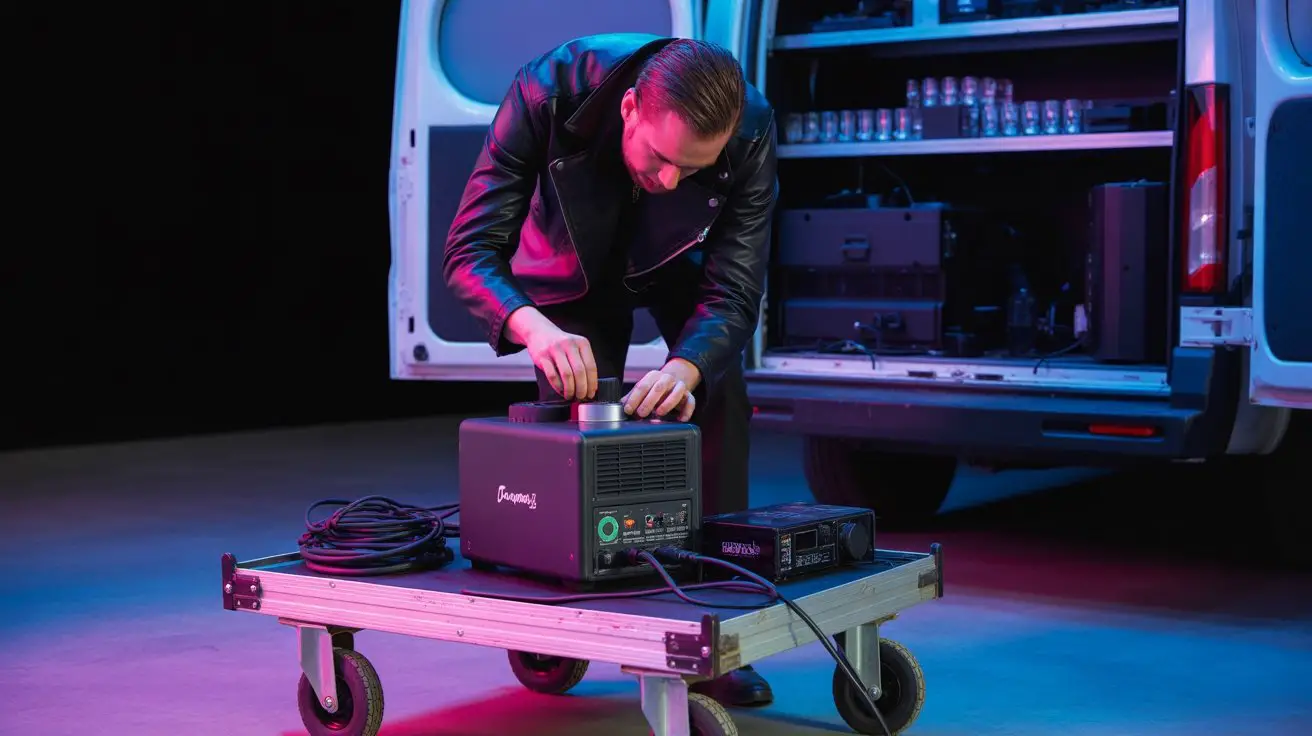
Whether you’re moving your fog machine between venues or setting it up for the first time, proper handling prevents internal damage and guarantees reliable performance.
Always drain the fluid tank before transport to prevent spillage and pump damage. Secure all detachable components and use padded cases to absorb shock during transit.
During setup, position your machine on stable, level surfaces away from high-traffic areas. Confirm adequate ventilation around heating elements and maintain minimum clearance distances specified in your manual.
Check power requirements match venue outlets before plugging in. Prime the pump system by running a test cycle before your event begins. If fog output appears weak or inconsistent, verify fluid levels and inspect nozzle connections for loose fittings that may have shifted during transport. Regular cleaning frequency is essential to ensure optimal performance and longevity of your fog machine.
Regular Inspection of Internal Components
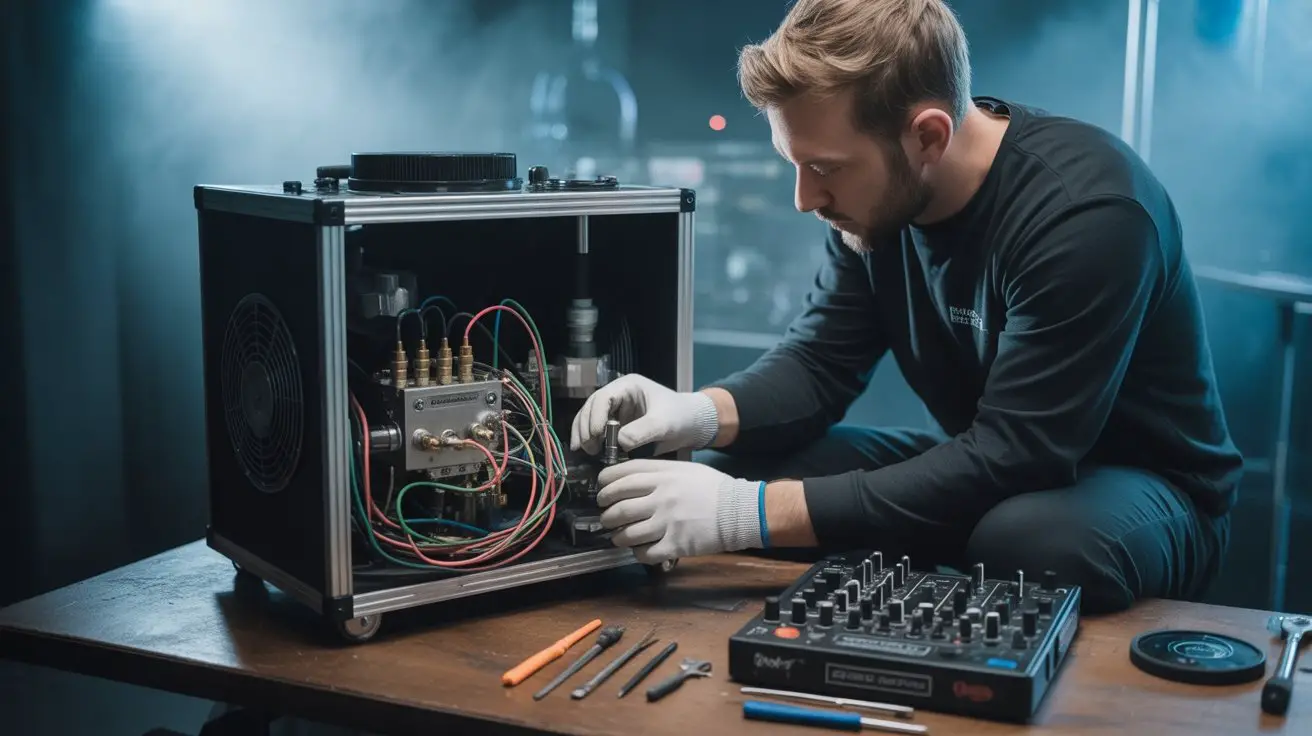
While external maintenance keeps your fog machine looking professional, internal component inspection prevents costly breakdowns and guarantees consistent performance.
You’ll need to check critical systems that directly impact fog output quality and machine reliability. Unplug the machine and let it cool fully before opening the case.
- Heat Exchanger Block – Inspect for fluid residue buildup and mineral deposits that reduce heating efficiency. Clean with distilled water when cool.
- Pump Assembly – Check tubing connections for leaks or cracks. Verify pump draws fluid consistently without air bubbles or irregular flow patterns.
- Internal Wiring – Examine power connections for corrosion, loose terminals, or damaged insulation that could cause electrical failures.
- Thermostat Sensor – Test temperature accuracy with an infrared thermometer. Replace if readings deviate beyond manufacturer specifications, preventing overheating damage. Regular cleaning, such as using distilled water and vinegar, helps maintain optimal performance and prevent clogging.
Troubleshooting Common Performance Issues
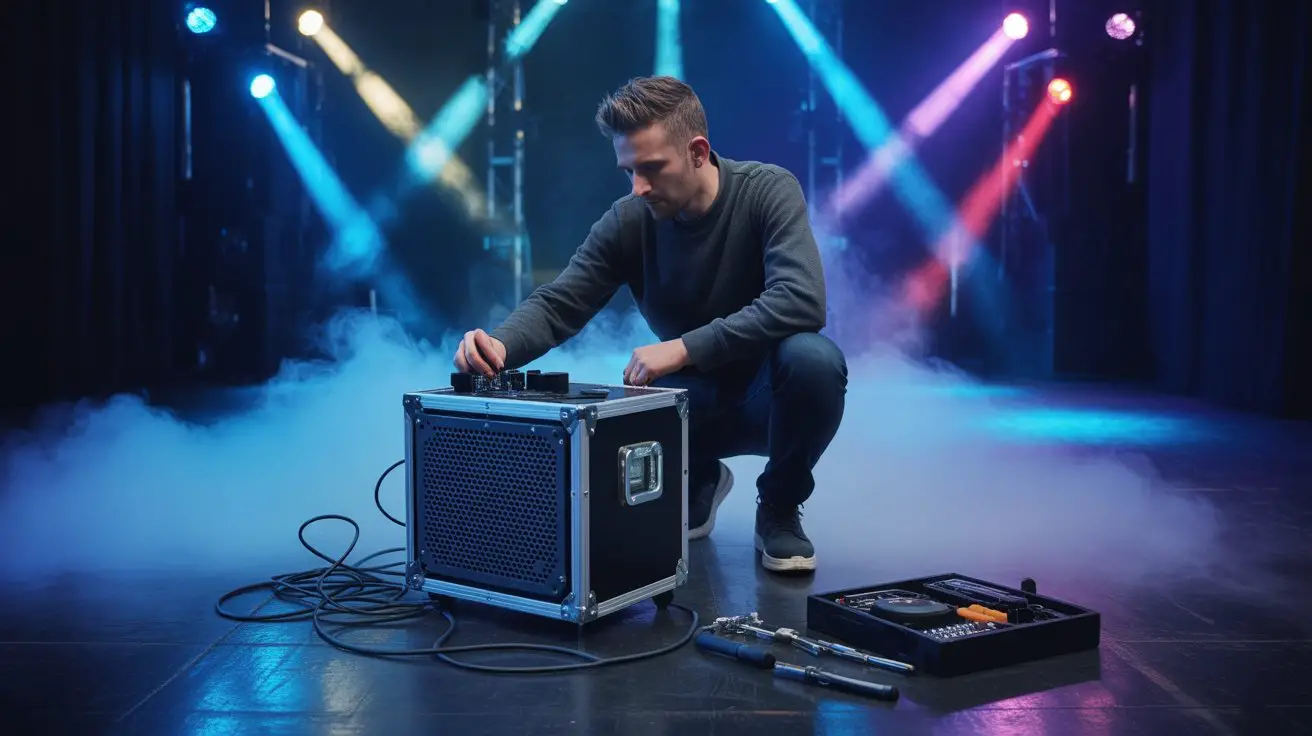
When your fog machine fails to produce adequate output or behaves erratically, systematic diagnosis identifies the root cause faster than random component replacement. Start by checking fluid levels and pump operation before examining heating elements and temperature sensors.
| Symptom | Primary Cause |
|---|---|
| Weak fog output | Clogged fluid lines or worn pump |
| No fog production | Heating element failure or empty tank |
| Intermittent operation | Temperature sensor malfunction |
You’ll find that most performance issues stem from fluid blockages or heating system failures. Test the pump’s priming function first—if it’s not drawing fluid properly, you’ve identified your problem. Check heating element continuity with a multimeter, ensuring it reaches ideal operating temperature. Replace worn seals that cause pressure loss, and verify all electrical connections remain secure throughout your diagnostic process. Regular cleaning and maintenance can help prevent many of these issues from arising in the first place.
Long-Term Storage Techniques Between Seasons
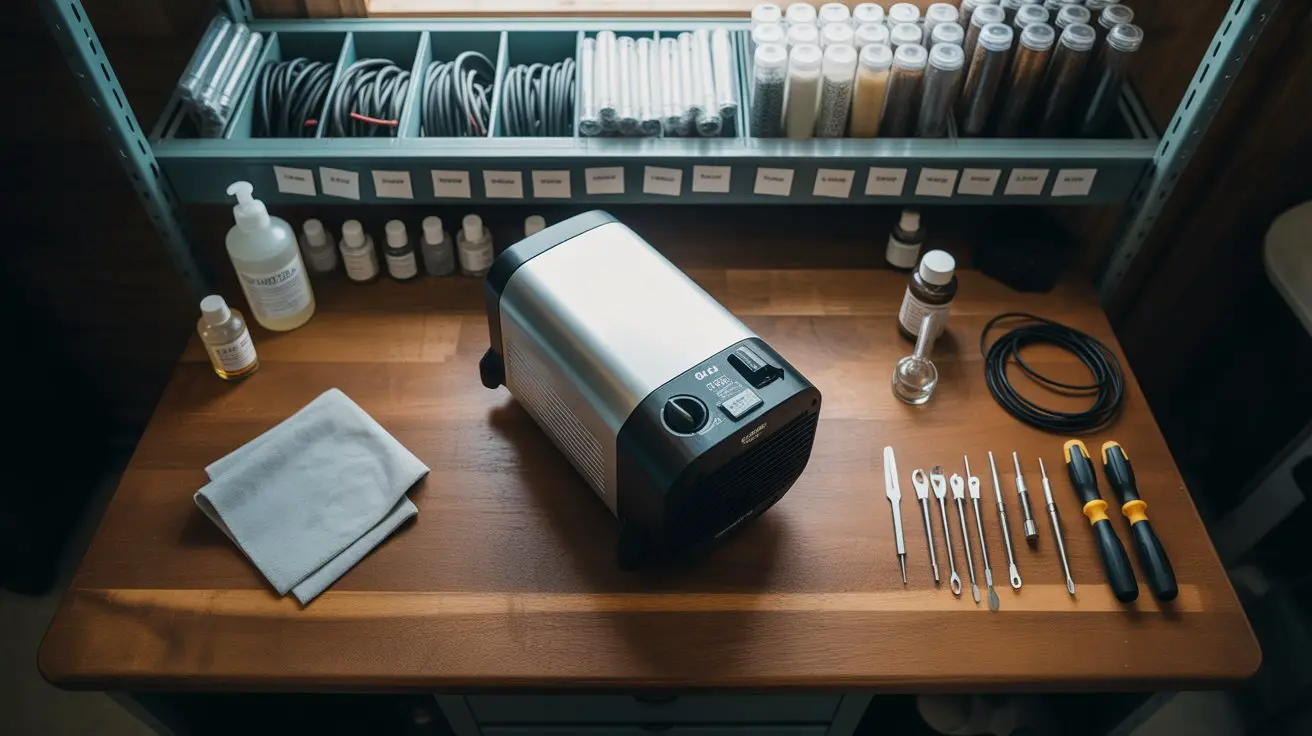
After resolving performance problems, proper storage procedures protect your fog machine’s internal components during extended periods of inactivity.
You’ll prevent costly repairs and guarantee reliable operation when performance season returns.
- Drain all fluid completely – Run distilled water through the heating chamber until no fog fluid remains, then operate until the chamber’s completely empty to prevent residue buildup.
- Clean the fluid tank thoroughly – Remove the tank, wash with warm soapy water, rinse completely, and dry before storage to eliminate bacterial growth.
- Store in climate-controlled environment – Maintain temperatures between 40-80°F with low humidity to prevent condensation damage and component corrosion.
- Secure original packaging – Use manufacturer’s foam inserts and boxes to protect delicate heating elements during transport and storage.
Preventive Maintenance Schedule for Peak Performance
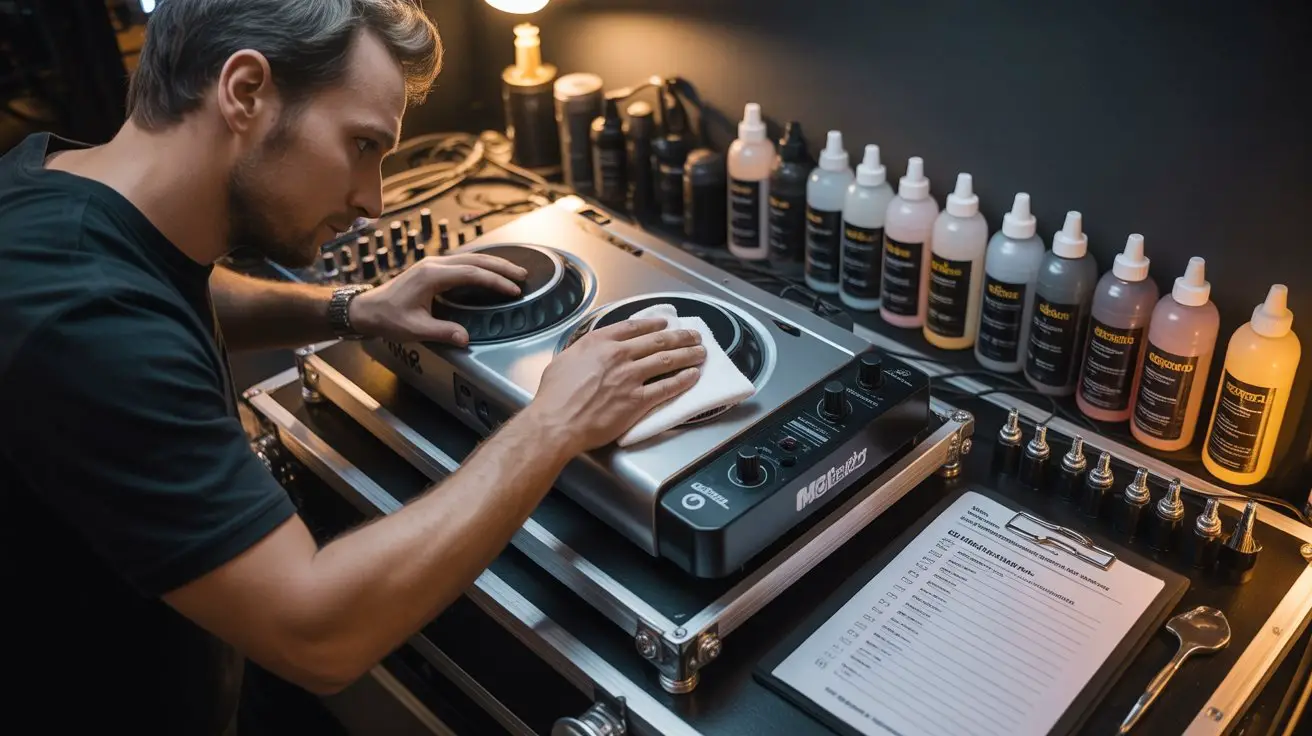
Three distinct maintenance intervals—daily, weekly, and seasonal—form the backbone of any professional fog machine’s reliability program.
Daily checks include fluid level verification, heat-up time monitoring, and output density assessment. You’ll catch pump irregularities and heating element degradation before they cause gig failures.
Weekly maintenance involves thorough cleaning cycles with distilled water flushes, pump seal inspection, and electrical connection checks. Document temperature readings and output consistency patterns—these metrics reveal developing problems.
Seasonal overhauls require complete disassembly for deep cleaning, pump replacement evaluation, and internal component inspection.
Replace worn seals, clean mineral deposits from heating chambers, and calibrate temperature controls. You’ll extend machine lifespan considerably while preventing mid-performance breakdowns that damage your professional reputation.
Frequently Asked Questions
Can Fog Machines Be Used Outdoors in Windy Conditions?
You can’t effectively use fog machines outdoors when wind speeds exceed 10-15 mph. Wind disperses fog rapidly, reducing visibility effects. Position machines downwind from audiences and use windbreaks or enclosed spaces for best performance.
How Much Fog Fluid Should I Budget per Event?
You’ll need 1-2 liters for standard 4-hour events. Continuous running uses fluid much faster than short bursts. Factor in venue size, desired density, and ventilation rates. Always bring 50% extra fluid for equipment troubleshooting and unexpected extended runtime requirements.
Are There Fire Safety Regulations for Fog Machines at Venues?
Your atmospheric enhancement devices face regulatory scrutiny at most venues. You’ll encounter fire marshal restrictions, sprinkler system interference protocols, and evacuation route clearance requirements. Always verify venue-specific fog machine policies before setup to avoid operational shutdowns.
Can Fog Machines Trigger Smoke Alarms or Sprinkler Systems?
Yes, fog machines can trigger photoelectric smoke detectors and sprinkler systems. You’ll need to position units away from sensors, use water-based fluids, and test density levels before events to prevent false alarms.
What Insurance Coverage Do I Need for Fog Machine Equipment?
Your insurance portfolio’s your safety net when fog machines malfunction. You’ll need general liability coverage for property damage, equipment insurance for stolen units, and professional liability protection. Verify your policy specifically covers atmospheric effects equipment before operating.
Conclusion
You’ll extend your fog machine’s lifespan considerably when you implement these maintenance protocols consistently. Don’t skip the post-event flushing procedure—fluid residue is a common cause of clogs and early heating element failures. Follow your preventive maintenance schedule religiously, inspect components for wear patterns, and troubleshoot issues immediately when they surface. Your investment in proper maintenance procedures will prevent costly repairs and guarantee reliable fog output throughout your DJ career.