You’ll select your fog machine, position it strategically, and time its operation perfectly to transform your ordinary yard into a spine-chilling Halloween spectacle. Professional-grade theatrical foggers deliver superior output compared to basic consumer units, but they require specific fluid types and proper electrical configurations. Your fog machine’s placement determines whether you’ll achieve that eerie ground-hugging effect or create towering walls of mist. However, one critical mistake in setup can render your entire display ineffective and potentially hazardous.
Types of Fog Machines for Outdoor Halloween Displays
When selecting a fog machine for your outdoor Halloween display, you’ll need to evaluate three primary types based on their fog generation method and output capacity.
Water-based fog machines heat fog fluid to create dense, white vapor that dissipates within minutes. They’re ideal for ground-level effects and require standard electrical outlets. Output ranges from 1,000 to 5,000 cubic feet per minute.
Dry ice machines produce low-lying fog that hugs surfaces without rising. You’ll need continuous dry ice supplies and proper ventilation due to CO2 displacement risks.
Oil-based hazers create thin, lingering atmospheric effects lasting hours. They’re perfect for backlighting but require higher-grade fluids and generate less visible density than water-based units. Fog machines are considered safer for family-friendly displays, since they avoid the frostbite and carbon dioxide risks of dry ice.
Consider wind patterns and power requirements when choosing your machine type.
Choosing the Right Fog Fluid for Your Spooky Effects

While fog machines create the foundation for your Halloween atmosphere, the fluid you select determines the visual impact, duration, and safety of your spooky effects.
Water-based fluids remain the safest choice for outdoor displays, producing dense, lingering fog that’s non-toxic and biodegradable. Oil-based fluids generate longer-lasting effects but require proper ventilation and cleanup considerations.
Consider these critical factors when selecting fog fluid:
- Density specifications – Thick fluids create ground-hugging effects, while thin formulations disperse quickly for ambient coverage.
- Hang time ratings – Premium fluids maintain visibility for 10-15 minutes versus standard options lasting 3-5 minutes.
- Temperature compatibility – Cold-weather formulations prevent nozzle clogging below 40°F.
Additionally, understanding the different types of liquid used in fog machines can enhance your selection process.
Always use manufacturer-recommended fluids to prevent machine damage and guarantee peak performance throughout your Halloween display.
Strategic Placement and Positioning Techniques

With your fog fluid selected, proper machine placement transforms ordinary Halloween setups into spine-chilling theatrical experiences. Position your fog machine 12-18 inches above ground level for ideal coverage and safety. Place units upwind from your display area, allowing natural air currents to distribute fog effectively across your scene. Additionally, understanding the operation of fog machines ensures that you create a safe and immersive atmosphere for your Halloween festivities.
| Placement Zone | Distance from Props | Height Setting | Safety Clearance |
|---|---|---|---|
| Ground Level | 3-5 feet | 12-18 inches | 6 feet from walkways |
| Elevated Areas | 2-4 feet | 24-36 inches | 8 feet from power lines |
| Behind Objects | 1-3 feet | 6-12 inches | 4 feet from vegetation |
| Corner Positions | 4-6 feet | 18-24 inches | 10 feet from structures |
Avoid positioning machines near electrical outlets, walkways, or flammable decorations to prevent accidents.
Creating Low-Lying Ground Fog Effects

To achieve that classic cemetery-ground fog effect, you’ll need to cool your fog machine’s output using either dry ice chambers or commercial fog chillers. The cooled fog becomes denser than ambient air, creating that spine-tingling ground-hugging effect that transforms your Halloween display.
Here are three essential setup requirements:
- Position your fog machine 2-3 feet above ground level – this allows adequate cooling distance before the fog reaches the surface.
- Install wind barriers around your fog zone – use plywood sheets or tarps to prevent dispersal from air currents.
- Maintain your chiller’s ice supply consistently – refill every 30-45 minutes for continuous low-lying coverage. Additionally, ensure that your fog machine is compatible with the fog chiller design to maximize fog density and performance.
Monitor ambient temperature and humidity levels, as these factors directly impact fog density and ground-hugging performance throughout your Halloween event.
Timing Your Fog Machine for Maximum Scare Factor

Strategic fog deployment creates maximum atmospheric impact when you synchronize machine activation with key scare moments in your Halloween display.
Program your fog machine’s timer function to release bursts 30 seconds before trick-or-treaters approach motion sensors. This pre-timing guarantees ideal fog density when visitors trigger your scares.
Install remote controls or DMX controllers for precise activation timing. Position fog machines upwind from high-traffic areas, allowing 15-20 seconds for proper dispersion.
Coordinate fog release with sound effects, animatronics, or lighting changes for layered scares.
Monitor fluid levels hourly during peak hours—running dry mid-scare ruins the effect. Use interval settings rather than continuous output to conserve fog juice and prevent overwhelming your display area.
Test timing sequences before guests arrive. Additionally, be aware that fog machines can potentially trigger fire alarms due to photoelectric smoke detectors, which may misinterpret fog as smoke.
Safety Considerations for Outdoor Fog Machine Use
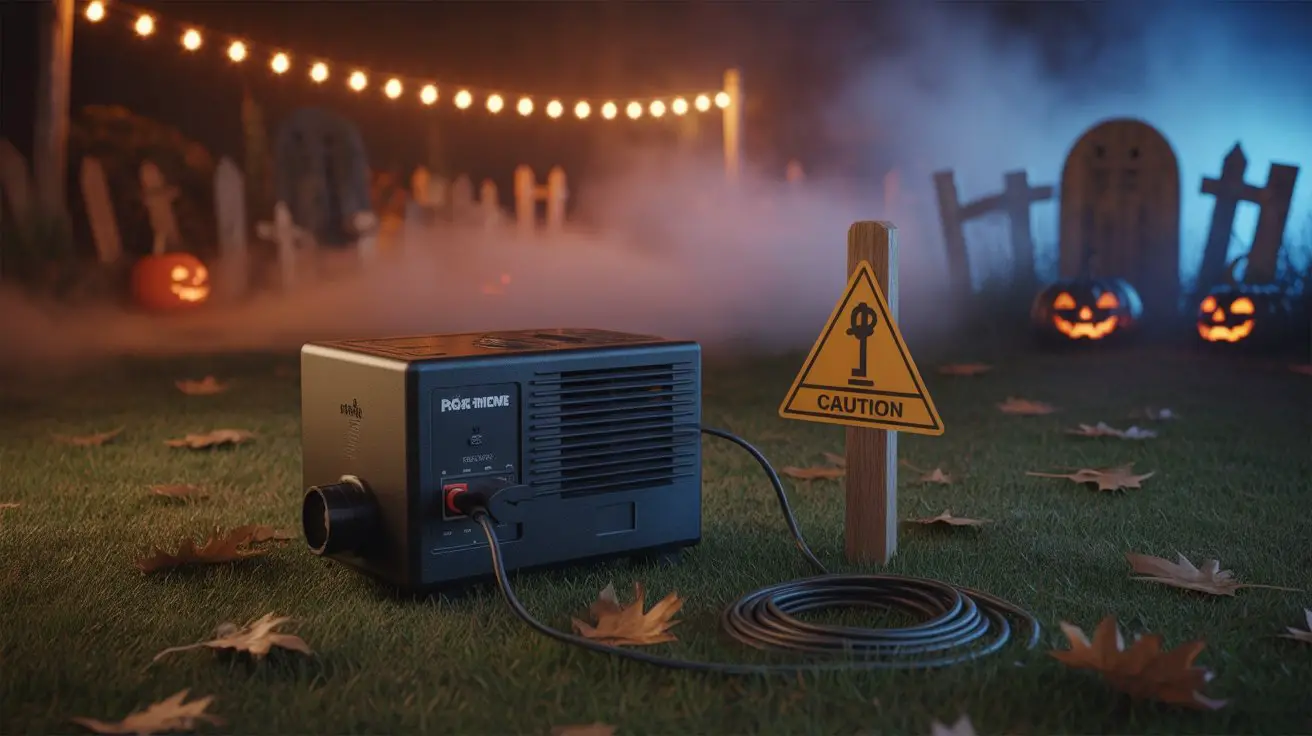
While timing your fog effects creates impressive scares, operating fog machines outdoors requires specific safety protocols to protect both your equipment and visitors.
You’ll need weatherproof GFCI outlets and covered extension cords rated for outdoor use. Position machines away from walkways to prevent slip hazards on wet surfaces.
Essential outdoor safety measures include:
- Electrical Protection: Use waterproof cord connections and elevate power strips above ground level.
- Visibility Management: Install pathway lighting to guide visitors safely through fog-covered areas.
- Equipment Positioning: Place machines on stable, level surfaces away from decorative elements and foot traffic.
Monitor wind conditions continuously—strong gusts can blow fog unpredictably or push moisture back into electrical components.
Keep machines covered when not in use to prevent moisture damage.
Weather Protection and Power Setup Tips
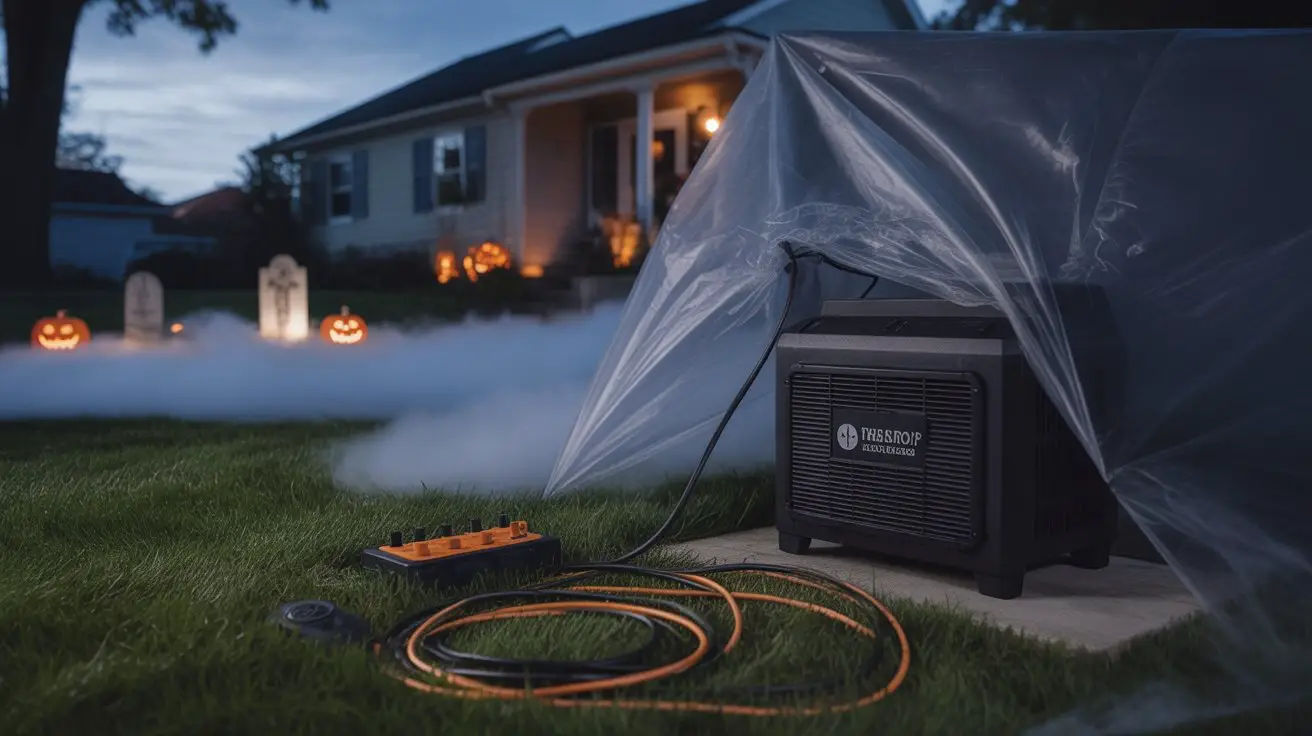
Since outdoor fog machines face constant exposure to moisture and temperature fluctuations, you’ll need robust weatherproofing strategies that go beyond basic electrical safety.
Position your fog machine under covered areas like porches or gazebos to shield it from direct precipitation. Use weatherproof electrical enclosures for all connections and guarantee GFCI protection on every outlet.
Run heavy-duty outdoor extension cords rated for your machine’s amperage requirements—typically 15 amps for residential units. Secure all cables with cord protectors to prevent tripping hazards and moisture infiltration.
Install your power source at least three feet from the fog output to prevent electrical components from moisture exposure. Test all connections before guests arrive, and keep backup fuses readily accessible.
Maintenance and Troubleshooting Common Issues
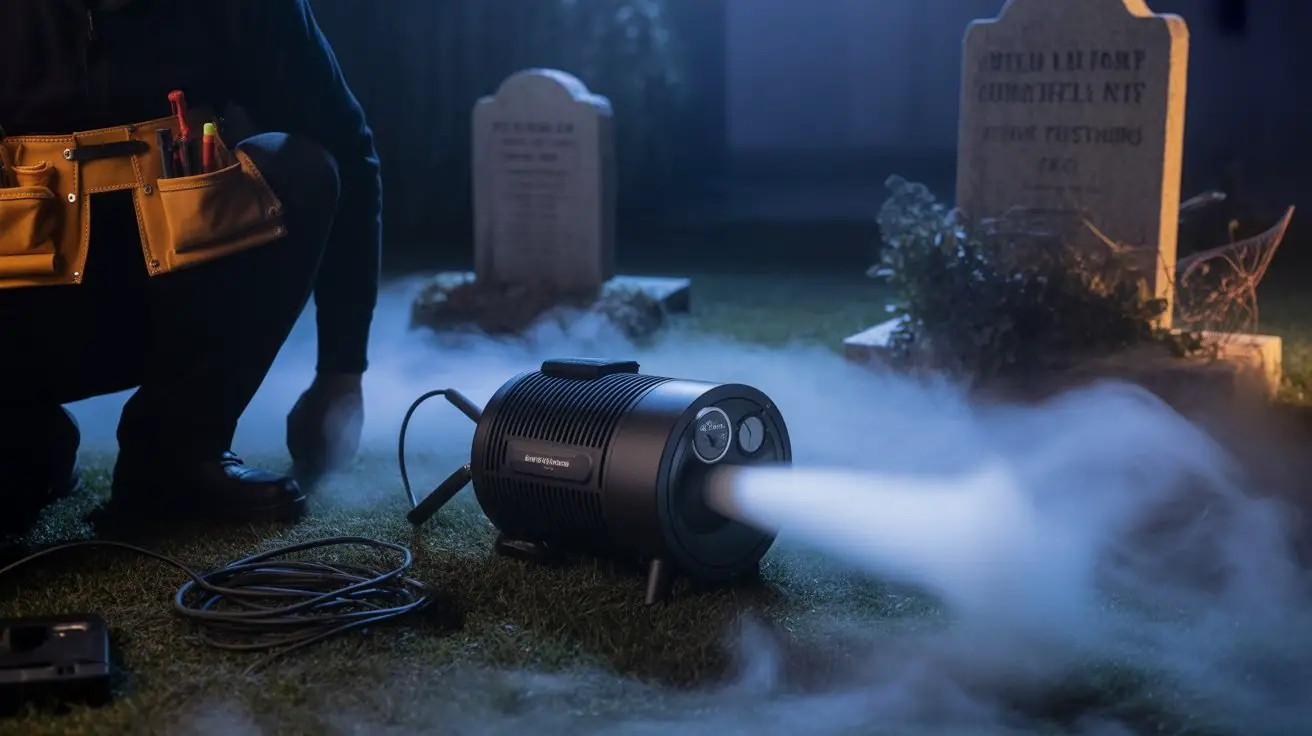
Regular maintenance prevents most fog machine failures and extends equipment lifespan considerably.
Clean your machine after each use by flushing the heating chamber with distilled water to remove fog fluid residue. Store equipment in a dry location with all fluid drained from the reservoir.
When troubleshooting common problems, check these critical areas:
- No fog output – Verify fluid levels, check pump operation, and guarantee heating element reaches proper temperature.
- Weak fog production – Clean clogged nozzles, replace worn pump seals, and use fresh fog fluid.
- Machine won’t power on – Inspect fuses, test power connections, and examine control board connections.
Address pump failures immediately by checking fluid lines for blockages.
Replace heating elements showing visible damage or inconsistent temperature readings.
Frequently Asked Questions
Can I Use a Fog Machine Indoors and Outdoors With the Same Setup?
You’ll need different setups for indoor versus outdoor fog machines. Indoor units require proper ventilation and electrical safety considerations, while outdoor models need weatherproofing and higher fluid capacity for dispersal effectiveness.
How Much Does It Cost to Run a Fog Machine All Night?
Most fog machines consume 400-1000 watts hourly. You’ll spend $2-8 running yours all night, depending on your local electricity rates and machine specifications. Check your unit’s wattage rating and calculate costs using your utility provider’s per-kilowatt pricing.
Will Fog Machines Trigger Smoke Detectors in Nearby Homes?
Fog machines can trigger photoelectric smoke detectors if vapor drifts through windows or vents. You’ll need to maintain proper distance, use water-based fog fluid, and guarantee adequate ventilation to prevent false alarms in neighboring properties.
Can I Add Scents or Colors to My Fog Machine Fluid?
Don’t add scents or colors directly to fog fluid—you’ll damage your machine’s heating element and void warranties. Use dedicated fog fluid with built-in scents, or position separate scent dispensers and colored lights around your fog output.
Do I Need Permits to Use Fog Machines in My Yard?
Most municipalities don’t require permits for residential fog machines. You’ll need to check local fire codes and HOA restrictions. Keep machines away from smoke detectors and guarantee adequate ventilation for safe operation.
Conclusion
You’ve mastered the technical aspects of fog machine deployment for maximum Halloween impact. A simple setup works well: a 400-watt machine placed upwind, chilled water-based fluid, and 30-second bursts every two minutes. Remember: maintain your equipment’s heating element, monitor ambient temperature readings, and always verify your GFCI protection before each operating session.