Should you turn off your humidifier in the summer? In most homes, yes. Summer air usually carries plenty of moisture, and running a humidifier on top of it can push indoor humidity high enough to feed mold and dust mites.
The real answer depends on your indoor humidity, not the calendar. Here’s the one rule to follow, plus how to put your humidifier away properly.
The Rule: Let a Hygrometer Decide
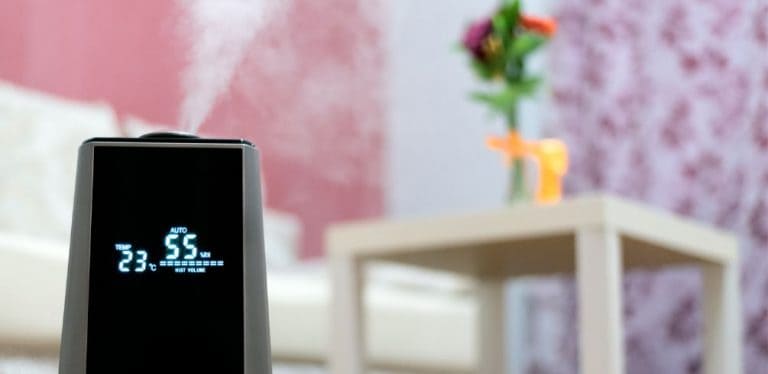
A hygrometer is a small, inexpensive gauge that shows your indoor relative humidity (RH). Many humidifiers have one built in, but a separate one placed across the room gives a truer reading.
The EPA recommends keeping indoor humidity between 30% and 50%. If the room reads below 30%, run the humidifier until it’s back in range; if it reads 50% or higher, turn it off.
Why Most Humidifiers Should Be Off in Summer
Warm air holds more moisture than cold air, so summer air is usually humid already. Adding more can push indoor humidity past 50%, where dust mites thrive and mold can start growing on walls, windowsills and in closets.
High humidity also makes a room feel hotter, because sweat evaporates more slowly from your skin. Your air conditioner then has to work harder to pull that extra moisture back out.
When a Summer Humidifier Still Makes Sense
Some homes stay dry in summer, especially in desert climates or rooms where the air conditioning runs nonstop. If your hygrometer keeps reading below 30%, it’s fine to run the humidifier with its humidistat set inside the 30-50% range, such as 40%.
Keep checking the hygrometer. Turn the humidifier off if you see condensation on the windows or the reading climbs past 50%.
If you do run it, clean it often. Warm rooms help bacteria and mold grow in standing water, so empty and dry the tank daily, follow the maker’s cleaning schedule, and fill it with cool water (distilled water cuts down on white mineral dust).
How to Keep Your Home Comfortable in Summer
If your home feels damp instead of dry, you need the opposite tool. Let your air conditioner run, since it removes moisture as it cools, and use your bathroom and kitchen exhaust fans.
In a basement or a muggy climate, a dehumidifier can bring indoor humidity back under 50%. Our dehumidifier size calculator can help you pick the right size.
How to Store Your Humidifier for the Summer
Once you’ve switched it off for the season, don’t leave water in the tank. Stagnant water grows mold and bacteria that the humidifier will spray into the air the next time you turn it on.
- Unplug it and empty the tank and base.
- Clean and descale it the way your manual says (many makers suggest white vinegar for scale), then rinse well.
- Throw out a used wick filter rather than storing it damp, and buy a fresh one for fall.
- Let every part air-dry completely.
- Store it in its box in a cool, dry place.
In the fall, give it a quick rinse and put in a new filter if it uses one before the first fill.
The Bottom Line
Turn your humidifier off in summer unless your hygrometer says the air is dry. Keep indoor humidity between 30% and 50%, and clean and dry the humidifier completely before you store it.

Please be careful and use at your own risk
None of the authors, contributors, administrators, or anyone else connected with Wild Fog, in any way whatsoever, can be responsible for your use of the information contained in or linked from these web pages.