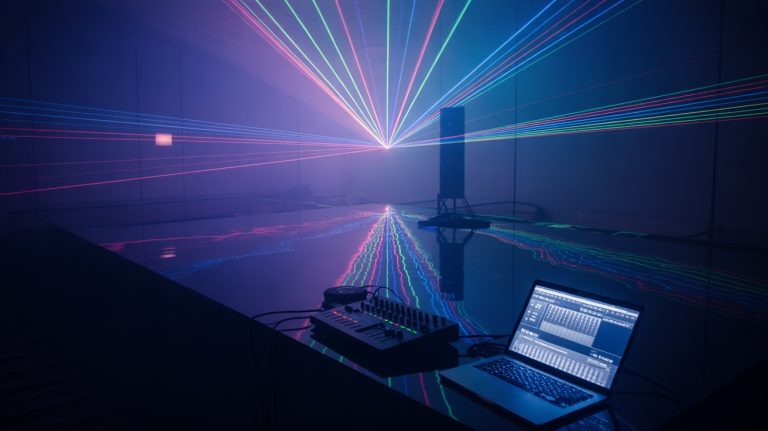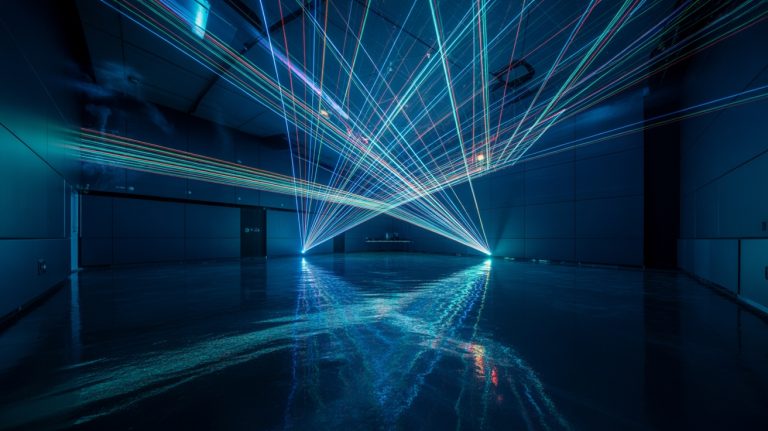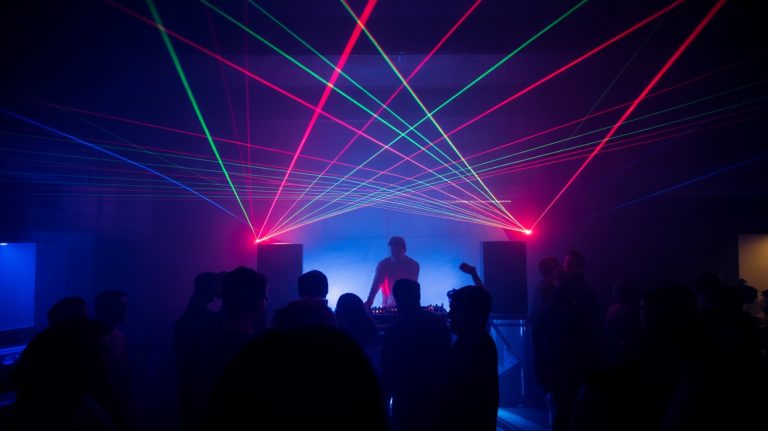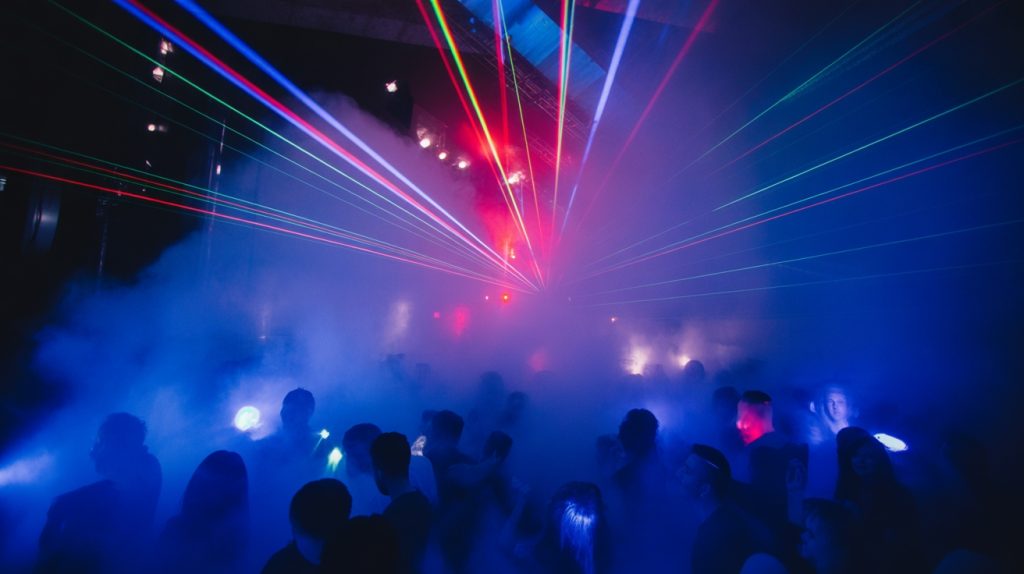
You’ll need to understand the technical specifications behind fog machines, laser classifications, and lighting synchronization systems before investing in party effects equipment. Water-based fog machines produce different particle densities than oil-based units, while Class 3A lasers require specific safety protocols that Class 2 systems don’t. Your lighting controller’s DMX capabilities will determine whether you can achieve seamless audio-reactive programming or you’ll be limited to basic static patterns that won’t captivate your audience.
Understanding Fog Machine Types and Their Applications
Fog machines transform ordinary venues into atmospheric spectacles through distinct operational mechanisms that determine their suitability for specific applications.
You’ll encounter three primary types: water-based, oil-based, and dry ice machines.
Water-based units heat glycol or glycerin solutions, producing dense, lingering fog that’s ideal for dance floors and theatrical productions.
Oil-based machines create finer particles with extended hang time, perfect for laser light enhancement and photography.
Dry ice machines sublimate frozen carbon dioxide, generating low-lying fog that hugs surfaces—excellent for ground-level effects and spooky atmospheres. Handle dry ice with insulated gloves and keep the room ventilated, since that low fog is carbon dioxide.
Consider your venue’s ventilation, desired fog density, and dissipation rate when selecting equipment. The fog density produced by the machine can significantly impact the overall atmosphere of your event.
Water-based machines offer the most versatility for general party applications, while specialized events may require targeted solutions.
Safety Considerations When Using Fog Effects
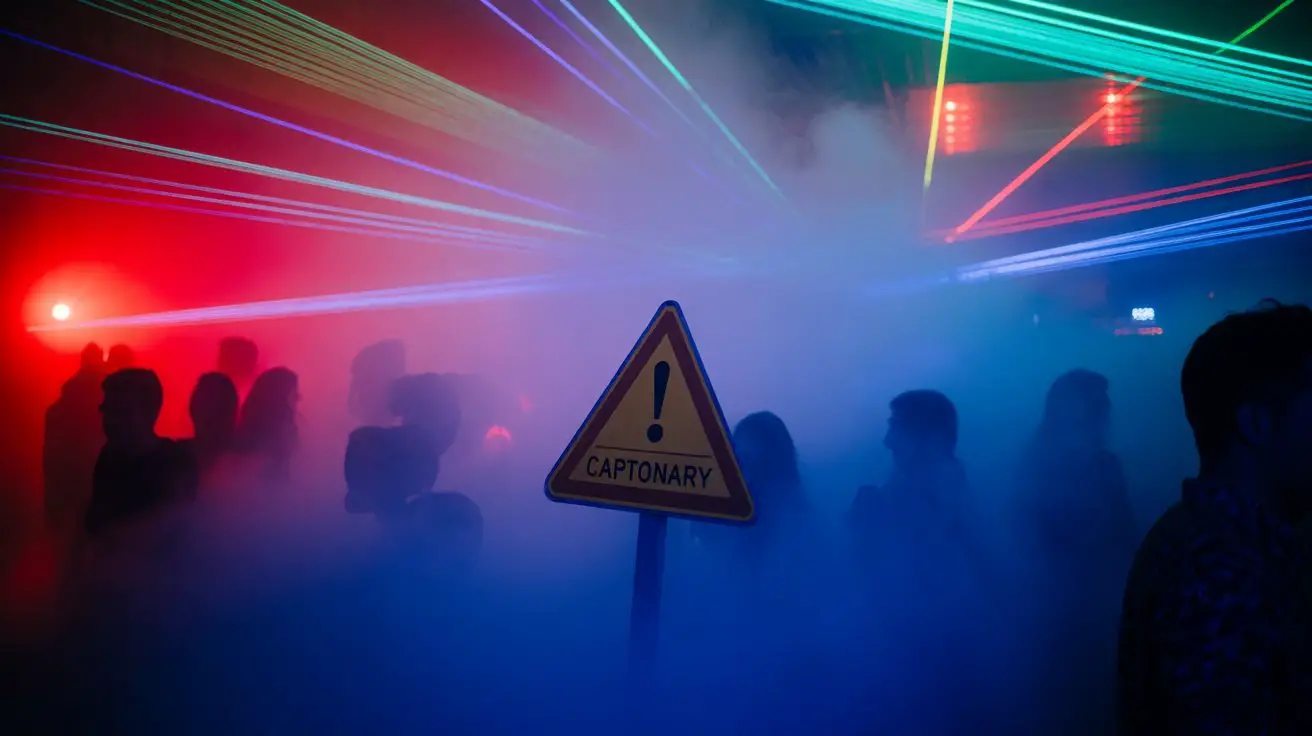
While selecting the appropriate fog machine establishes your atmospheric foundation, operating these devices requires adherence to specific safety protocols that protect both performers and audiences.
You’ll need adequate ventilation to prevent fog accumulation that could obscure emergency exits or trigger smoke detectors. Position machines away from heat sources and maintain proper fluid levels to prevent overheating.
Use only manufacturer-approved fog fluids, as substitutes can produce toxic vapors or damage equipment. Choose machines with built-in thermal protection, and make sure electrical connections meet venue codes.
You should establish clear sight lines for emergency personnel and post visible warnings about fog effects. Test all equipment before events and designate trained operators to monitor systems throughout performances. Additionally, ensure that you are aware of the potential risks associated with prolonged exposure to fog, especially for those with respiratory conditions.
Laser Light Categories and Color Options
Understanding laser classifications becomes essential as you shift from atmospheric effects to precise light projection systems.
You’ll encounter three primary laser categories for entertainment applications, each with distinct safety requirements and operational parameters.
Laser Classification Categories:
- Class 3R Lasers (1-5mW) – Consumer-grade systems offering basic beam effects with minimal safety requirements, suitable for home parties and small venues.
- Class 3B Lasers (5-500mW) – Professional-grade units requiring controlled access and safety protocols, delivering vibrant aerial effects and complex patterns.
- Class 4 Lasers (>500mW) – Industrial-strength systems demanding thorough safety measures, producing brilliant beam shows visible across large venues.
Color options span the visible spectrum, with green (532nm) providing maximum visibility, red (650nm) offering warmth, and blue (445nm) delivering striking contrast.
RGB systems combine multiple wavelengths for dynamic color mixing capabilities.
Positioning Lasers for Maximum Visual Impact
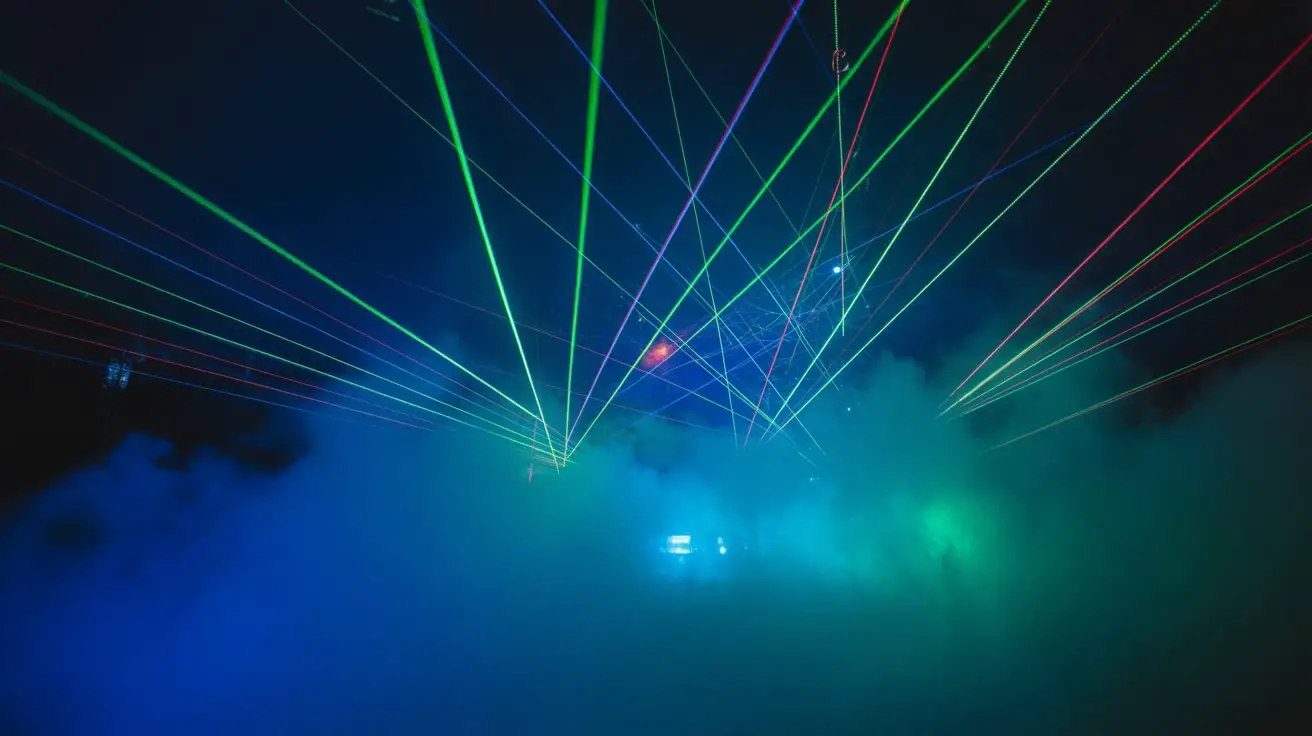
Strategic laser placement transforms basic light projection into enthralling visual experiences that command audience attention. You’ll achieve peak impact by positioning lasers at varying heights—mount units overhead for sweeping aerial beams, place them at ground level for upward projections, and install mid-level fixtures for horizontal patterns. Corner positioning creates dynamic convergence points where multiple beams intersect. Keep beams well above head height, and never aim them at faces, aircraft, or cameras. Consider your venue’s architecture when positioning—use walls, ceilings, and structural elements as projection surfaces. Space multiple units 6-8 feet apart to prevent beam overlap. For fog-enhanced environments, position lasers to cut through haze at different depths, creating layered visual dimension that captivates audiences throughout your event space. Additionally, using fog machines in combination with lasers can greatly enhance the overall visual effect by adding depth and texture to your lighting design.
Dynamic Lighting Systems That Sync With Music
When audio signals trigger lighting responses in real-time, you’ll create synchronized spectacles that elevate parties beyond standard illumination.
Professional DMX controllers analyze frequency ranges and convert sound into precise lighting commands, enabling seamless coordination between beats and visual effects.
Modern systems offer three essential capabilities:
- Frequency-based triggering – Bass frequencies activate strobes while mid-range tones control color changes and high frequencies manage beam movements.
- Beat detection algorithms – Automatic tempo recognition guarantees lights pulse exactly with rhythm changes, maintaining synchronization during shifts.
- Multi-zone programming – Independent control of different lighting areas allows complex layered effects that respond to various instrumental elements simultaneously.
You’ll achieve ideal results by calibrating sensitivity thresholds and mapping specific frequency bands to designated fixture groups, creating immersive environments where sound and light merge seamlessly.
Creating Layered Effects by Combining All Three Elements
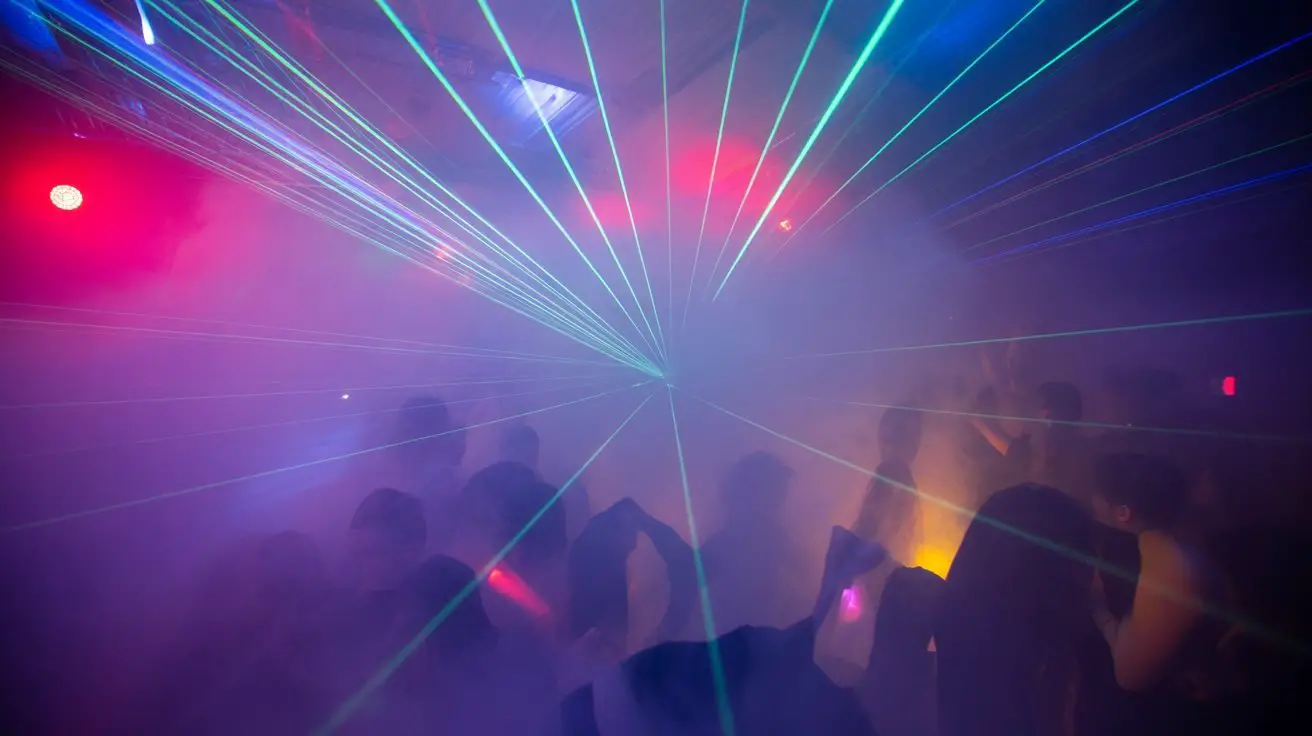
Mastering individual lighting techniques provides the foundation for sophisticated multi-layered effects that combine strobing, color manipulation, and synchronized audio response into cohesive visual experiences.
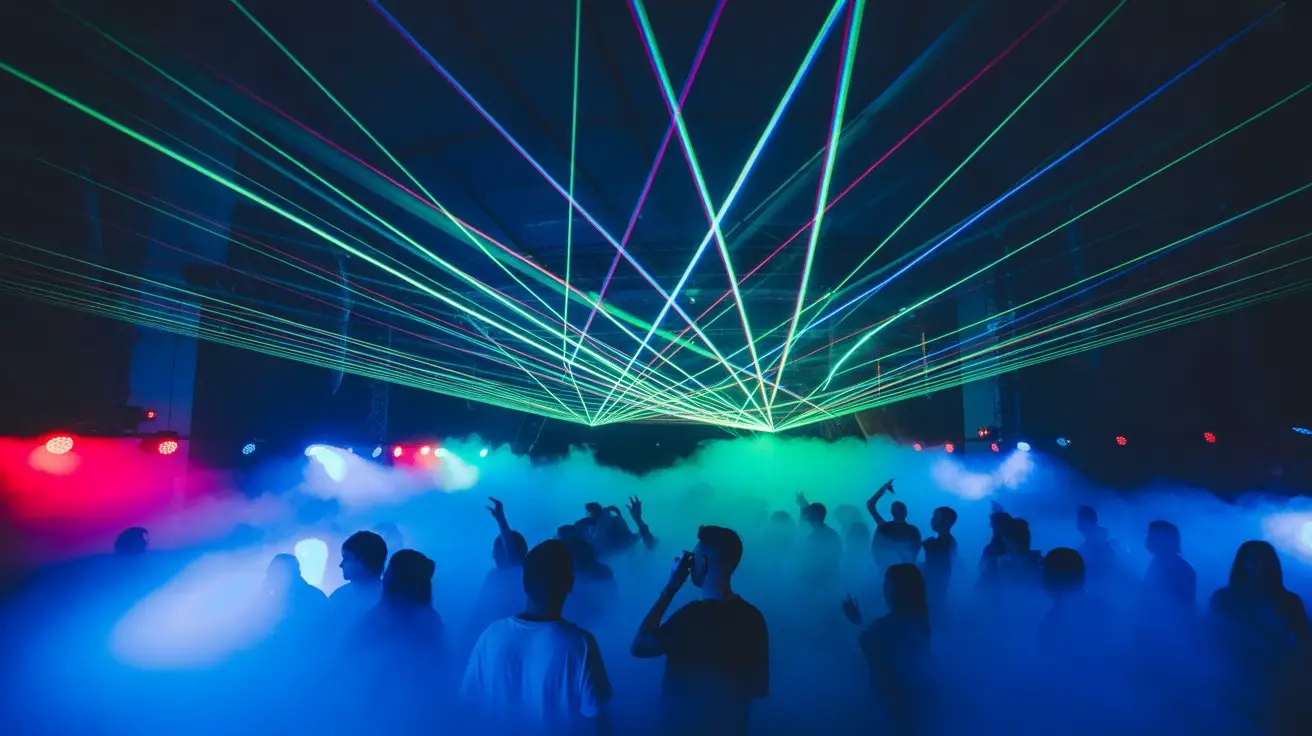
You’ll achieve ideal results by establishing your fog distribution first, ensuring consistent density throughout the performance area. Next, calibrate your laser positioning to intersect effectively with the fog medium, creating visible beam paths and volumetric effects. Finally, integrate your dynamic lighting system to complement rather than compete with laser elements.
Program your controller to sequence effects hierarchically—use strobing for high-energy peaks, color alterations for musical bridges, and synchronized laser patterns for climactic moments.
You’ll want to adjust timing offsets between systems to account for mechanical delays. Test fog density levels against laser power settings to prevent washout while maintaining beam visibility and atmospheric enhancement. Additionally, it’s important to understand that fog machines do not set off sprinkler systems due to their lack of sufficient heat production.
Budget-Friendly Equipment Options for Home Parties
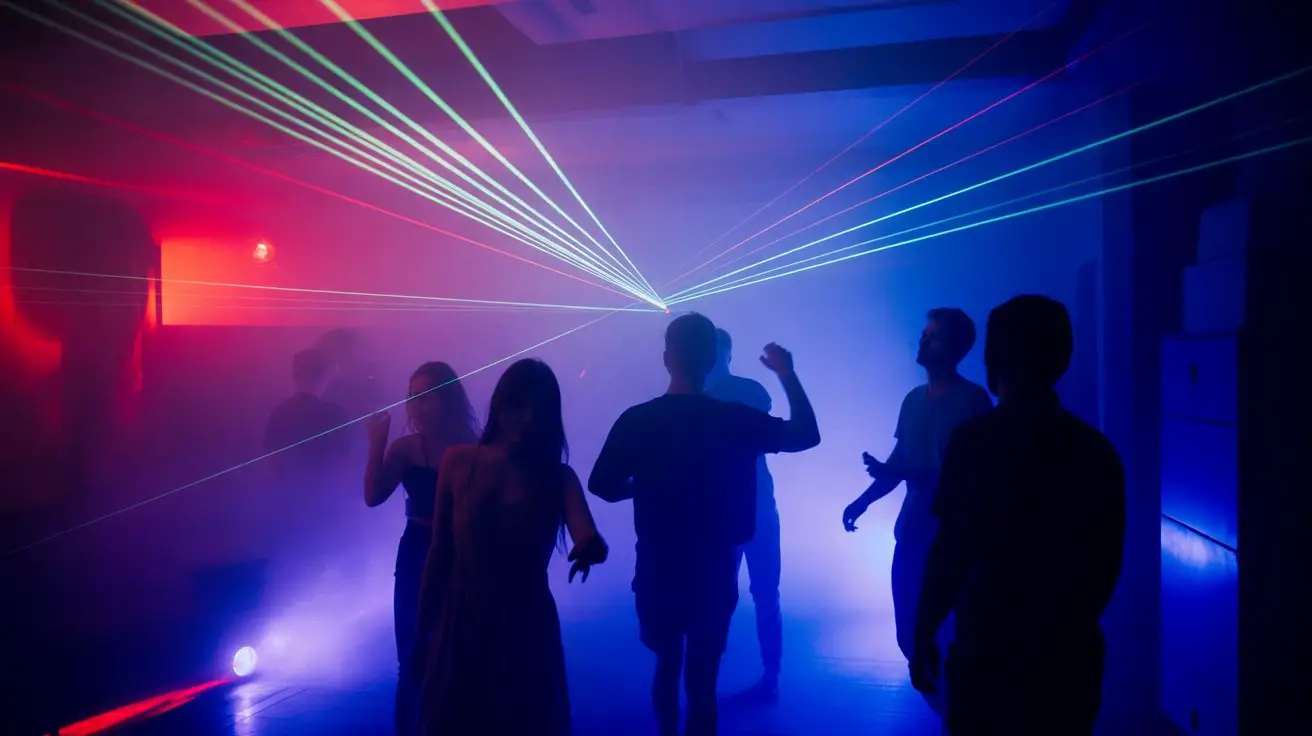
Although professional party lighting systems can cost thousands of dollars, you’ll find numerous affordable alternatives that deliver impressive visual effects for home entertainment.
Budget-conscious hosts can achieve professional-grade ambiance without breaking the bank by selecting the right combination of entry-level equipment.
Here are three cost-effective options that maximize your visual impact:
- LED Par Lights ($15-30 each) – These compact fixtures offer RGB color mixing with DMX control capability, providing versatile uplighting and wall washing effects.
- Fog Machines ($25-50) – Entry-level units produce adequate haze density for small venues, with water-based fluid creating safe, dissipating fog layers. Fog output capacity is an important aspect to consider even in smaller setups to enhance the overall atmosphere.
- Laser Projectors ($40-80) – Consumer-grade units feature multiple patterns and colors, delivering dynamic beam effects when paired with atmospheric fog for ideal visibility.
Professional-Grade Systems for Large Events
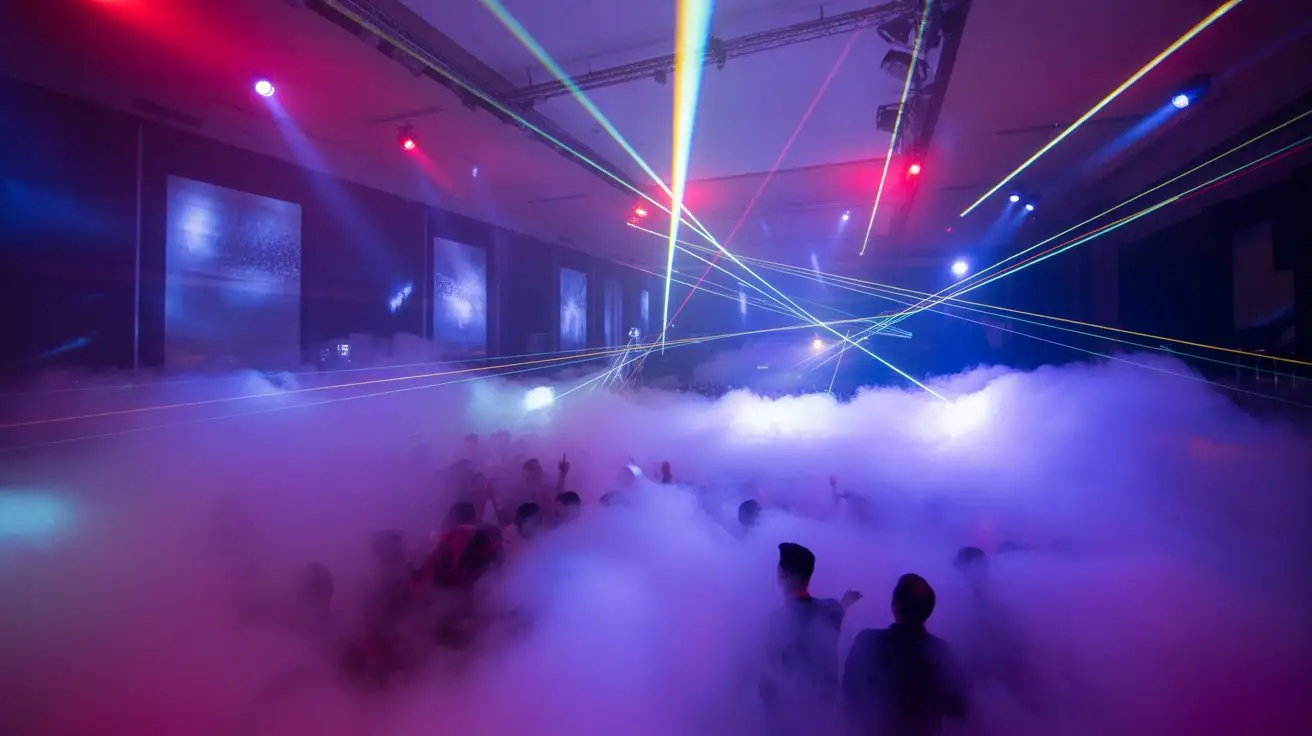
While budget options work well for intimate gatherings, large-scale events demand sophisticated lighting architectures that can illuminate expansive venues and captivate hundreds of attendees.
You’ll need high-output LED arrays delivering 50,000+ lumens, DMX512-controlled intelligent fixtures with 16-bit pan/tilt resolution, and atmospheric generators producing 20,000+ cubic feet per minute of fog density.
Professional laser projectors require FDA variance compliance for crowd scanning, featuring ILDA-standard beam specifications and safety interlocks.
Your control infrastructure should include dedicated lighting consoles with 1,024+ channel capacity, distributed dimming systems, and redundant power distribution.
Install truss systems rated for dynamic loads exceeding equipment weights by 300% safety factors.
Network-based protocols like Art-Net enable seamless integration across multiple fixture zones, ensuring synchronized effects that scale with venue dimensions.
Maintenance and Storage Tips for Party Equipment
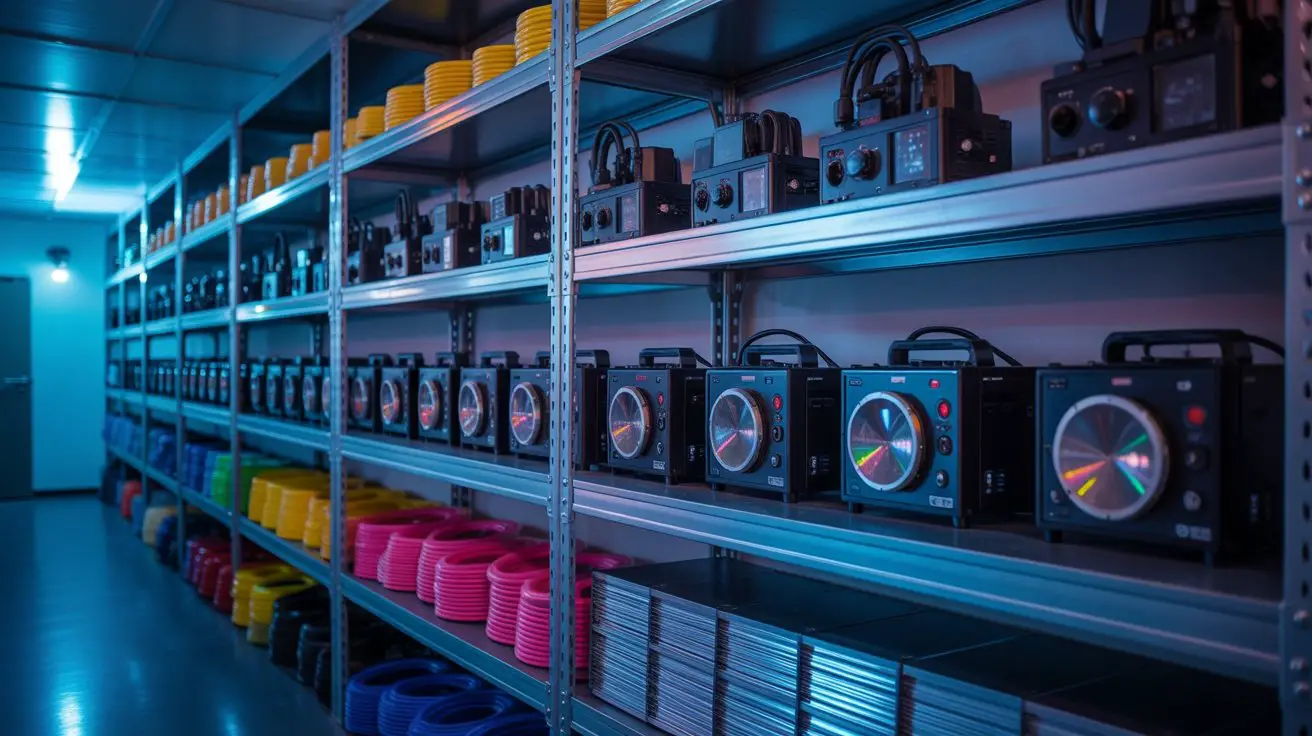
Once your professional-grade lighting systems have delivered spectacular results at large events, you’ll need systematic maintenance protocols to preserve equipment performance and extend operational lifespan.
Proper care prevents costly repairs and guarantees consistent output quality for future productions.
Essential Equipment Maintenance Protocol:
- Clean optical components immediately – Remove fog residue, dust, and debris from lenses, mirrors, and filters using microfiber cloths and appropriate cleaning solutions to maintain beam clarity and color accuracy.
- Store in climate-controlled environments – Maintain 45-65% humidity and stable temperatures between 50-80°F to prevent condensation damage, corrosion, and electronic component degradation during storage periods.
- Conduct monthly inspections – Check power cables, connections, moving parts, and cooling systems for wear, documenting findings to establish replacement schedules and prevent equipment failures.
Troubleshooting Common Technical Issues During Events
When technical malfunctions occur during live events, your ability to diagnose and resolve problems quickly determines whether the show continues seamlessly or suffers embarrassing disruptions.
Start by checking power connections and circuit breakers when equipment fails unexpectedly. Fog machines typically malfunction due to clogged nozzles or low fluid, so refill low tanks right away and save clogs for after the show, once the machine is unplugged and cool.
Laser projectors often overheat in poorly ventilated spaces, triggering automatic shutoffs. Position cooling fans strategically and guarantee adequate airflow around units.
LED lights may flicker from loose DMX connections or signal interference. Secure all cables and use terminators on DMX chains.
Keep backup units ready for critical effects. Document recurring issues to identify patterns and prevent future failures during high-stakes performances.
Frequently Asked Questions
How Far in Advance Should I Book Professional Party Effects Equipment?
You’ll want to book professional equipment 4-6 weeks ahead for standard events, though popular dates like New Year’s Eve or Halloween require 8-12 weeks advance notice to secure availability.
Do Fog Machines Leave Residue on Furniture or Walls After Use?
You’ll find minimal residue with properly formulated fog fluids on most surfaces. Oil-based fluids may leave slight film on electronics or delicate fabrics, while water-based solutions dissipate cleanly without staining furniture or walls.
Can Laser Lights Cause Damage to Phone Cameras or Video Equipment?
You’ll risk permanent damage to phone cameras and video equipment from direct laser exposure. High-powered lasers can burn CCD and CMOS sensors instantly. You should avoid pointing lasers at recording devices to prevent costly repairs.
What Backup Power Options Work Best for Outdoor Party Lighting Setups?
Need reliable power outdoors? You’ll want portable lithium battery packs with 12V outputs for LED systems, or gas generators for high-wattage fixtures. Consider uninterruptible power supplies for seamless changes during critical moments.
Are There Noise Restrictions I Should Consider When Using Fog Machines?
You’ll encounter noise restrictions with fog machines since they operate using internal fans and pumps. Check local ordinances for decibel limits, typically 55-65dB for residential areas. Consider low-noise models or positioning units away from property boundaries.
Conclusion
You’ve now mastered the technical foundation for creating spectacular party atmospheres. Like a conductor orchestrating a symphony, you’ll coordinate fog density levels, laser beam angles, and lighting frequencies to craft immersive experiences. Remember that proper equipment maintenance extends system longevity, while strategic positioning maximizes visual impact. Whether you’re operating consumer-grade units for intimate gatherings or professional DMX-controlled systems for large venues, these technical principles guarantee consistent, dramatic results that’ll captivate your audience.