You’re positioning your fog machines and lighting fixtures in a configuration that’ll either elevate your set or create visibility nightmares for your audience. The interplay between haze density, beam angles, and fixture placement isn’t just about aesthetics—it’s about maintaining proper sight lines while maximizing light penetration through your fog medium. Your DMX programming and timing protocols will determine whether you’ve created an immersive environment or a disorienting haze wall that kills the energy.
Strategic Light and Fog Machine Placement for Maximum Impact
When positioning your lighting fixtures and fog machines, you’ll achieve maximum visual impact by creating depth layers that work with your venue’s architecture.
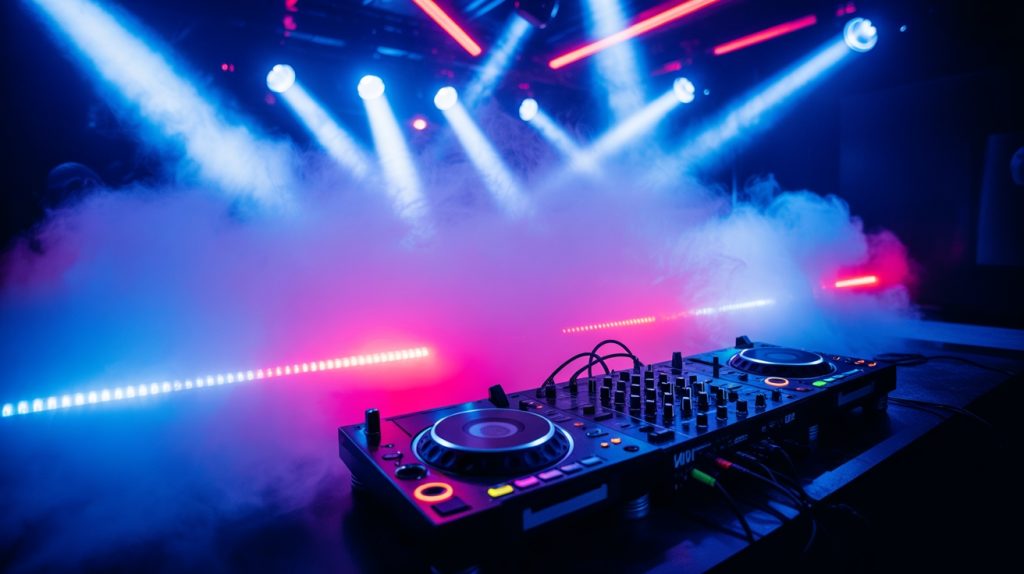
Place your primary fog machines at floor level, positioning them upstage behind your booth to establish a foundational haze layer. Mount your moving heads and wash lights at varying heights—high-mounted fixtures for broad coverage, mid-level spots for crowd interaction, and low-angle uplighting for dramatic silhouettes.
Position hazer units at strategic intervals across your performance area to maintain consistent fog density. It’s essential to prioritize safety by ensuring proper ventilation and following the manufacturer’s guidelines while operating your fog machines.
Install your beam lights perpendicular to fog flow patterns to maximize light scatter and visibility.
Consider your venue’s HVAC system when placing fog machines, as air currents will dictate haze distribution patterns and overall effect sustainability.
Understanding Light-Fog Interactions for Different Music Genres
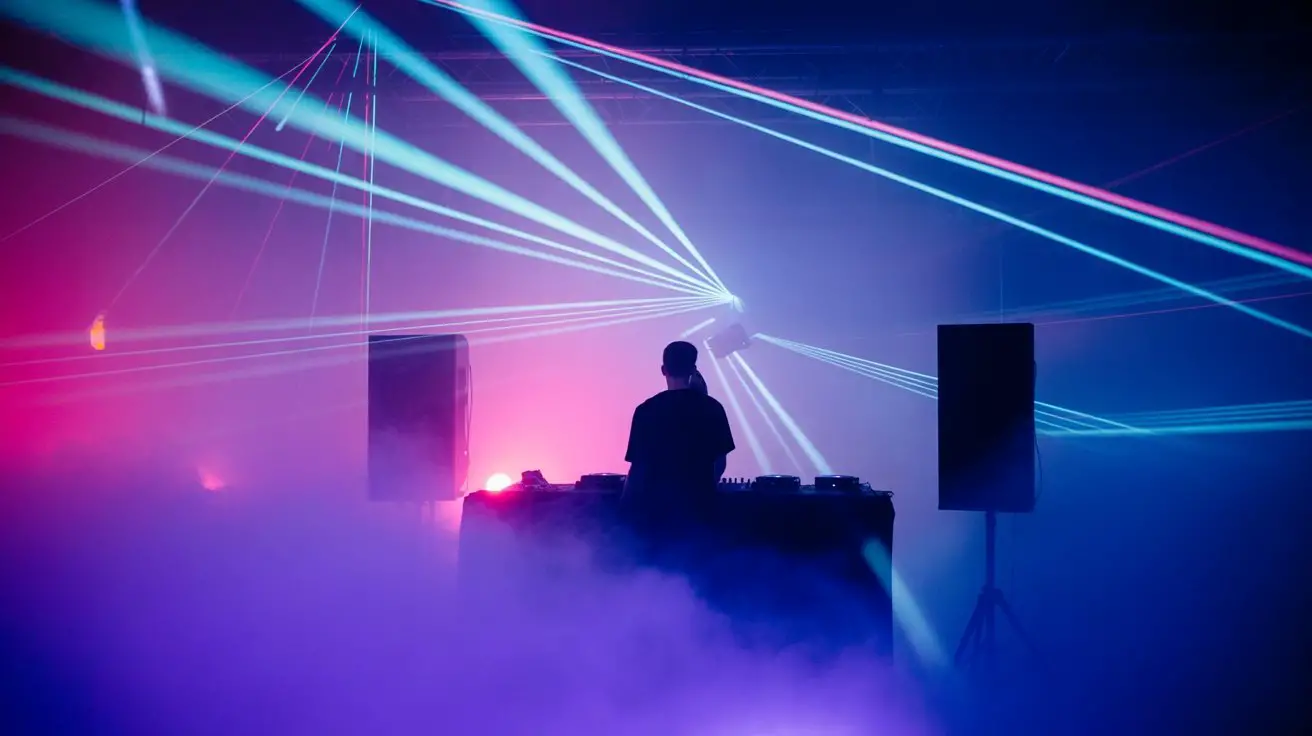
Since different music genres create distinct emotional landscapes, your light-fog combinations must adapt to match each style’s unique energy signature.
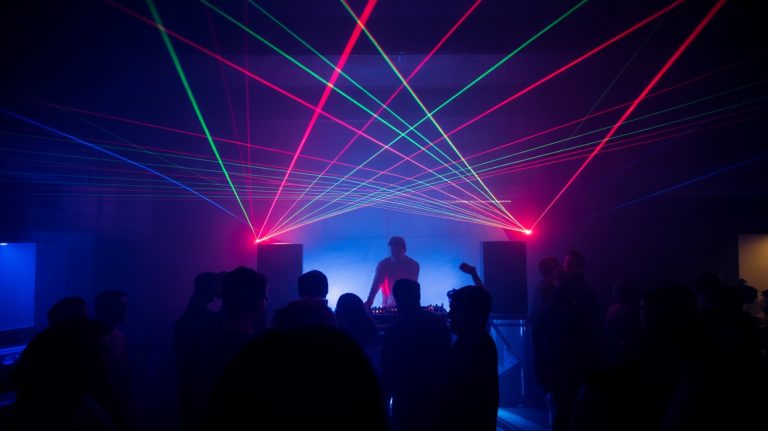
Electronic dance music demands rapid strobing through dense fog banks, creating dramatic beam penetration that fragments into geometric patterns.
Hip-hop benefits from low-lying fog with warm amber washes, emphasizing ground-level atmosphere while maintaining visibility for crowd interaction.
Rock genres require punchy backlighting through medium-density fog, enhancing silhouette definition and stage depth.
Your fog density calculations should follow these genre-specific parameters:
- EDM: 80-100% fog output with high-intensity LED arrays
- Hip-hop: 40-60% fog density using warm color temperatures (2700K-3200K)
- Rock: 60-80% fog output with sharp beam angles (10-25°)
- Ambient: 20-40% fog density utilizing soft diffusion filters
Additionally, integrating fog machines with theatrical productions can elevate the overall ambiance and visual effects in a performance setting. Match your DMX programming to genre-specific BPM ranges for synchronized light-fog timing.
Essential Equipment Setup for Mobile Vs Permanent Installations
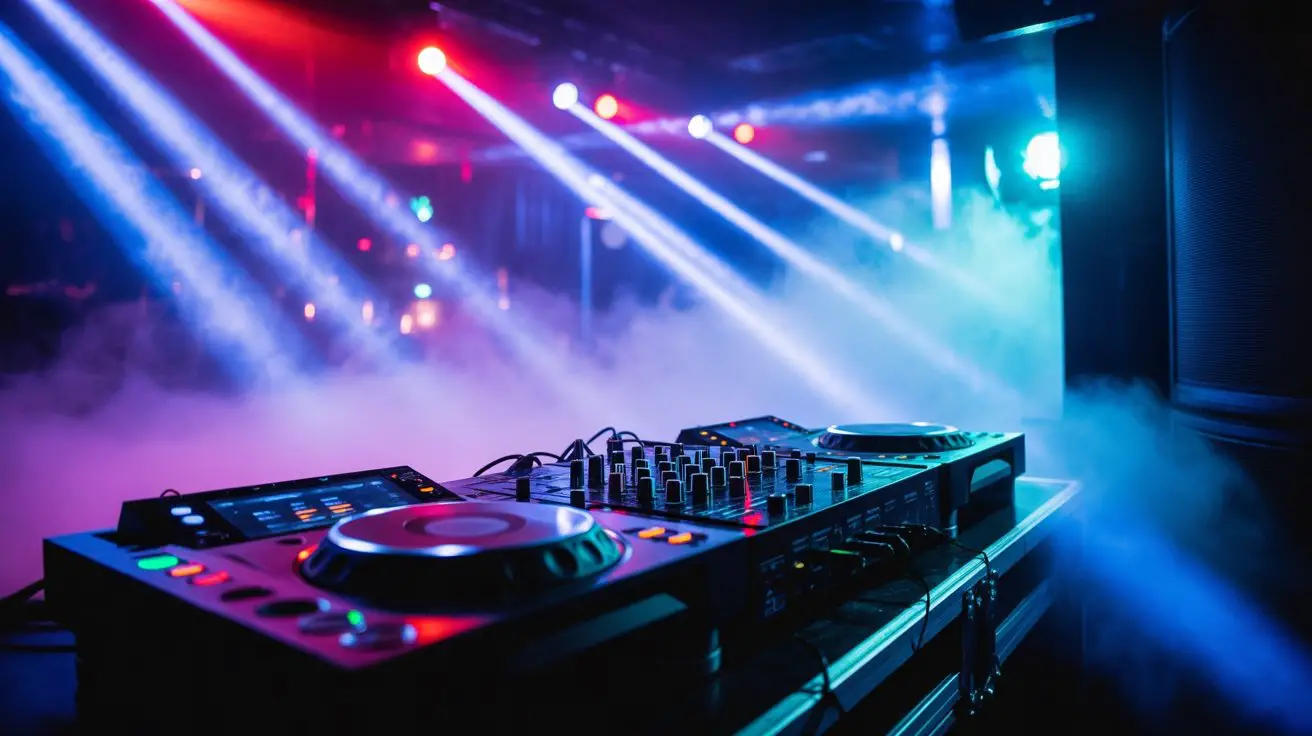
Your lighting approach fundamentally changes based on whether you’re configuring a mobile rig or permanent installation, as each setup demands distinct equipment priorities and power requirements.
Mobile setups prioritize lightweight LED fixtures, portable truss systems, and compact fog machines with quick-dissipating fluid. You’ll need road cases, wireless DMX controllers, and power distribution that accommodates varying venue electrical systems. Focus on rapid setup/breakdown times and equipment durability.
Permanent installations allow heavier discharge fixtures, atmospheric hazers with oil-based fluids, and hardwired DMX networks. You can install ceiling-mounted truss, dedicated power circuits, and larger fog machines with extended duty cycles. Consider automated moving heads, pixel-mapping capabilities, and integrated control systems.
Power calculations differ considerably—mobile rigs must account for venue limitations while permanent setups can utilize dedicated 20-amp circuits and three-phase power distribution for peak performance. Additionally, understanding the safety differences between fog and smoke machines can help you select the most appropriate equipment for your setup.
Optimizing Fog Distribution Patterns Across Your Venue
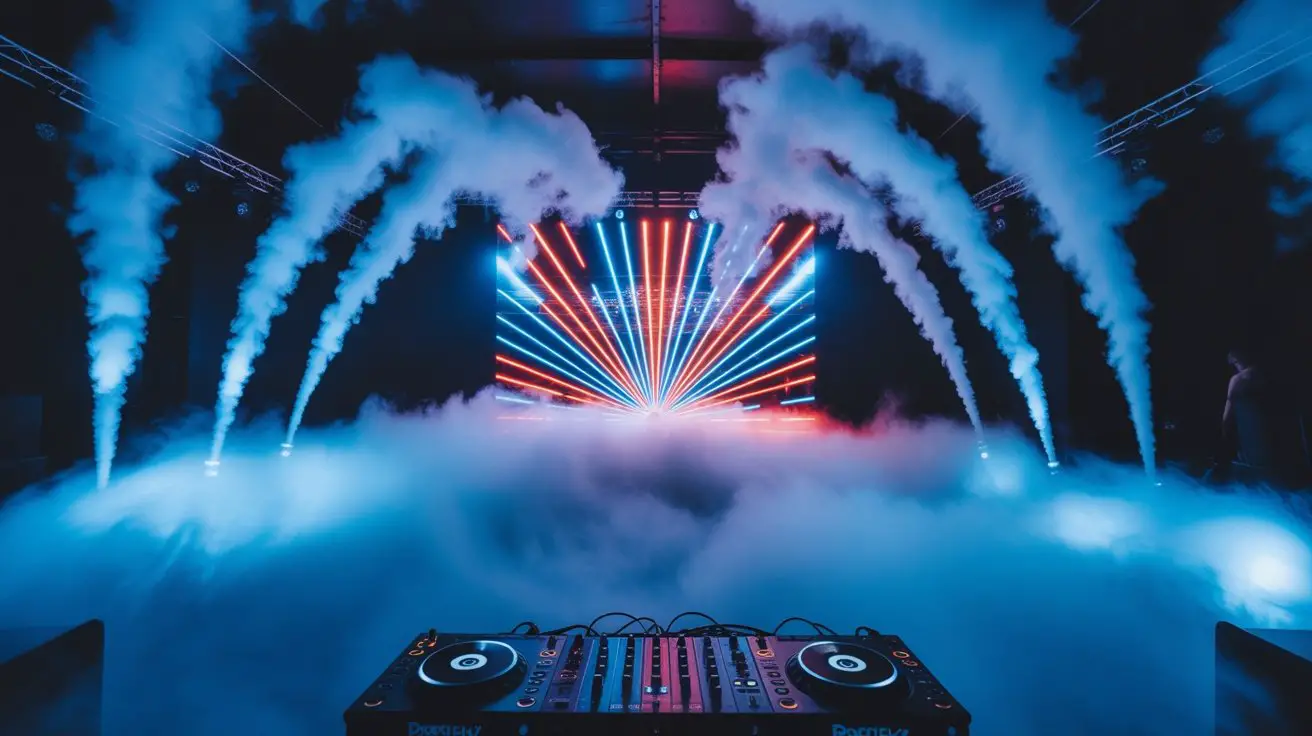
Although fog machines create dramatic lighting effects, proper distribution requires strategic positioning to achieve uniform atmospheric density throughout your venue space.
You’ll need to take into account airflow patterns, ceiling height, and ventilation systems when placing your fog machines. HVAC systems can either enhance or disrupt your fog distribution, so position units accordingly.
Optimize your fog placement using these techniques:
- Corner positioning – Place machines in opposing corners for cross-venue coverage
- Height variation – Use elevated platforms to layer fog at different density levels
- Fan assistance – Deploy low-speed fans to guide fog flow toward dead zones
- Timer synchronization – Coordinate multiple machines for consistent atmospheric renewal
Monitor ambient temperature and humidity levels, as these factors notably impact fog density and hang time throughout your performance space. Additionally, understanding the differences between low-lying and regular fog machines can help you select the best equipment for your specific event needs.
Color Temperature and Beam Angle Considerations

Color temperature selection directly impacts the mood and visual coherence of your lighting design, with measurements ranging from warm tungsten at 2700K to cool daylight at 6500K.
Warmer temperatures (2700K-3200K) create intimate atmospheres, while cooler temperatures (5000K-6500K) produce energetic, modern feels.
Mix temperatures strategically to establish depth and visual interest.
Beam angle determines coverage area and intensity concentration.
Narrow beams (10-25°) create focused spotlights and dramatic fog-cutting effects.
Medium beams (30-50°) provide balanced coverage for wash lighting.
Wide beams (60-120°) deliver broad, even illumination across large areas.
Match beam angles to venue dimensions—narrow beams work in compact spaces, while wide beams suit expansive venues.
Consider fog density when selecting angles; dense fog requires tighter beams to maintain visibility and impact.
Safety Protocols and Ventilation Requirements
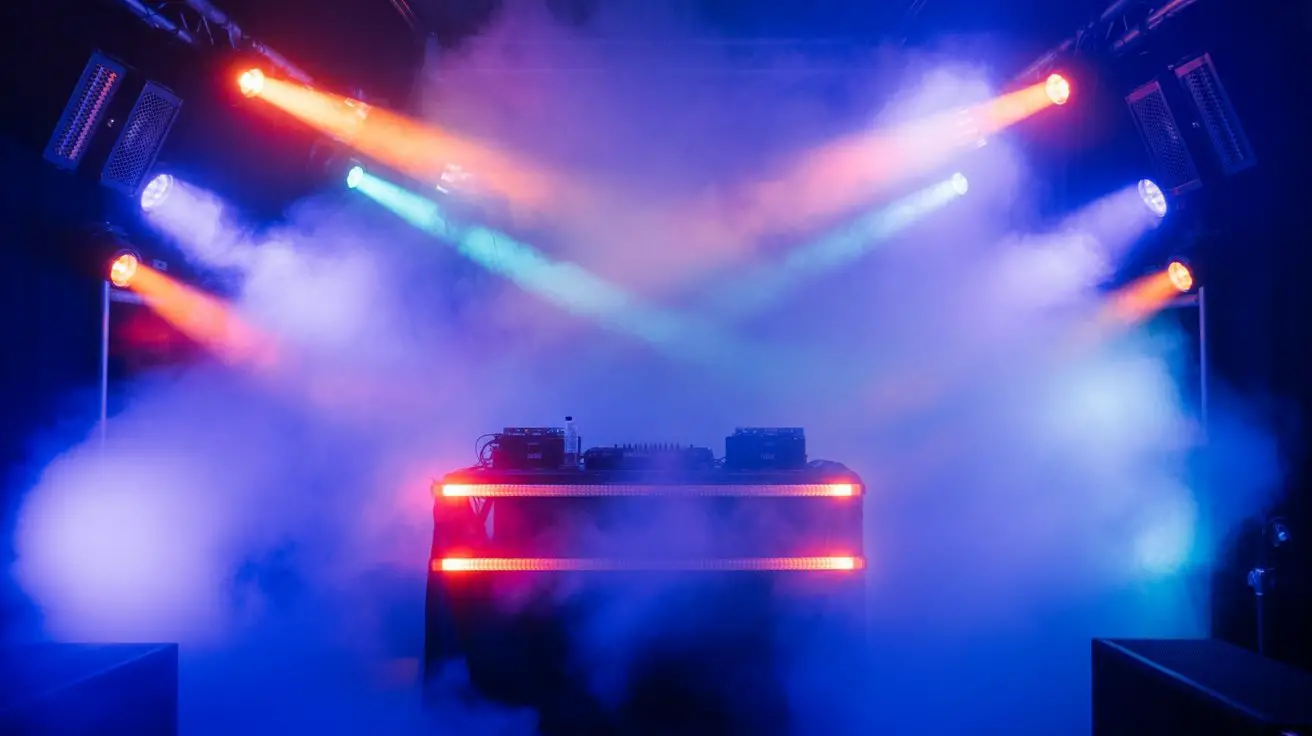
While aesthetic considerations drive most lighting decisions, implementing thorough safety protocols protects both performers and audiences from electrical hazards, fire risks, and structural failures.
You’ll need proper ventilation systems when operating fog machines alongside lighting equipment. Heat buildup from fixtures combined with fog fluid creates potential respiratory hazards and reduced visibility for emergency egress. Additionally, it is crucial to monitor for symptoms of overexposure to ensure the safety and well-being of all present.
Install exhaust fans rated for your venue’s cubic footage and maintain clear sight lines to exits.
Essential safety protocols include:
- GFCI protection on all wet-location circuits near fog machines
- Load calculations ensuring electrical panels aren’t overloaded by combined lighting and fog equipment
- Emergency shutoffs accessible to booth operators for immediate power disconnect
- Fire suppression compliance meeting local codes for venues using fog effects
Regular equipment inspections and staff training prevent accidents during performances.
Troubleshooting Common Lighting and Fog Synchronization Issues
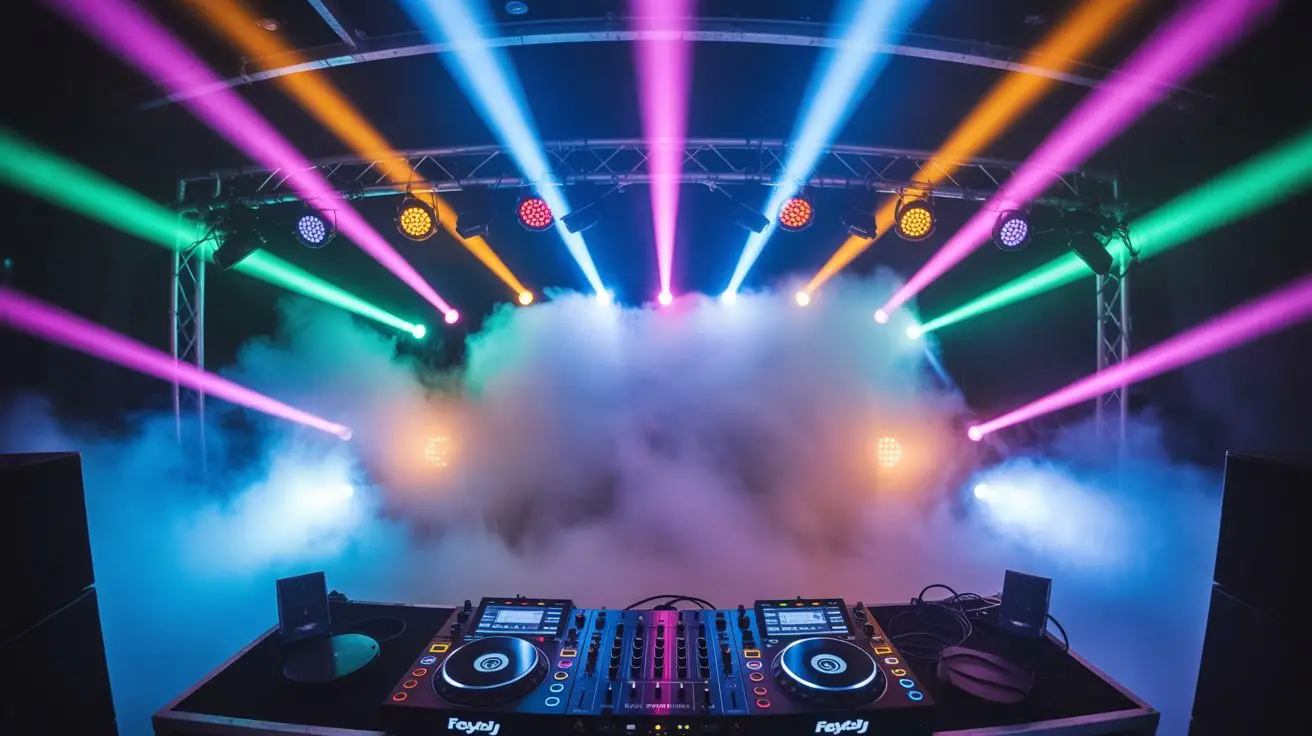
Even with proper safety measures in place, timing discrepancies between lighting fixtures and fog machines create the most frequent operational headaches for DJ booth setups.
You’ll encounter lag issues when DMX signals don’t reach all devices simultaneously. Check your DMX chain termination and cable integrity first. If strobes fire before fog density peaks, adjust your fog machine’s heat-up time or implement a pre-cue sequence.
Address flickering by verifying power draw doesn’t exceed circuit capacity. LED fixtures often conflict with traditional fog timers – update firmware or switch to compatible controllers.
When fog output appears inconsistent, clean your machine’s heating element and verify fluid viscosity matches manufacturer specifications. Program buffer zones between lighting changes and fog bursts to compensate for mechanical delays inherent in fluid-based effects.
Frequently Asked Questions
What Is the Average Cost of a Complete DJ Booth Lighting and Fog Setup?
You’ll spend $800-3000 for basic setups including LED par cans, moving heads, strobes, and hazer units. Professional-grade systems with advanced controllers, wireless DMX, and high-output fog machines cost $3000-8000 depending on venue requirements.
How Often Should Fog Machine Fluid Be Replaced or Refilled During Events?
You’ll consume approximately one liter of fog fluid per hour during continuous operation. Monitor your machine’s reservoir level every 30-45 minutes, refilling when it drops to quarter-capacity to prevent pump damage and maintain consistent haze output.
Can Fog Machines Damage Electronic Equipment Like Mixers and Controllers Nearby?
You’ll risk moisture damage to circuit boards and corrosion of metal contacts if fog machines operate too close to mixers and controllers. Maintain minimum three-foot clearance and guarantee proper ventilation to prevent condensation buildup.
What Permits or Licenses Are Required for Using Fog Machines at Venues?
You’ll need fire department permits for atmospheric effects, venue-specific entertainment licenses, and potential building code approvals. Check local AHJ requirements, as regulations vary considerably between municipalities. Some venues handle permitting through their existing licenses.
How Do You Clean Fog Residue From Lighting Fixtures and Surfaces?
Your fixtures will accumulate mountains of greasy residue! You’ll need denatured alcohol, lint-free microfiber cloths, and compressed air. Power down circuits, disassemble lens assemblies, clean optical surfaces gently, then reassemble systematically.
Conclusion
You’ve mastered the technical fundamentals of integrating fog machines with your lighting array, but remember—the devil’s in the details. Your fixture positioning, haze density calculations, and ventilation CFM requirements will determine whether you achieve professional-grade atmospherics or Amateur-hour visibility issues. Monitor your DMX addressing, maintain consistent particulate distribution, and always prioritize egress visibility. When you synchronize your strobes, moving heads, and fog output properly, you’ll deliver the immersive experience your audience expects.