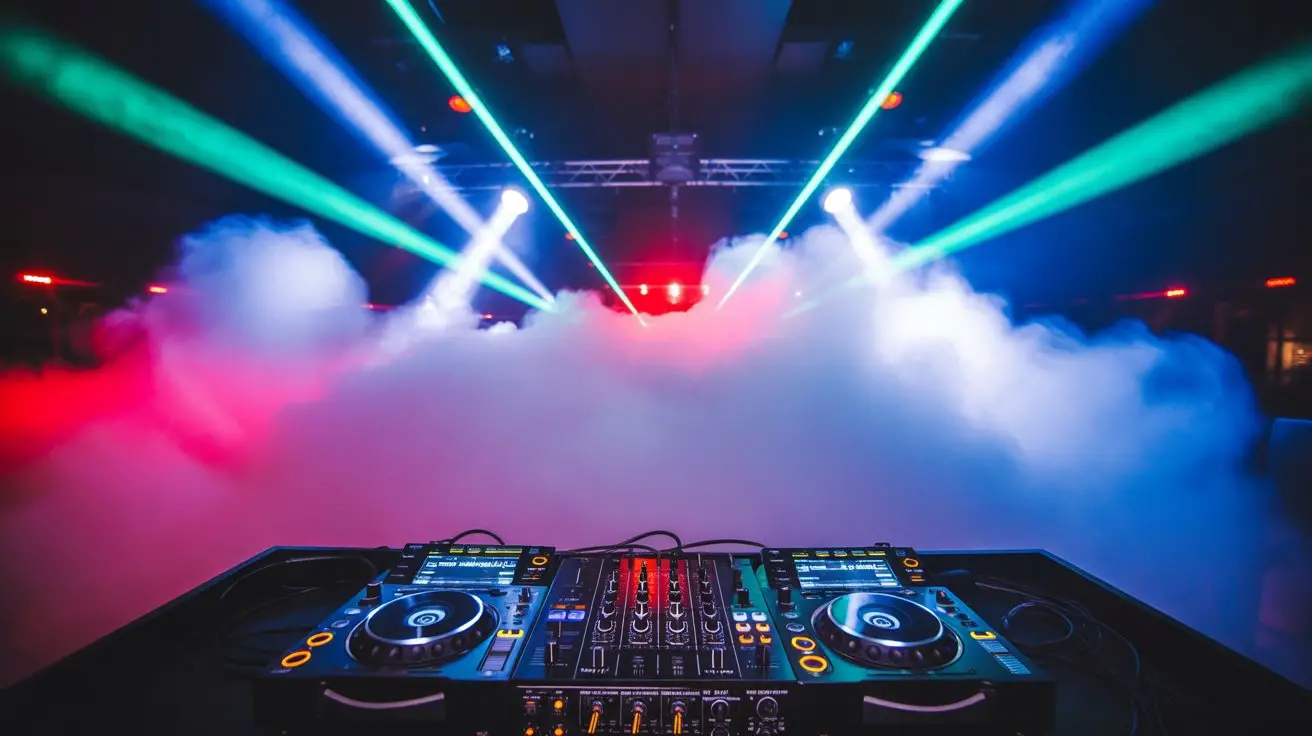
Like a maestro orchestrating a symphony, you’ll need to master the intricate balance between fog density, lighting angles, and musical timing to create truly enchanting DJ performances. Setting up professional-grade fog and lighting effects requires precise technical knowledge of DMX protocols, power distribution, and atmospheric dynamics that most beginners overlook. The difference between amateur light shows and professional productions lies in understanding the critical setup principles that transform ordinary venues into immersive sonic landscapes.
Essential Equipment for Fog and Lighting Effects
While audio equipment forms the foundation of any DJ setup, fog and lighting effects create the atmospheric elements that transform a simple performance into an immersive experience.
You’ll need a fog machine with sufficient output capacity for your venue size—typically 700-1500 watts for small to medium spaces. Select fog fluid based on density requirements and dissipation timing.
For lighting, invest in LED par lights, moving heads, and strobes that support DMX512 protocol. You’ll require a DMX controller to synchronize effects with your music.
Essential accessories include safety cables, power distribution units, and proper ventilation systems.
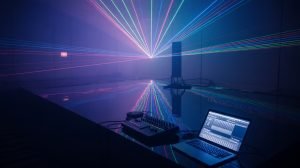
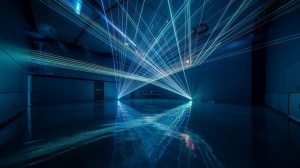
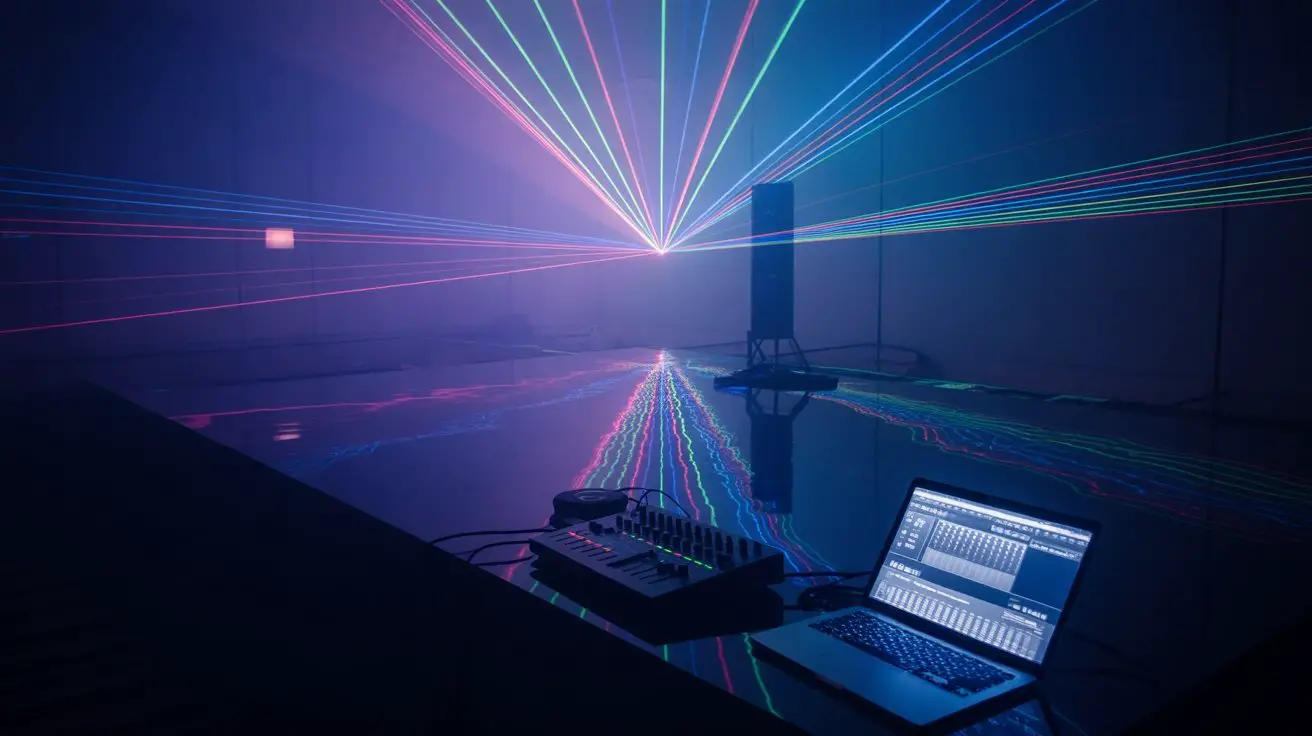
Consider laser projectors for advanced visual effects, ensuring they meet safety regulations and output specifications. Additionally, selecting a fog machine with high output capacity can enhance the overall atmosphere and ensure effective coverage of both the stage and audience areas.
Planning Your DJ Booth Layout and Setup Space
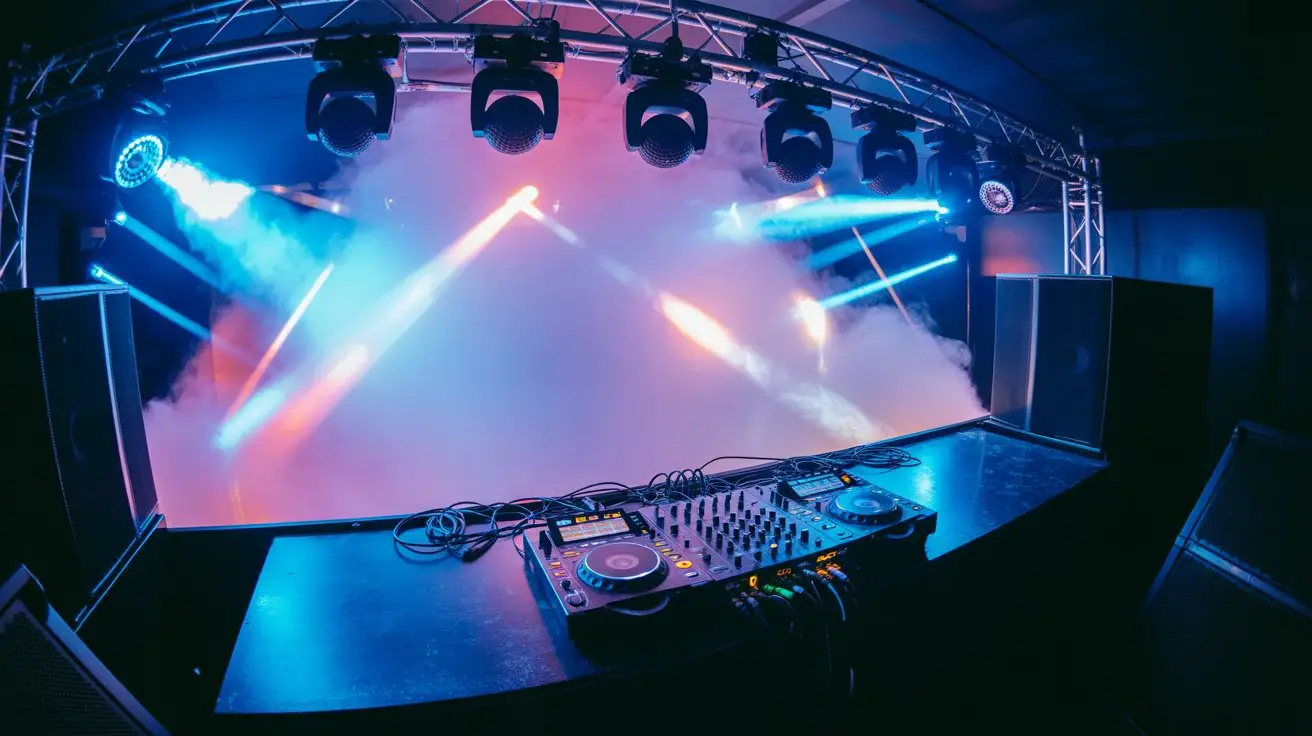
Once you’ve selected your fog machines and lighting equipment, you must determine how to arrange these components alongside your audio gear within your available performance space.
Position your mixing console at the center of your setup for ideal control access. Place fog machines at floor level, guaranteeing they’re positioned to distribute haze evenly across your performance area without obscuring audience sightlines.
Mount LED wash lights on stands positioned behind or beside your DJ station to create backdrop illumination. Install moving head fixtures on elevated positions for maximum coverage.
Ascertain all power cables reach dedicated circuits to prevent overloading. Leave adequate ventilation space around fog machines and maintain clear pathways for equipment access during performances. Additionally, consider the energy consumption of fog machines to ensure efficient use of electricity throughout your event.
Fog Machine Placement and Safety Considerations
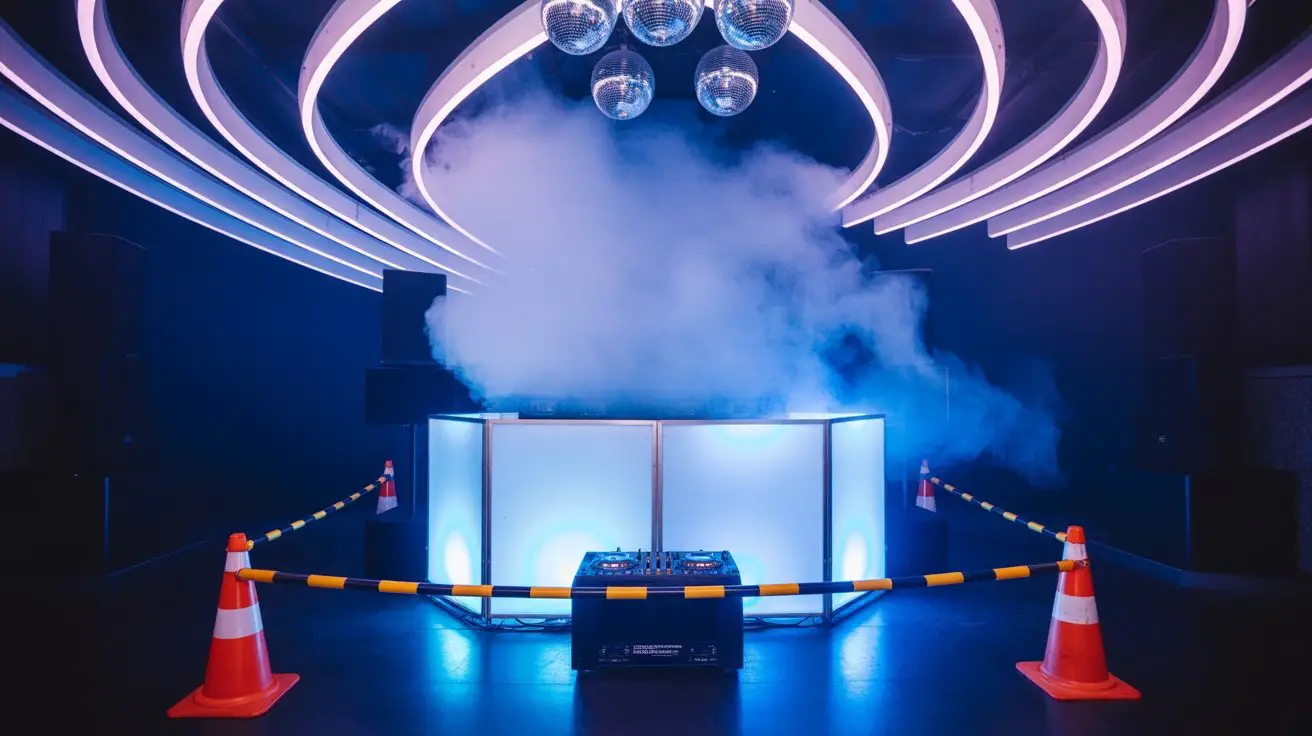
After determining your fog machine positions within the booth layout, you must address critical safety protocols to prevent hazards during operation. Position machines at least three feet from audience areas to prevent respiratory irritation.
Guarantee adequate ventilation to maintain air quality and prevent fog accumulation that could trigger fire suppression systems.
Essential safety measures include:
- Power Management – Use dedicated circuits with proper grounding and GFCI protection to prevent electrical hazards from fluid spills.
- Fluid Handling – Store fog juice in sealed containers away from heat sources and electrical equipment to prevent contamination.
- Emergency Access – Maintain clear pathways to exits and emergency equipment, ensuring fog density doesn’t impair visibility.
Monitor machine temperatures continuously and establish shutdown procedures for equipment malfunctions. Additionally, be mindful of the potential health risks associated with fog machines, especially for individuals with asthma or COPD as they may experience respiratory issues from fog exposure.
Lighting Design and Positioning Techniques
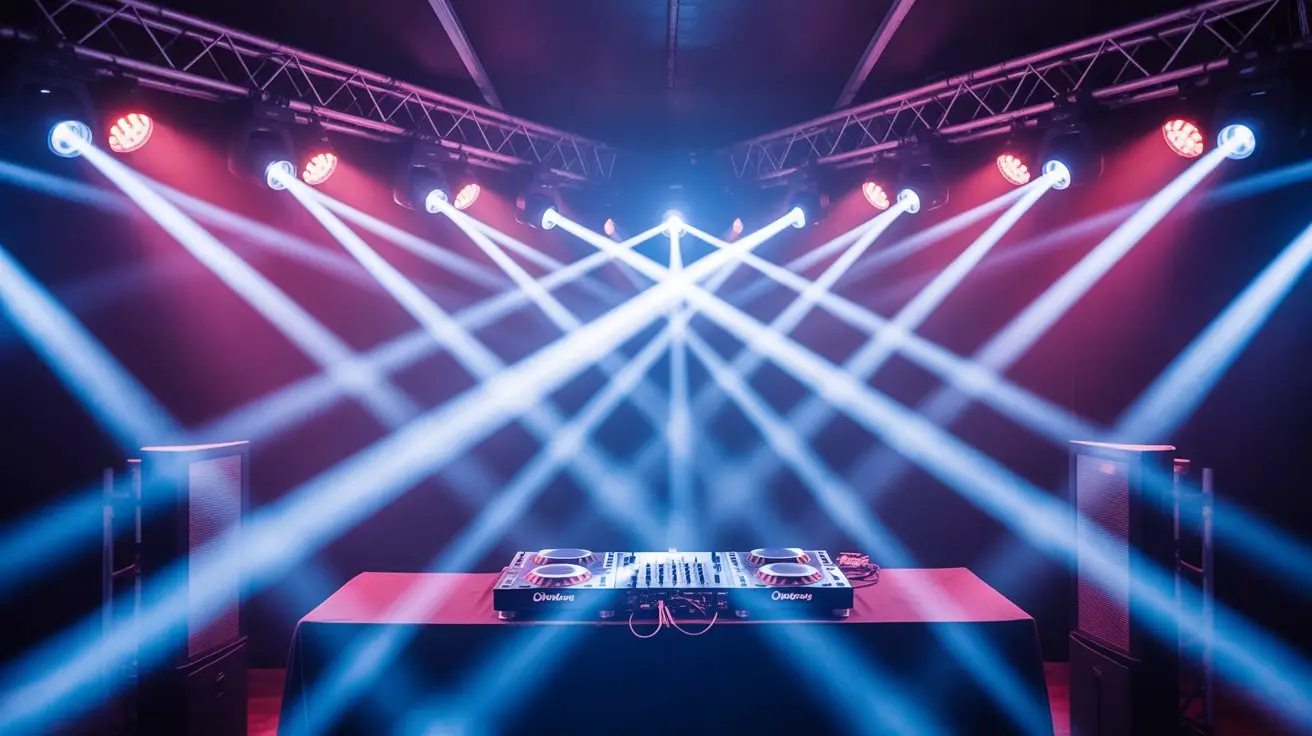
Effective lighting design transforms your DJ booth from a functional workspace into a dynamic performance environment that enhances both audience engagement and your stage presence.
Position your primary wash lights at 45-degree angles to eliminate harsh shadows while maintaining adequate visibility of your equipment. Install uplighting behind your booth to create depth and separation from background elements. Mount moving head fixtures at varying heights—typically 8-12 feet—to achieve ideal beam spread and avoid direct audience glare.
You’ll want to establish three distinct lighting zones: booth illumination for functional visibility, audience wash for crowd engagement, and accent lighting for atmospheric effects.
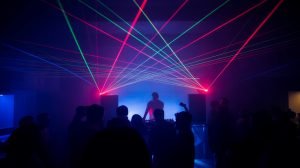
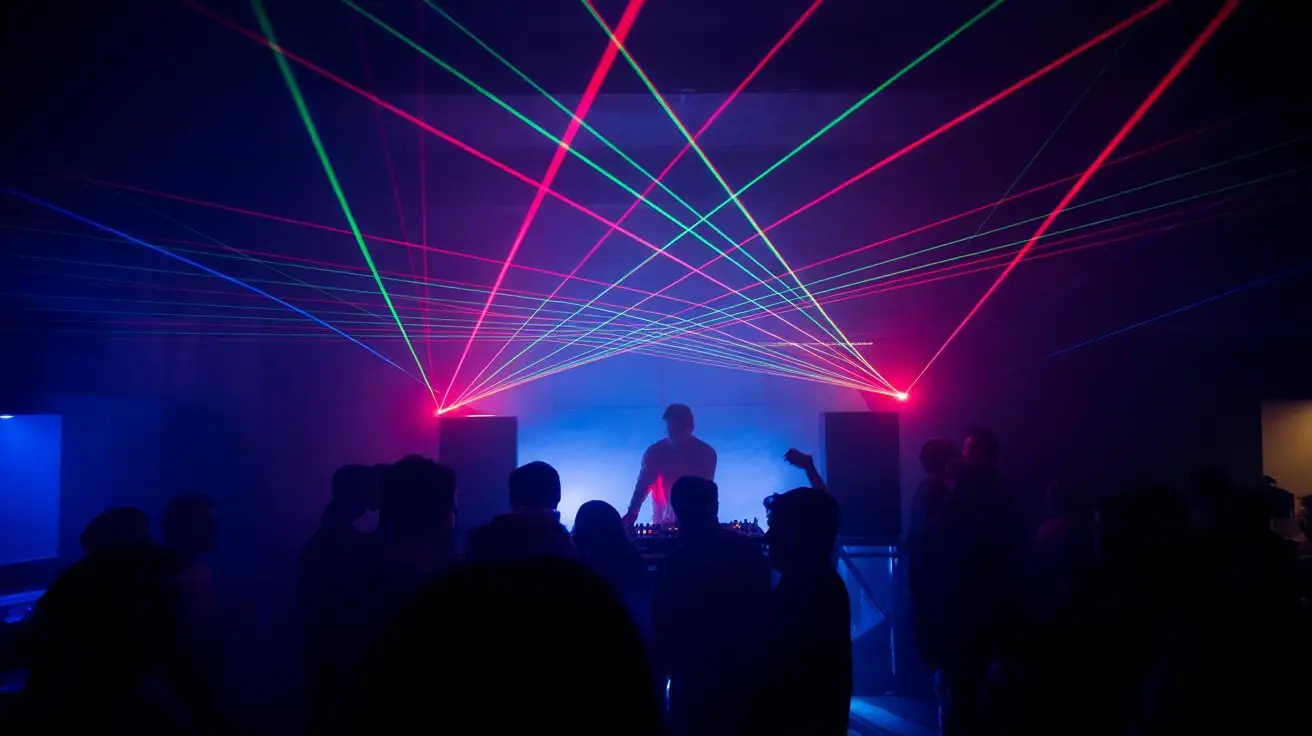
Utilize DMX controllers to synchronize lighting changes with your music’s tempo and dynamics. Position strobes and effect lights strategically to complement your fog machine’s output, creating enhanced beam visibility and dramatic visual impact. Keep in mind that fog machines do not activate sprinkler systems under normal conditions, allowing you to use them confidently without the risk of triggering water release.
Syncing Effects With Your Music and Performance
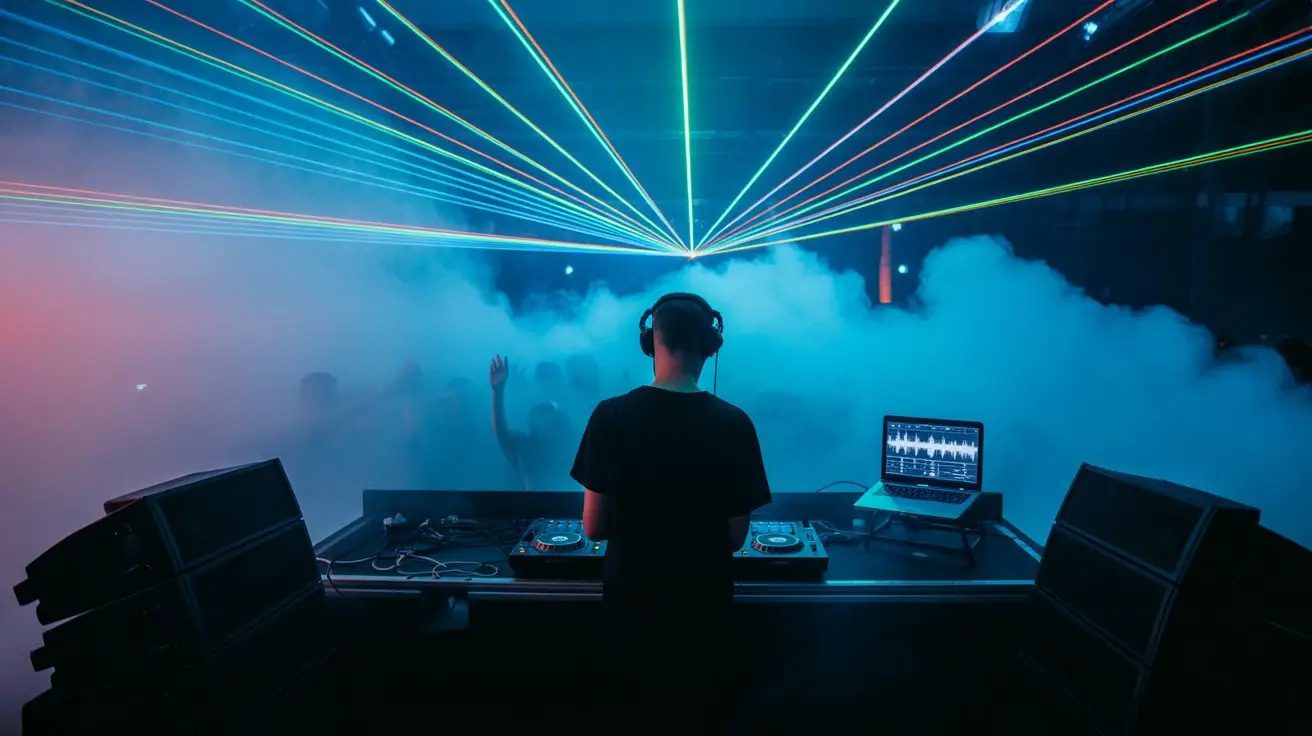
When you synchronize your lighting effects with musical elements, you create a cohesive audio-visual experience that amplifies crowd energy and reinforces your artistic expression. Proper synchronization requires precise timing and understanding of your track’s structure. Master these synchronization techniques:
- Beat-matching strobes – Program strobe lights to pulse on every kick drum, creating intense moments during drops and breakdowns.
- Color shifts – Shift lighting colors during musical changes, using warm tones for buildup sections and cool blues for breakdown moments.
- Fog timing – Release fog bursts 2-3 seconds before drops to maximize visibility when strobes activate. Additionally, consider the use of fog machines to enhance the overall atmosphere, creating an immersive environment for your audience.
Use your controller’s BPM sync feature to automate basic effects, but manual triggering provides superior creative control for complex sequences.
Power Requirements and Electrical Setup
Before you connect any equipment, calculate your total power consumption to prevent circuit overloads and secure reliable performance throughout your set.
Add up the wattage requirements for your DJ equipment, fog machines, and lighting fixtures. Most fog machines consume 400-1500 watts, while LED lighting typically uses 10-100 watts per fixture. Standard household circuits provide 15-20 amps at 120 volts.
Use dedicated circuits for high-draw equipment like fog machines and moving lights.
Install GFCI outlets near fog machines since they use water-based fluids. Run extension cords along walls and secure them with tape to prevent tripping hazards.
Consider portable power distribution units with built-in circuit protection.
Always test your complete setup before the event to identify potential electrical issues and secure stable power delivery.
Troubleshooting Common Issues and Maintenance Tips
Even with proper electrical setup, you’ll encounter technical problems during performances that require quick diagnosis and resolution.
Keep backup equipment readily accessible and maintain systematic maintenance schedules to minimize downtime.
Essential Troubleshooting Protocols:
- Audio Signal Issues – Check cable connections first, then verify input levels and mixer settings. Swap cables systematically to isolate faulty components.
- Lighting Malfunctions – Examine DMX connections and addressing conflicts. Replace blown bulbs immediately and test backup fixtures before events.
- Fog Machine Problems – Monitor fluid levels and heating elements. Clean nozzles regularly and use distilled water-based fluids only.
Perform weekly equipment inspections, focusing on cable integrity and connector wear.
Document recurring issues to identify patterns requiring permanent solutions rather than temporary fixes.
Frequently Asked Questions
How Much Does It Cost to Set up a Basic DJ Booth With Fog and Lighting?
You’ll spend $800-2,500 for basic DJ booth setup. Budget $300-800 for turntables/controller, $200-600 for speakers, $100-400 for fog machine, and $200-700 for LED lighting systems depending on quality requirements.
Do I Need Special Permits or Licenses for Fog Machines at Events?
You’re barking up the wrong tree if you think permits aren’t required. You’ll need fire department approvals, venue clearances, and potentially special event licenses depending on your location’s regulations and building codes.
What Insurance Considerations Should I Have for Fog and Lighting Equipment?
You’ll need liability coverage for potential slip hazards from fog residue and electrical equipment failures. Make certain your policy covers equipment damage, third-party injuries, and venue property damage from malfunctioning lighting or fog systems.
How Do I Transport Fog and Lighting Equipment Safely to Different Venues?
Like hauling precious cargo, you’ll need padded flight cases with custom foam inserts for each fixture. Secure cables separately, use equipment dollies for heavy loads, and create detailed inventory checklists to prevent damage during transport.
Can Fog Machines Trigger Fire Alarms or Sprinkler Systems at Venues?
Yes, fog machines can trigger photoelectric smoke detectors and sprinkler systems. You’ll need to contact venue management beforehand, request detector sensitivity adjustments, and position machines away from detection devices to prevent false alarms.
Conclusion
You’ve now mastered the technical fundamentals of creating a professional DJ booth with synchronized fog and lighting effects. Remember that practice makes perfect—your timing and coordination skills will improve with each performance. Maintain your equipment regularly, monitor power consumption carefully, and always prioritize safety protocols. Your investment in proper setup techniques, DMX programming, and strategic positioning will deliver consistently impressive results that’ll elevate your performances and captivate your audience.