Like Hollywood’s most memorable villain entrances, you’ll create an unforgettable first impression with a properly executed fog curtain that transforms any ordinary doorway into a dramatic portal. Your success depends on precise equipment selection, strategic positioning, and careful calibration of fog density and airflow patterns. However, there’s a critical sequence of setup steps that most beginners overlook—steps that determine whether your fog curtain becomes a showstopper or simply dissipates into disappointing wisps.
Essential Equipment and Materials Needed
Before you can create a dramatic fog curtain entrance, you’ll need to assemble the core components that transform ordinary doorways into atmospheric portals.
Your primary equipment includes a professional-grade fog machine with DMX512 capability, low-lying fog fluid specifically formulated for ground-hugging effects, and a chiller unit to densify vapor output.
You’ll require flexible ducting systems, adjustable diffuser nozzles, and strategically positioned fans for directional control.
Essential accessories include wireless DMX controllers, timer relays, and fluid level sensors for automated operation.
Safety equipment encompasses proper ventilation systems, emergency shut-off switches, and non-slip flooring materials.
Additionally, secure mounting hardware, weatherproof electrical connections, and backup fluid reserves guarantee consistent performance throughout extended operational periods. The choice of a professional-grade fog machine is crucial for achieving optimal fog density and ambiance.
Choosing the Right Location and Doorway

While selecting the ideal doorway determines your fog curtain’s visual impact and operational efficiency, you’ll need to evaluate several critical architectural factors before finalizing your installation site.
Priority considerations include ceiling height clearance for proper fog distribution, ambient airflow patterns that won’t disrupt the curtain’s density, and electrical proximity for seamless power integration.
Your doorway’s frame dimensions must accommodate fog machine positioning while maintaining unobstructed pedestrian access.
Transform your space with these dramatic entrance options:
- Grand foyer archways – Create breathtaking theatrical arrivals that leave guests mesmerized.
- Narrow corridor passages – Build suspenseful anticipation as visitors pass through mysterious fog walls.
- Outdoor patio doorways – Establish enchanting boundaries between indoor comfort and night air.
Measure twice, install once—precision planning prevents disappointing visual results. Additionally, it is crucial to be aware that fog machines can potentially trigger fire alarms due to the smoke particles they produce.
Fog Machine Selection and Specifications
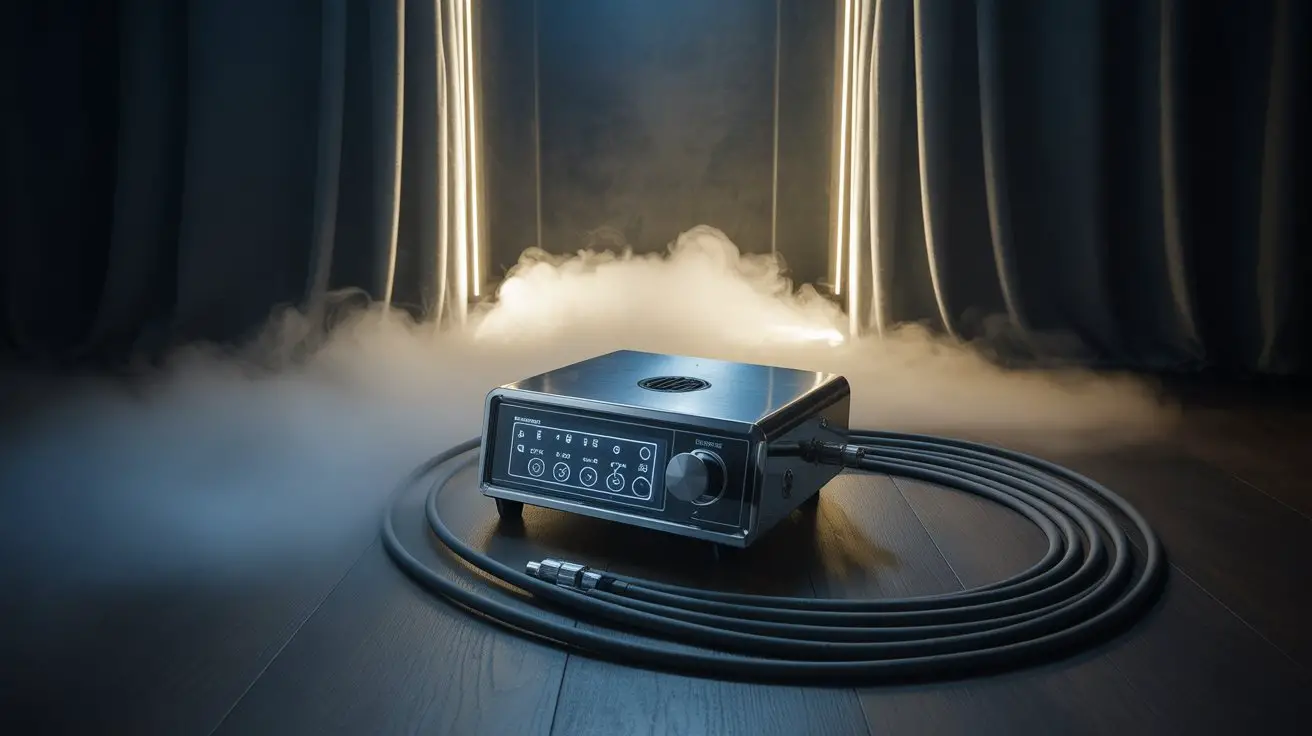
Once you’ve secured the perfect doorway location, your fog machine’s output capacity becomes the determining factor between a wispy disappointment and a dense, impenetrable wall of atmospheric drama. Professional-grade machines deliver consistent particle density through precise heating elements and fluid injection systems. Selecting a machine with a high fog output capacity ensures that your fog curtain will effectively cover the desired area.
| Specification | Light Traffic | Heavy Traffic | Commercial |
|---|---|---|---|
| CFM Output | 1,000-3,000 | 3,000-8,000 | 8,000+ |
| Warm-up Time | 3-5 minutes | 2-4 minutes | 1-2 minutes |
| Tank Capacity | 1-2 liters | 2-5 liters | 5+ liters |
| Power Draw | 400-700W | 700-1200W | 1200W+ |
Select machines with adjustable output controls and continuous operation capability. DMX compatibility enables synchronized timing with lighting systems. Timer-based fog injection maintains consistent curtain density throughout extended operation periods, preventing gaps in your atmospheric barrier.
Positioning Your Fog Machines for Maximum Effect
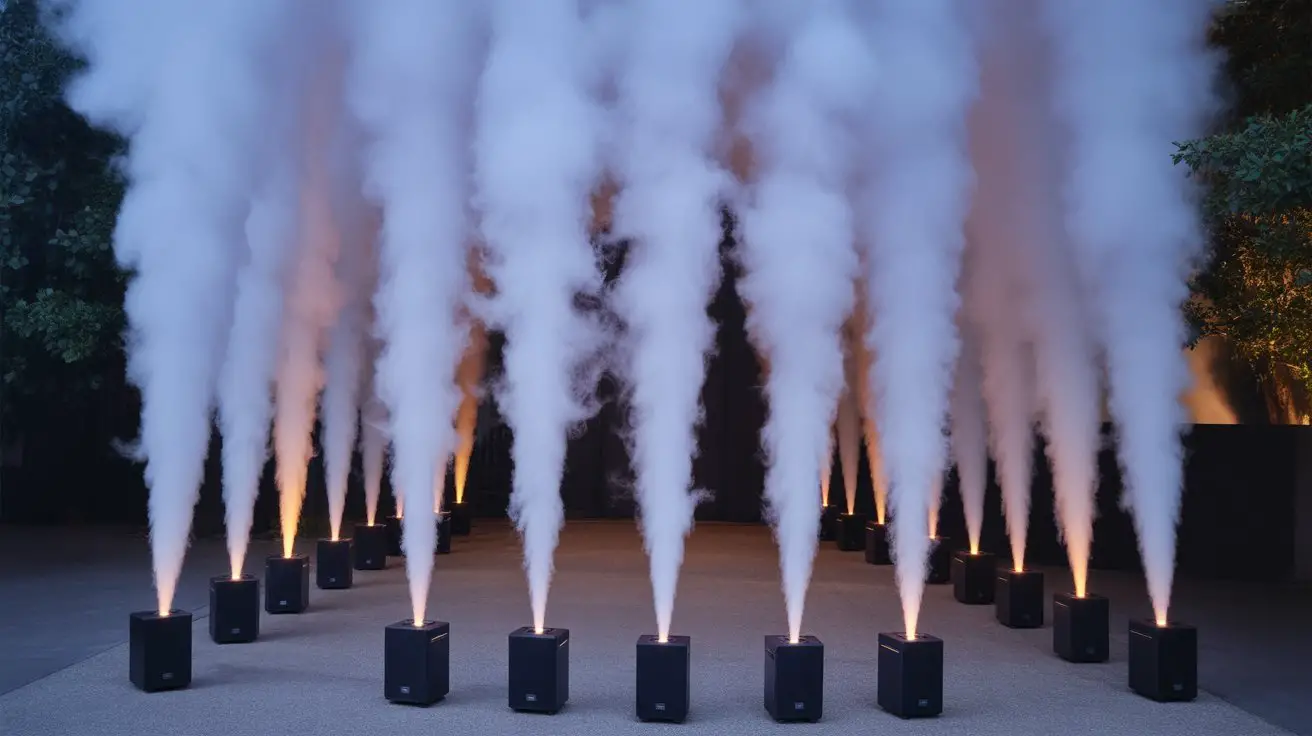
Strategic placement transforms your fog machine from a simple effect generator into an architectural tool that sculpts atmospheric density across your entrance threshold.
Position units at ground level, creating low-lying vapor that pools naturally due to fog’s cooling properties. Install secondary machines at mid-height positions to establish vertical layering and prevent gap formation in your curtain wall.
Critical positioning parameters include:
- Ground-level deployment – Creates mysterious, ankle-deep fog banks that guests must wade through, triggering primal anticipation.
- Flanking configurations – Positions machines on both sides of the entrance, forcing visitors to penetrate the atmospheric barrier.
- Upwind placement – Leverages air currents to push fog density toward the threshold, maximizing coverage efficiency.
Maintain 3-foot minimum spacing between units to prevent vapor collision and guarantee uniform distribution patterns. Additionally, be mindful that using water-based fog fluid can minimize residue on your furniture during the event.
Creating Proper Airflow and Ventilation Control
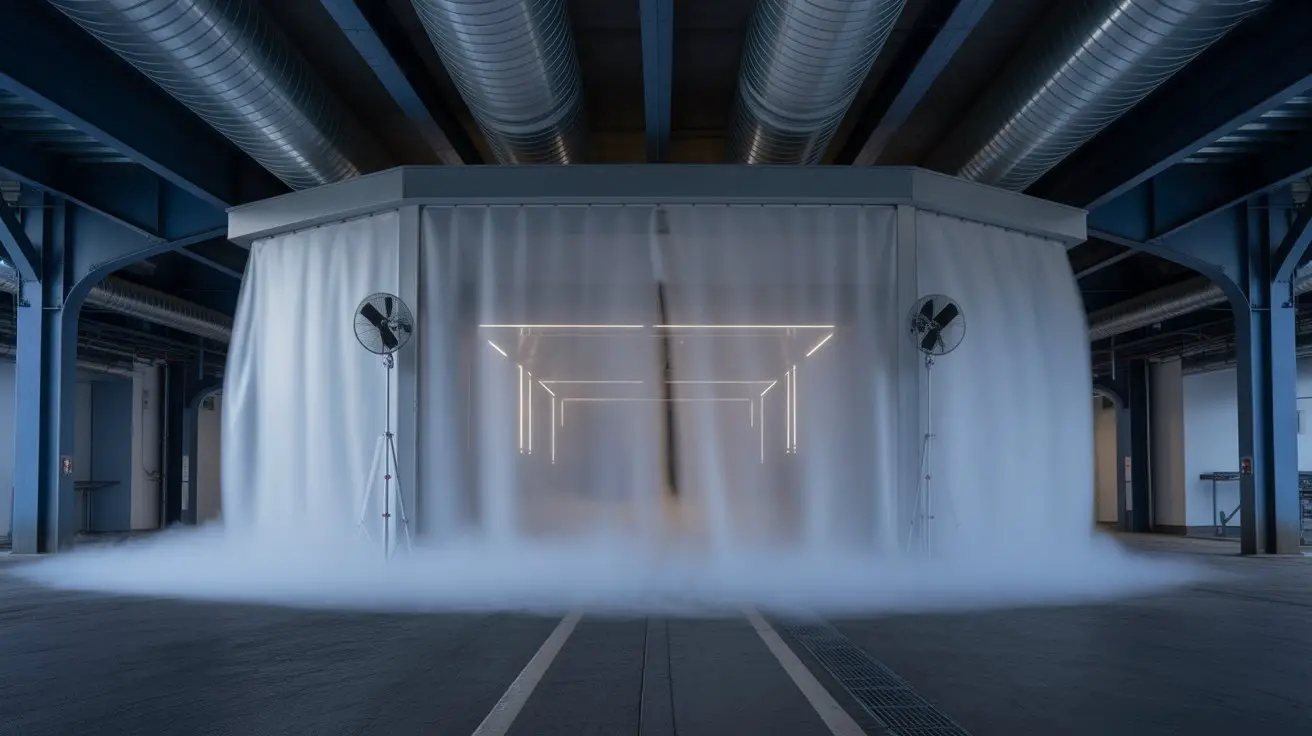
Effective fog machine placement means nothing without controlled airflow management that governs how your atmospheric curtain behaves at the entrance threshold.
You’ll need to identify natural air currents that disrupt fog density and redirect them using strategic baffles or temporary barriers. Install exhaust fans perpendicular to your fog flow to prevent unwanted dispersal while maintaining curtain integrity.
Position intake vents to create laminar airflow that supports fog descent rather than turbulent crosscurrents that fragment your effect.
You must balance ventilation requirements with fog retention—too much airflow evacuates your atmosphere, while insufficient circulation creates stagnant pockets that compromise the dramatic reveal.
Monitor air pressure differentials between spaces to guarantee fog flows directionally through your entrance portal, creating that perfect theatrical shift. Additionally, using different types of fog machines can help tailor your setup to achieve the desired fog density and effect.
Safety Precautions and Fire Regulations
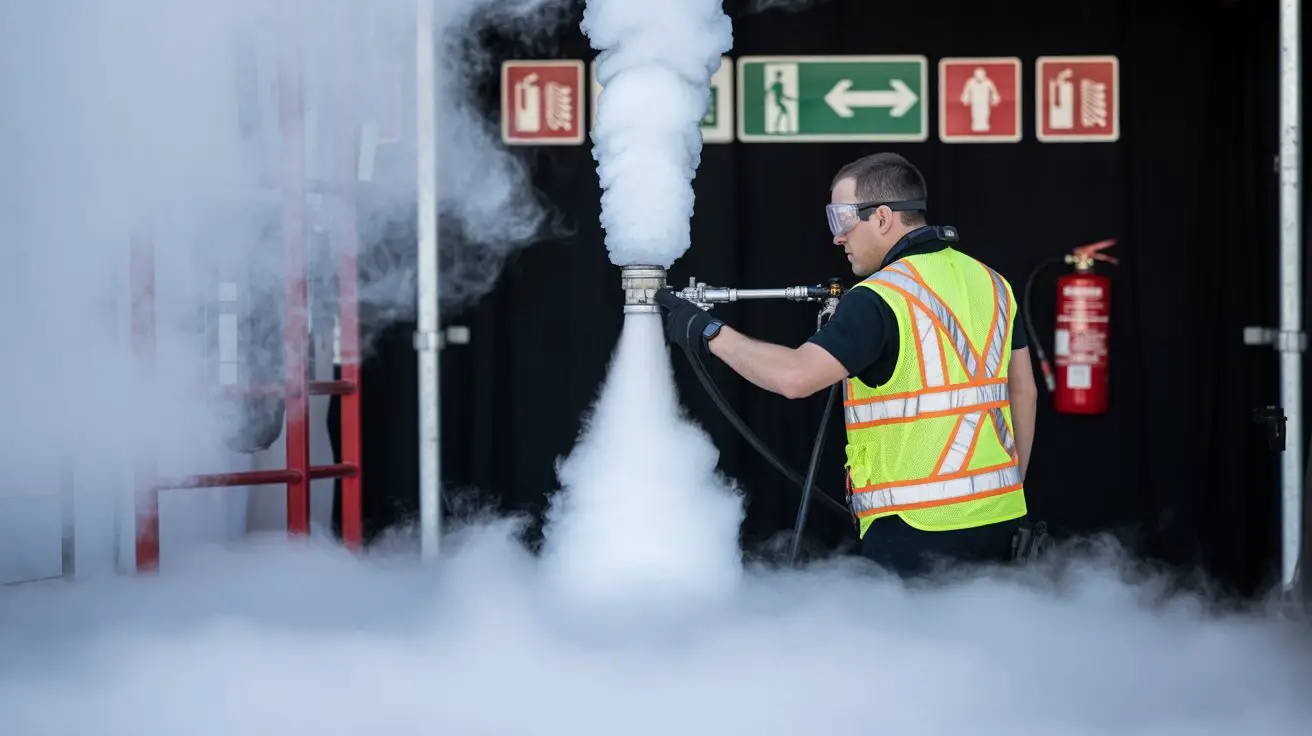
Before implementing your fog curtain entrance, you must verify compliance with local fire safety codes that specifically address theatrical fog and reduced visibility conditions.
Contact your fire marshal to obtain permits and conduct mandatory inspections before activation.
Install emergency shutoff systems with manual override capabilities positioned at multiple accessible points.
Your fog fluid must be water-based, non-toxic, and carry appropriate safety certifications from recognized testing laboratories.
Critical safety protocols you’ll implement:
- Emergency egress lighting – Bright LED strips guide panicked guests through dense fog when visibility drops to zero
- Audible alarm systems – Piercing sirens cut through disorienting fog clouds to alert everyone of immediate danger
- Staff monitoring stations – Trained operators watch for distressed guests who become lost or overwhelmed in thick fog
Maintain clear evacuation pathways and post visible emergency procedures.
Step-by-Step Setup Instructions
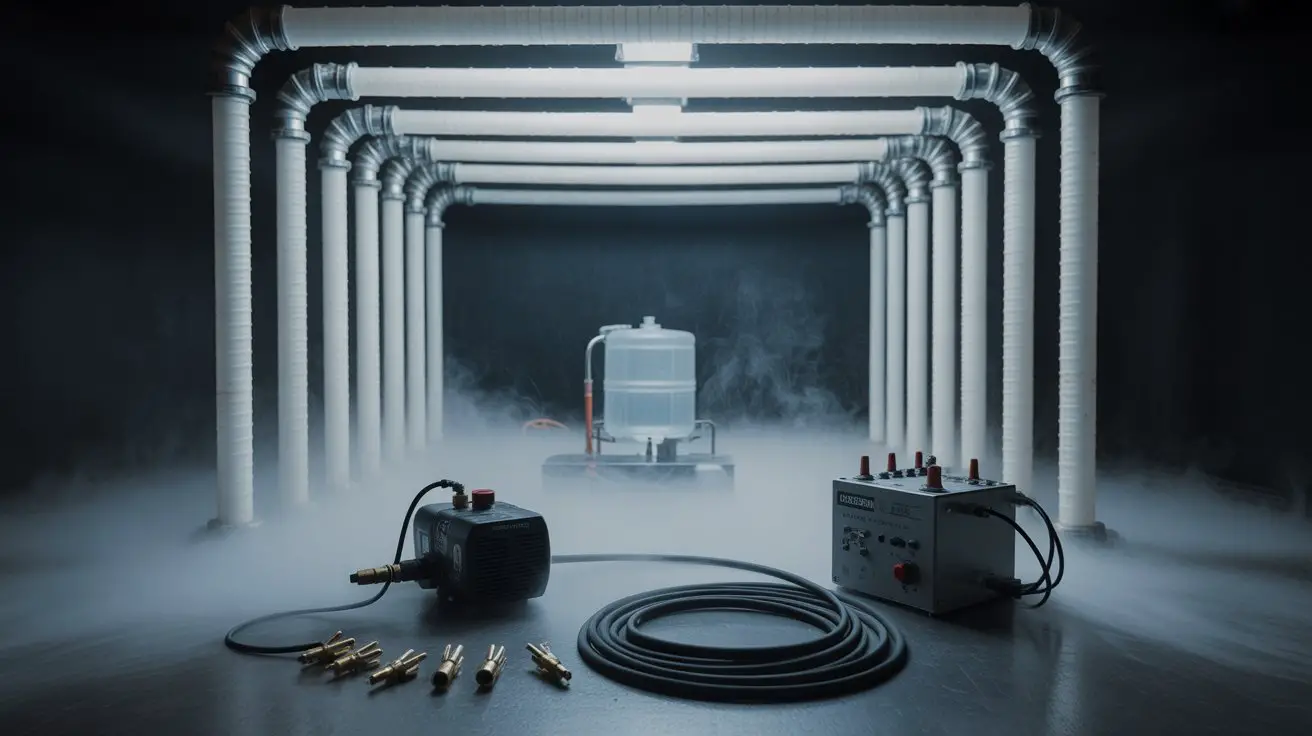
Position your fog machine 6-8 feet upstream from the entrance threshold, ensuring adequate clearance for fluid reservoir access and maintenance.
Connect flexible ducting to the machine’s output nozzle, routing it through concealed channels or overhead mounting brackets. Install distribution nozzles at strategic intervals along the entrance span—typically every 18-24 inches for uniform coverage.
Configure your DMX controller to coordinate fog output with ambient lighting and sound cues. Set timer intervals between 15-30 seconds to maintain consistent density without overwhelming guests.
Test output settings, starting at the manufacturer’s recommended level and adjusting based on desired opacity.
Run a complete system check, verifying electrical connections, fluid flow rates, and emergency shutoff functionality before opening to guests.
Fine-Tuning Density and Timing Controls
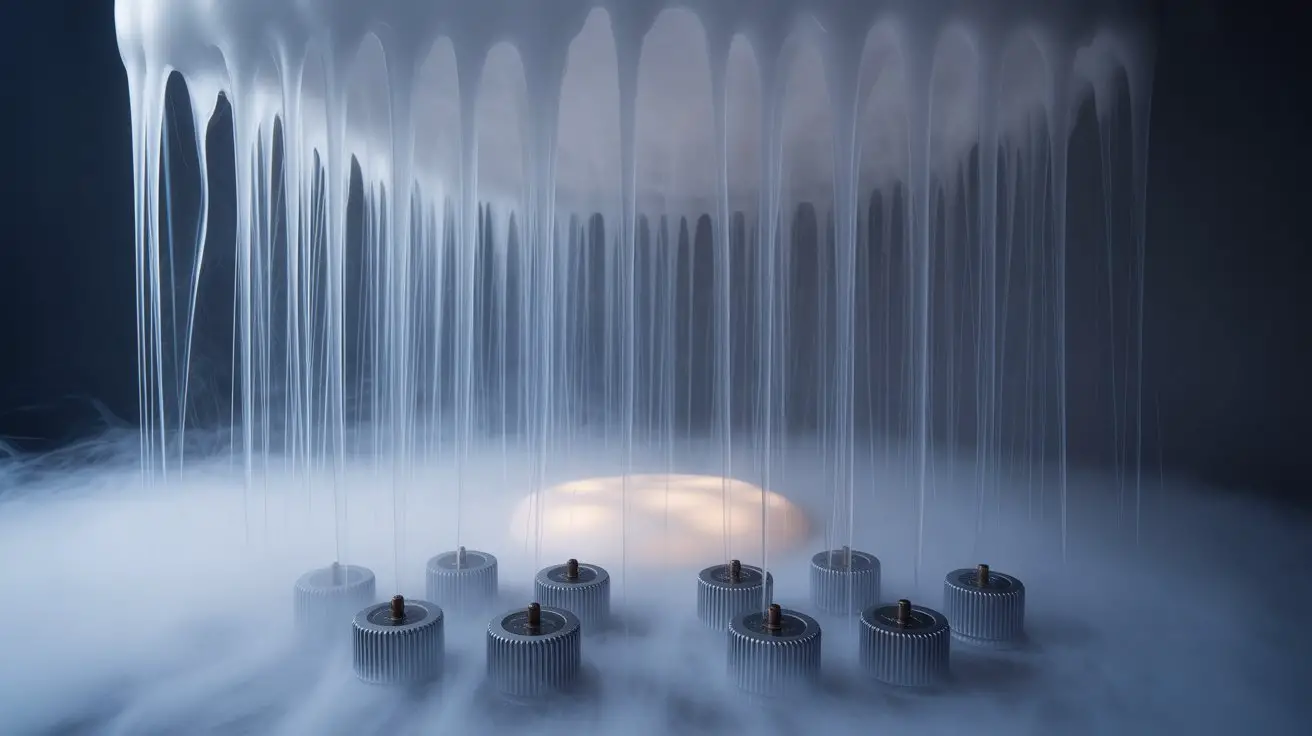
Once your system passes initial testing, achieving the perfect atmospheric balance requires precise calibration of fog output density and timing sequences.
You’ll need to adjust the machine’s output level and burst length while watching how dense the curtain looks. Start with 30-second intervals between activation cycles, then modify based on environmental conditions and desired effect duration.
Configure your timing controller to match pedestrian traffic patterns:
- Dramatic cascading walls that flow like liquid silk, creating an otherworldly portal that transforms ordinary doorways into mystical thresholds
- Billowing ethereal clouds that swirl and dance around visitors, enveloping them in mysterious embrace as they cross the threshold
- Pulsing rhythmic bursts synchronized with ambient lighting, creating a theatrical heartbeat that quickens anticipation with each approaching step
Monitor ambient temperature and humidity levels continuously, adjusting output parameters accordingly.
Lighting Techniques to Enhance the Effect

Nothing transforms a functional fog curtain into a mesmerizing spectacle quite like strategic lighting placement.
You’ll want to position LED fixtures at ground level, angling upward through the fog at 30-45 degrees for ideal light scatter. Install color-changing RGB units behind the fog generators to create dramatic backlighting effects that illuminate particles from within.
Deploy strip lights along the entrance perimeter to define boundaries while accent spotlights highlight specific fog zones. You can synchronize lighting sequences with fog bursts using DMX controllers for dynamic presentations.
Cool blues and purples enhance the ethereal quality, while warm ambers create mysterious atmospheres.
Consider adding blacklight fixtures to make fog particles fluoresce spectacularly. Position key lights to avoid direct eye contact while maintaining sufficient ambient illumination for safe passage through your fog curtain entrance.
Troubleshooting Common Problems
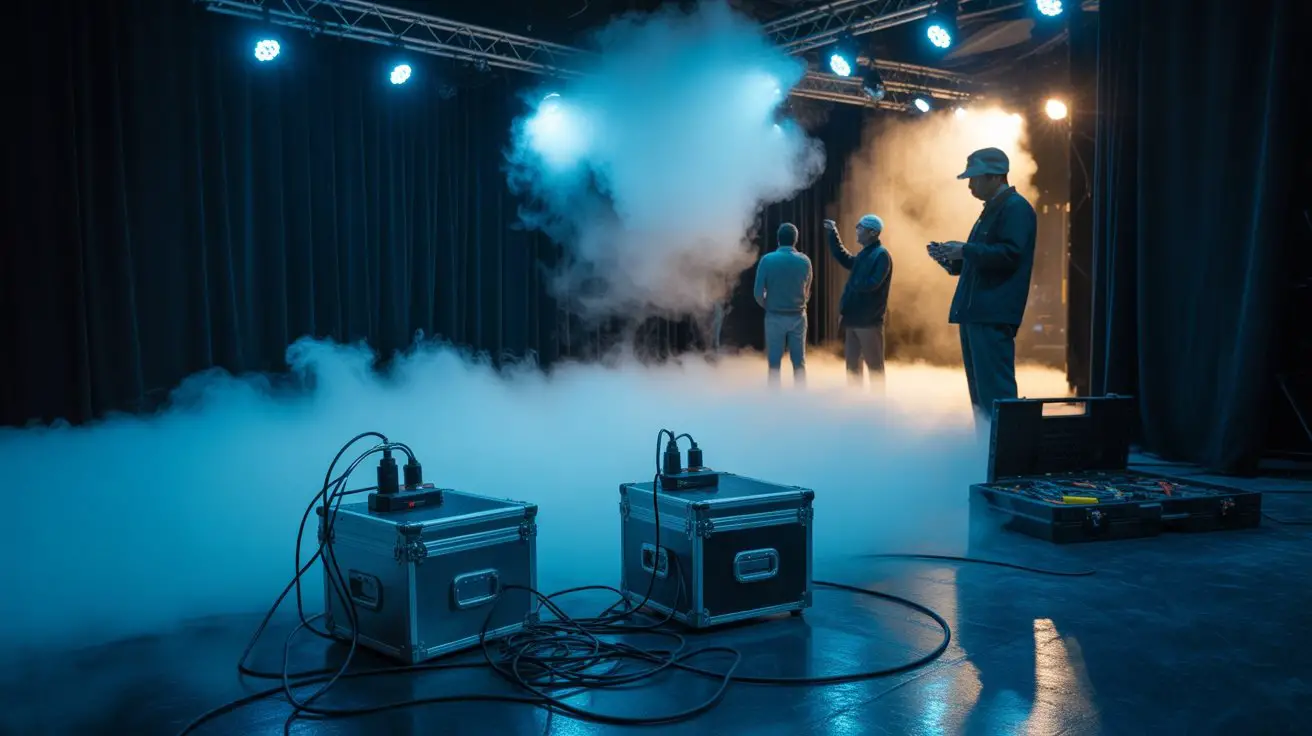
Three primary issues typically plague fog curtain installations: inconsistent fog density, premature dissipation, and uneven distribution patterns.
These problems stem from inadequate airflow management, improper fluid viscosity, or insufficient machine positioning.
When troubleshooting density variations, you’ll need to adjust your fog machine’s output settings and verify fluid concentration levels.
Temperature differentials between your fog fluid and ambient air create inconsistencies that require recalibration.
For premature dissipation, examine ventilation systems disrupting your fog patterns.
Strategic baffles redirect unwanted airflow while maintaining desired opacity levels.
Critical troubleshooting steps that’ll save your installation:
- Monitor fluid temperature – Cold fluid produces weak, patchy fog that destroys atmospheric impact
- Check nozzle alignment – Misaligned jets create gaps that shatter the mystical barrier effect
- Measure ambient humidity – Low humidity accelerates dissipation, ruining dramatic reveals
Frequently Asked Questions
How Much Does It Cost to Set up a Fog Curtain Entrance?
You’ll spend $200-800 for basic fog curtain systems, including fog machines, specialized nozzles, and controlled dispersal equipment. Professional-grade installations with multiple zones and DMX controllers can cost $1,500-5,000 depending on venue specifications.
How Long Does Fog Fluid Typically Last During Continuous Operation?
Like clockwork, you’ll consume approximately one liter of fog fluid per hour during continuous operation. Your consumption rate depends on output intensity, nozzle specifications, and ambient conditions affecting particle density and dissipation patterns.
Can Fog Curtains Be Used Outdoors in Windy Conditions?
You’ll face significant challenges using fog curtains outdoors in windy conditions. Wind speeds above 5-8 mph will disperse the fog effect, compromising visibility barriers and reducing operational effectiveness for security applications.
Do Fog Curtains Trigger Smoke Detectors or Security Systems?
Yes, they can. Fog droplets scatter light just like smoke, so photoelectric smoke detectors are especially likely to go off, and ionization detectors can trip too in dense fog. Check with the venue before running fog, and never cover or disable detectors yourself.
How Often Should Fog Machines Be Cleaned and Maintained?
You’ll need to clean your fog machine after every 40 hours of operation or monthly, whichever comes first. Perform deep maintenance quarterly, including fluid line flushing and heating element inspection to guarantee peak performance.
Conclusion
You’ve now mastered the technical fundamentals of fog curtain deployment, from DMX512 integration to ventilation dynamics. Remember, the devil’s in the details—monitor your fluid viscosity, calibrate your chiller settings, and maintain consistent ducting pressure. Your lighting arrays will amplify the atmospheric density you’ve created. Should malfunctions occur, systematically diagnose each component: machine output, fluid delivery, and airflow patterns. You’ve transformed a simple threshold into a professional-grade sensory experience through precise engineering execution.