You’ll face unique challenges when incorporating fog machines into indoor wedding venues that don’t exist in outdoor settings. The confined space, ventilation systems, and guest proximity require careful planning to achieve stunning atmospheric effects without compromising comfort or safety. Your success depends on understanding how fog behaves in enclosed environments and mastering the technical considerations that separate amateur attempts from professional-grade results that’ll transform your ceremony into something truly memorable.
Choosing the Right Fog Machine for Indoor Venues
When selecting a fog machine for your indoor wedding venue, you’ll need to take into account the room’s size, ventilation system, and ceiling height to guarantee ideal fog distribution without overwhelming your guests.
For intimate spaces under 1,000 square feet, choose a 400-watt machine to prevent excessive fog buildup. Medium venues (1,000-3,000 square feet) require 700-1,000 watt units for proper coverage. Large ballrooms need 1,500+ watt machines with multiple fog outputs.
Consider water-based fog fluid over oil-based alternatives, as it’s the standard for indoor use, though any fog can still set off smoke detectors. Additionally, ensure that the machine you select has a fog production rate that meets your event’s needs and provides a pleasing aesthetic without being overpowering.
Ascertain your chosen machine offers adjustable output controls and timer functions. Test the machine beforehand to verify compatibility with your venue’s HVAC system and fire safety regulations.
Selecting Appropriate Fog Fluids and Effects
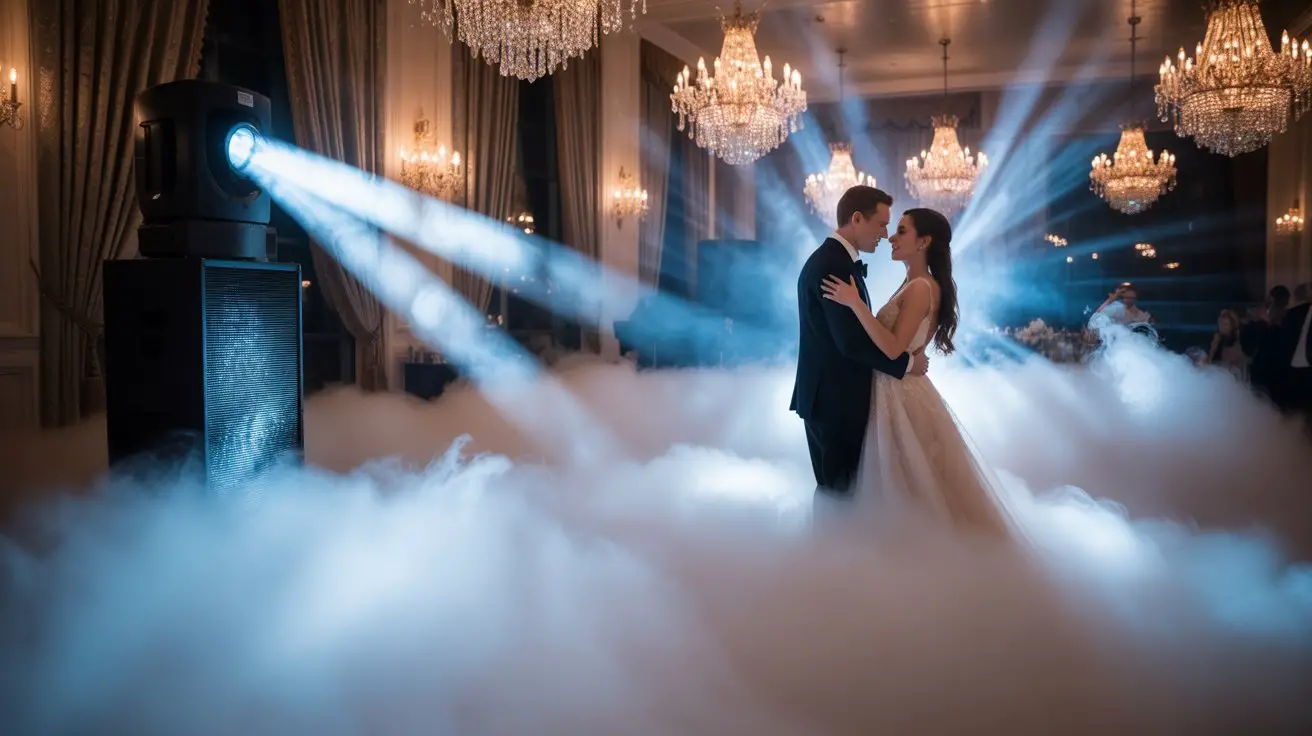
Once you’ve chosen your fog machine, the type of fog fluid you select will directly impact both the visual quality and safety of your wedding atmosphere.
For indoor weddings, you’ll need to prioritize guest comfort alongside stunning visuals.
Consider these essential fog fluid characteristics:
- Water-based formulas – These produce cleaner, less irritating fog that dissipates faster than oil-based alternatives.
- Low-residue options – Prevent sticky buildup on venue surfaces, furniture, and guest clothing.
- Odorless varieties – Eliminate distracting chemical smells that could interfere with dining or dancing.
- Quick-dispersing blends – Allow better visibility control and prevent overwhelming enclosed spaces.
You’ll also want to test your chosen fluid beforehand to guarantee it creates the desired density and duration for your specific venue size and ventilation system. Additionally, using glycerin-based smoke fluid ensures a thicker fog effect that can enhance the overall atmosphere of your special day.
Strategic Placement and Positioning Techniques
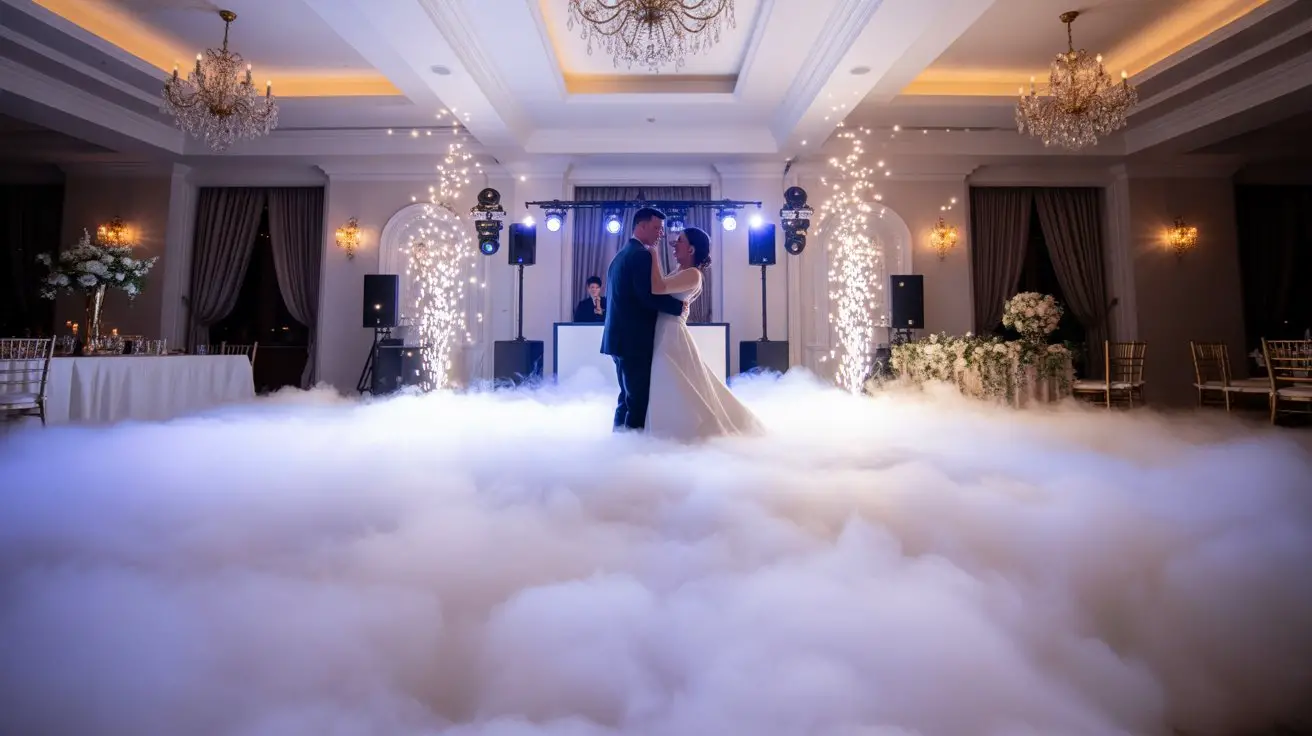
Where you position your fog machines will make the difference between a magical ambiance and an overwhelming haze that disrupts your celebration.
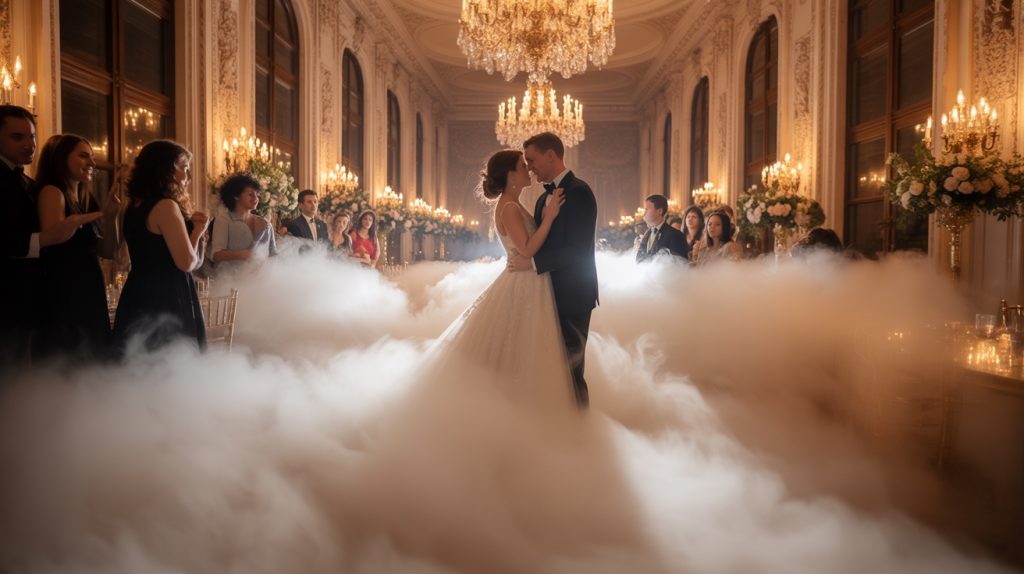
Place machines behind the wedding party during ceremonies to create dramatic backlighting without obscuring guests’ views. Position units low to the ground since fog naturally settles, creating a carpet effect that won’t interfere with photography or visibility.
For reception dance floors, install machines at opposite corners to guarantee even distribution. Keep them away from ventilation systems that’ll disperse the effect too quickly.
Consider guest comfort by avoiding placement near elderly attendees or those with respiratory sensitivities. Test positioning during your venue walkthrough, accounting for air currents, ceiling height, and guest seating arrangements to achieve ideal atmospheric enhancement. Additionally, ensure that you are using the right type of fog machine to create the desired visual effects without compromising air quality.
Working With Venue Ventilation and Safety Systems
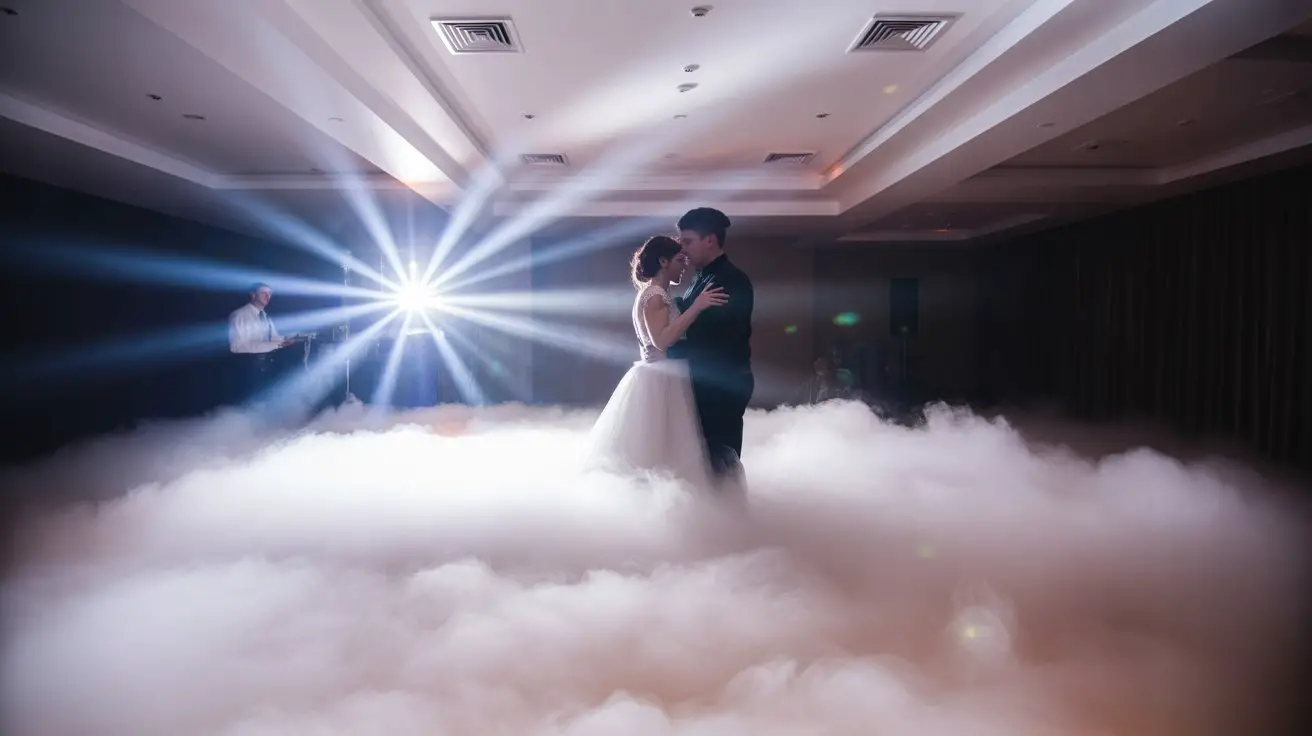
Understanding your venue’s ventilation and safety systems will determine how effectively your fog machines perform and whether they’ll trigger unwanted interruptions during your special day.
You’ll need to coordinate with venue management to identify HVAC intake locations, fire alarm sensors, and emergency systems that could interfere with your fog effects. Strategic timing becomes essential when working around these systems.
Key considerations for venue coordination:
- Test fog density levels during setup to avoid triggering smoke detectors
- Identify air circulation patterns to predict fog movement and dispersal
- Coordinate with venue staff on temporary sensor adjustments if permitted
- Plan backup strategies for quick fog dispersal if safety systems activate
Always prioritize guest safety over dramatic effects, and maintain clear communication channels with venue coordinators throughout your event. Additionally, be aware that fog machines can pose a risk of false alarms in venues due to their interaction with photoelectric (optical) smoke detectors.
Timing Your Fog Effects for Maximum Impact
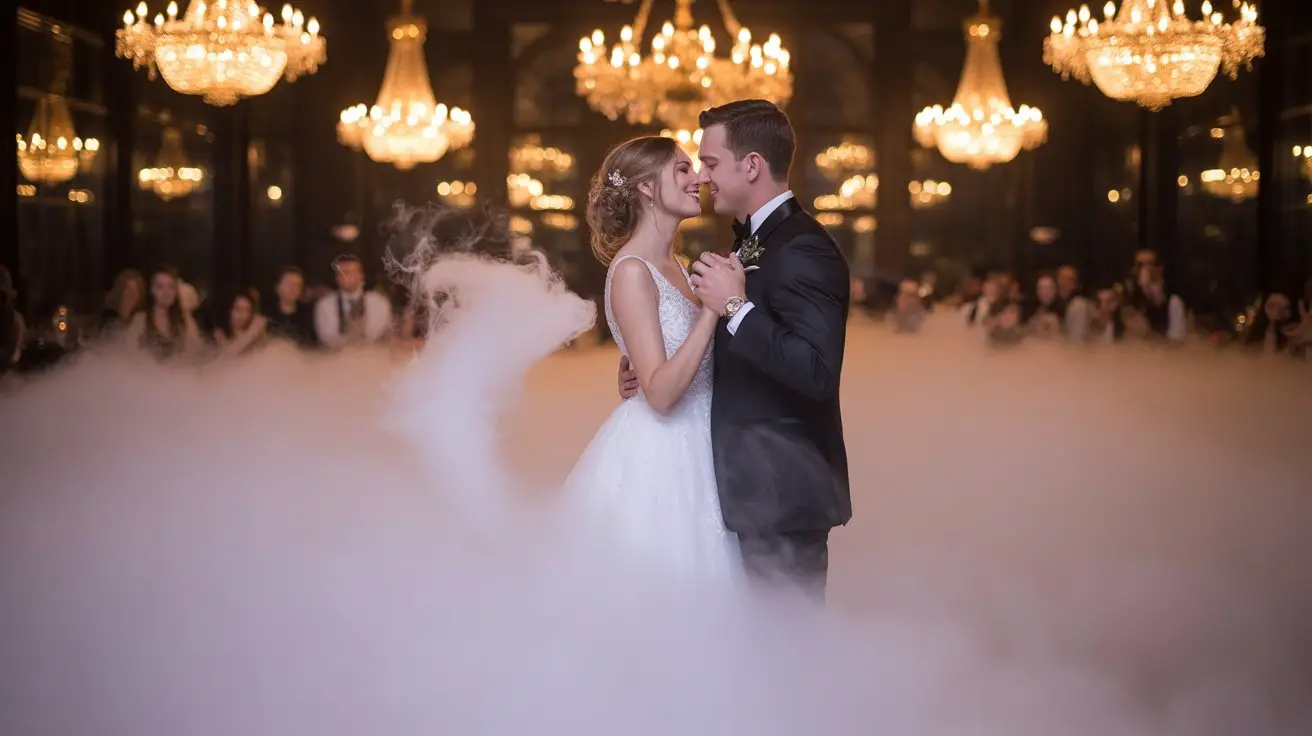
Strategic timing transforms ordinary fog effects into breathtaking moments that’ll leave your guests mesmerized and create the wedding magic you’ve envisioned.
Activate fog machines 30 seconds before your grand entrance to allow proper dispersal. For first dances, trigger effects during instrumental intros rather than vocals to avoid overwhelming the music.
You’ll want continuous low-level fog for ambient atmosphere, but reserve dramatic bursts for pivotal moments like processional walks and kiss reveals.
Coordinate with your DJ or band to synchronize fog releases with musical crescendos. Test timing during rehearsal to perfect your cues.
Consider your photographer’s needs—fog enhances dramatic shots but can obscure important facial expressions if overdone. Space effects at least 10 minutes apart to prevent overwhelming guests and maintain impact through strategic restraint. Additionally, be mindful of the potential health risks associated with prolonged fog exposure to ensure a safe and enjoyable experience for all attendees.
Coordinating Fog With Lighting and Photography
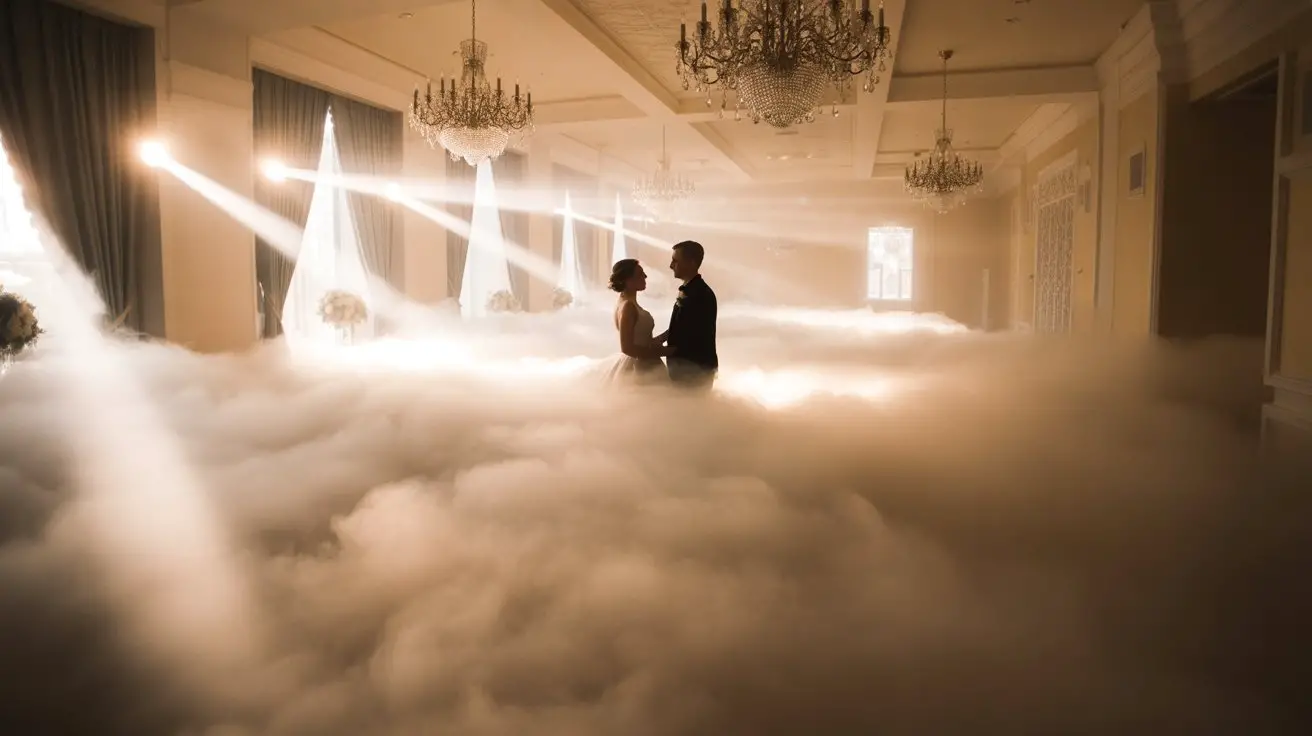
When fog meets carefully planned lighting, you’ll create stunning visual effects that transform your venue into a dreamlike setting.
Strategic coordination between fog, lighting, and photography guarantees your wedding moments are captured beautifully without compromising visibility or image quality.
Work closely with your lighting designer and photographer to synchronize fog bursts with key lighting cues. This collaboration creates dramatic backdrops while maintaining clear sightlines for essential shots.
- Test fog density levels during your venue walkthrough to determine ideal settings for different lighting scenarios
- Position uplights behind fog areas to create ethereal glowing effects without washing out foreground subjects
- Schedule fog releases between photo sessions to avoid obscuring important candid moments or formal portraits
- Use colored lighting gels with fog to match your wedding theme and create depth in photographs
Managing Fog Density and Distribution
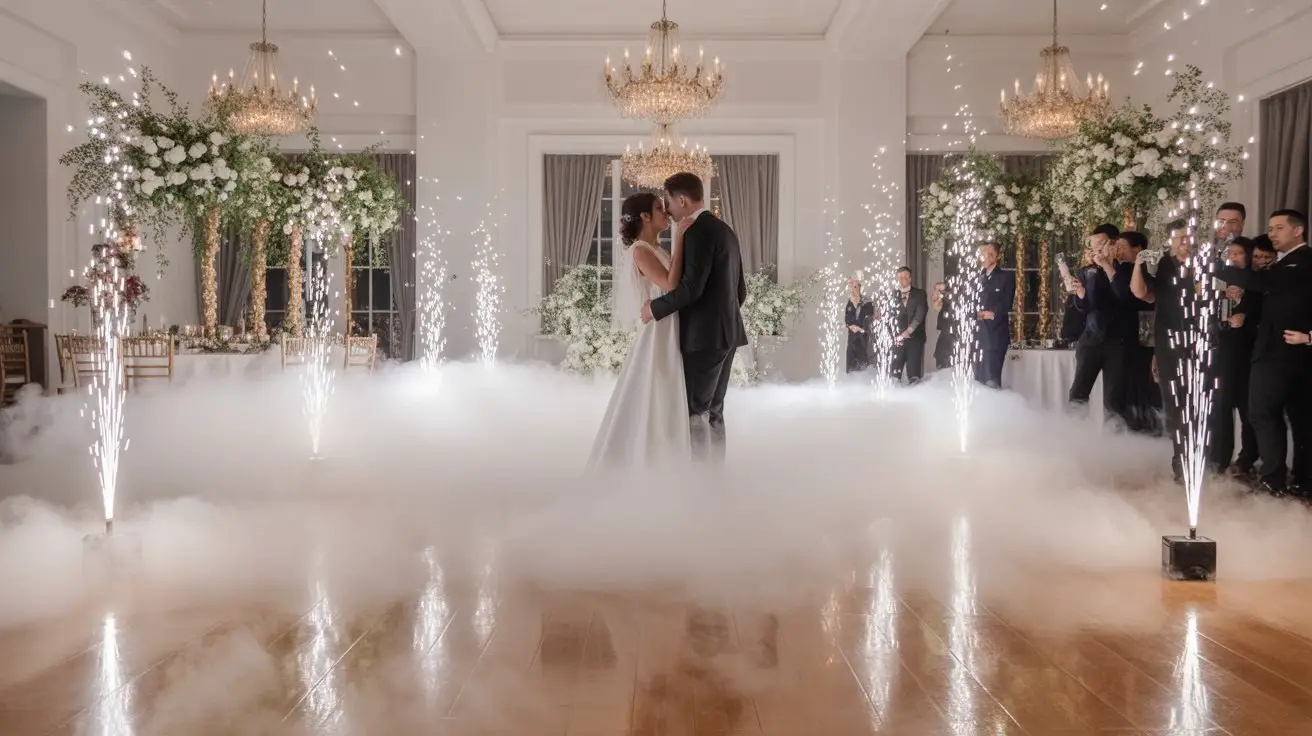
Controlling fog density requires precise adjustment of your machine’s output settings and careful monitoring of environmental factors that affect distribution patterns. You’ll need to balance output intensity with your venue’s air circulation to achieve ideal visual impact without overwhelming guests.
| Density Level | Output Setting | Best Applications |
|---|---|---|
| Light | 25-40% | Subtle ambiance, dinner service |
| Medium | 50-70% | First dance, ceremony entrance |
| Heavy | 75-90% | Grand entrances, photo sessions |
| Dense | 95-100% | Dramatic moments, stage effects |
Position your machine strategically to work with natural airflow patterns. Lower fog naturally settles, so elevate machines for broader distribution. Test different settings during your venue walkthrough, adjusting for ceiling height and ventilation systems. Monitor guest comfort levels and maintain clear pathways for safety.
Testing and Rehearsal Best Practices
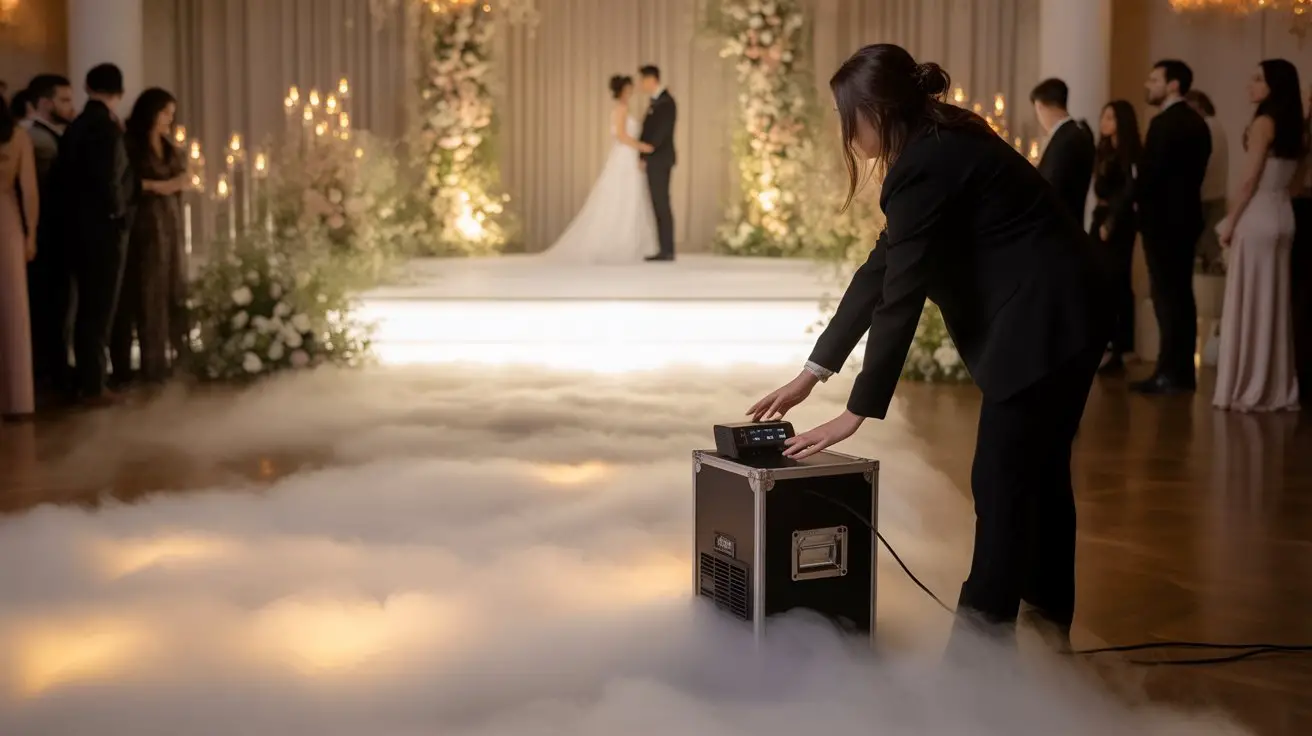
Before your wedding day arrives, you’ll need to conduct thorough testing sessions to confirm your fog effects perform flawlessly during the actual event.
Schedule at least two rehearsals in your actual venue to identify potential issues and perfect your timing.
During testing sessions, focus on these critical elements:
- Timing coordination – Practice cue sequences with your DJ, photographer, and wedding planner to achieve seamless integration.
- Equipment positioning – Test different fog machine locations to attain ideal coverage without obstructing guest views.
- Ventilation assessment – Monitor how fog disperses in your specific venue and adjust fan placement accordingly.
- Safety walkthrough – Verify all pathways remain clearly visible and emergency exits stay unobstructed.
Document successful settings and create backup plans for equipment malfunctions.
Troubleshooting Common Indoor Fog Machine Issues
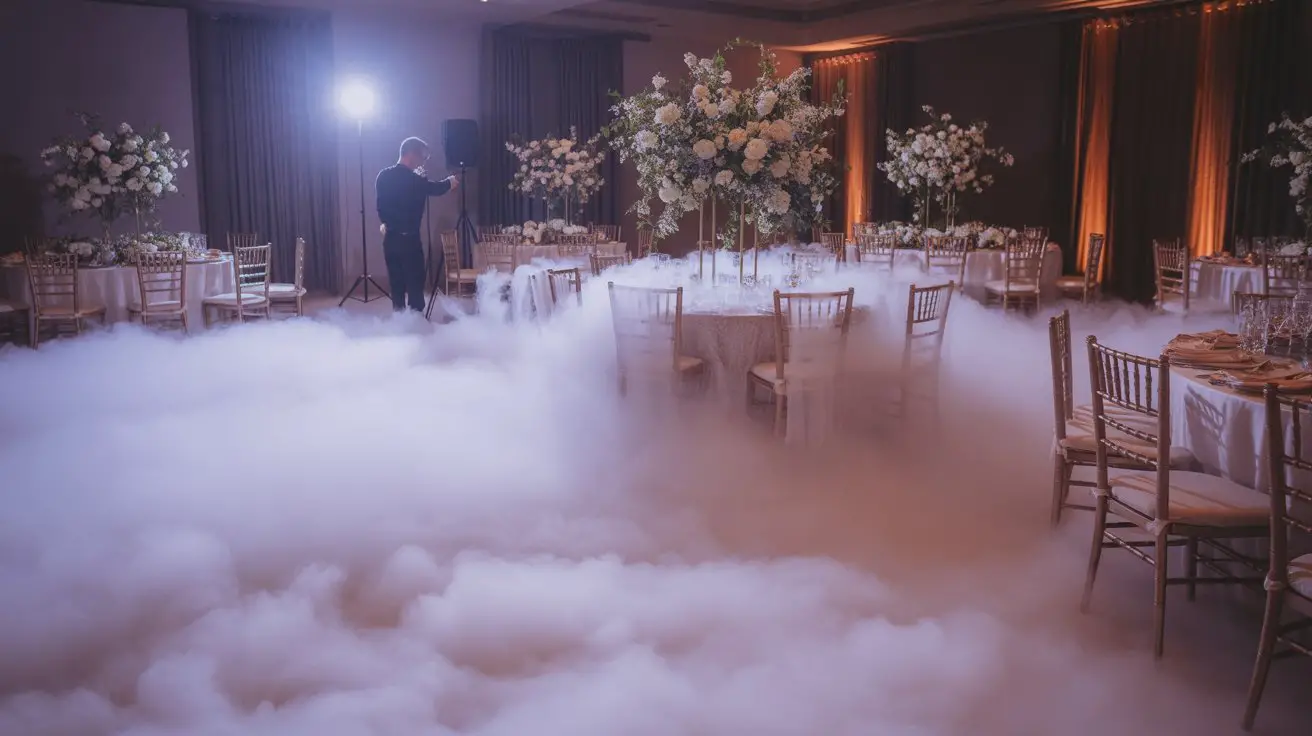
Several technical challenges can disrupt your fog effects during indoor wedding celebrations, but you can resolve most issues quickly with proper troubleshooting techniques.
| Problem | Solution |
|---|---|
| Weak fog output | Check fluid levels and replace empty cartridges |
| Machine won’t heat | Verify power connections and allow 5-10 minute warm-up |
| Fog dissipates too quickly | Reduce ventilation and lower room temperature |
| Uneven fog distribution | Adjust positioning and check for blocked vents |
When your fog machine stops producing dense effects, first examine the heating element indicator. If it’s not illuminated, disconnect and reconnect the power source. For persistent issues, clean the fluid reservoir with distilled water to remove residue buildup. Always keep backup fluid on hand, as running the machine dry can damage internal components and ruin your wedding moment.
Frequently Asked Questions
How Much Does It Cost to Rent Fog Machines for Weddings?
You’ll typically pay $75-$300 per day to rent wedding fog machines, depending on size and features. Basic units cost less, while professional-grade machines with remote controls and timers command higher rental fees.
Do Fog Machines Leave Residue on Wedding Dresses or Decorations?
Ironically, while fog creates magical moments, you’ll worry unnecessarily about residue. Quality water-based fog fluid rarely damages a dress or decorations. Keep the machine several feet away from fabric, though, since fog blown at close range for a long time can leave a slight film.
Can Fog Machines Trigger Asthma or Allergies in Wedding Guests?
Yes, fog machines can trigger asthma and allergies in sensitive guests. You’ll want to use water-based fog fluids, guarantee proper ventilation, inform guests beforehand, and consider glycerin-free options to minimize respiratory irritation risks.
Are Fog Machines Allowed in All Wedding Venues and Reception Halls?
Many wedding venues restrict fog machines due to fire safety systems. You’ll need to check your venue’s specific policies, obtain written permission, and verify their fog machine requirements before your reception.
How Long Does Fog Last After the Machine Stops Running?
You’ll typically see fog dissipate within 5-15 minutes after your machine stops, depending on venue ventilation, humidity levels, and air circulation. Dense fog clears faster in well-ventilated spaces with active HVAC systems.
Conclusion
You’ll transform your indoor wedding into an absolutely breathtaking cinematic masterpiece by mastering these fog machine techniques. Remember, you’re not just adding effects—you’re crafting unforgettable moments that’ll leave your guests mesmerized. Test everything beforehand, coordinate with your venue’s systems, and time each fog burst perfectly with your key moments. When you’ve balanced placement, density, and lighting coordination properly, you’ll create the magical atmosphere that makes your special day truly extraordinary.