Aim for about 30 to 50 percent indoor humidity in winter, which is the range the EPA recommends. On very cold days, go lower, toward 30 percent or less, so your windows don’t fog up and drip.
Heating dries indoor air out, so winter is when many homes drop below 30 percent. Here is how to find the right number for your house, how to measure it, and how to keep it there without causing condensation.
What Is a Good Humidity Level for a House in Winter?
The EPA recommends keeping indoor relative humidity between 30 and 50 percent, and below 60 percent to keep mold from growing. Inside that range, most people stop noticing dry skin, static shocks and scratchy throats.
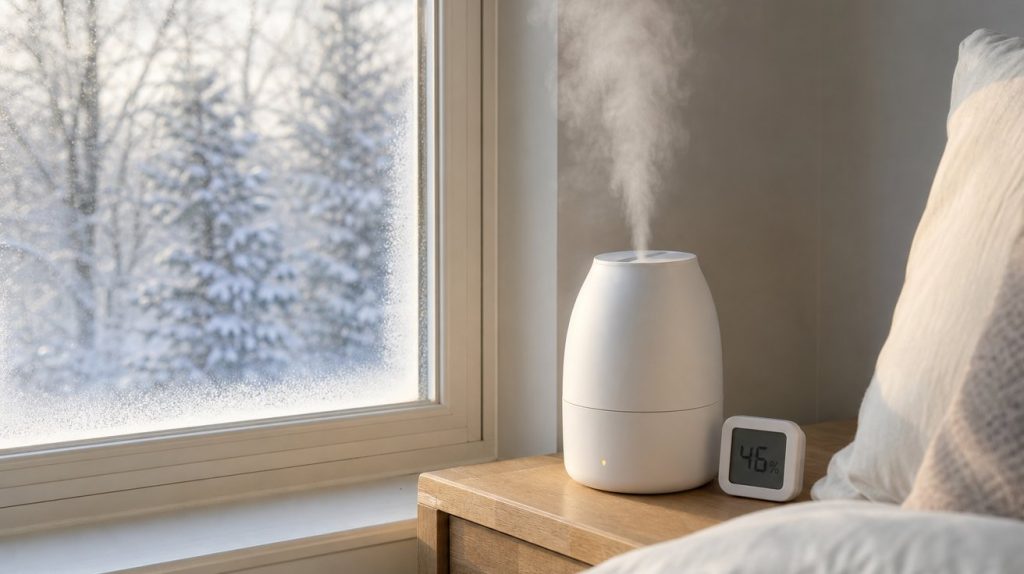
The catch is cold glass. The colder it is outside, the colder your windows get, and moist indoor air condenses on them long before it reaches 50 percent.
How Low Should You Go When It Gets Really Cold?
Cold-climate guides, such as the University of Minnesota Extension’s, lower the target as the outdoor temperature drops. This is the widely used version.
| Outdoor temperature | Indoor humidity, no higher than |
|---|---|
| 20 to 40°F | 40% |
| 10 to 20°F | 35% |
| 0 to 10°F | 30% |
| -10 to 0°F | 25% |
| -20 to -10°F | 20% |
| Below -20°F | 15% |
If water still collects on the inside of your windows, lower the humidity a little more. Condensation that sits on window frames day after day is how mold starts.
How Do You Measure Indoor Humidity?
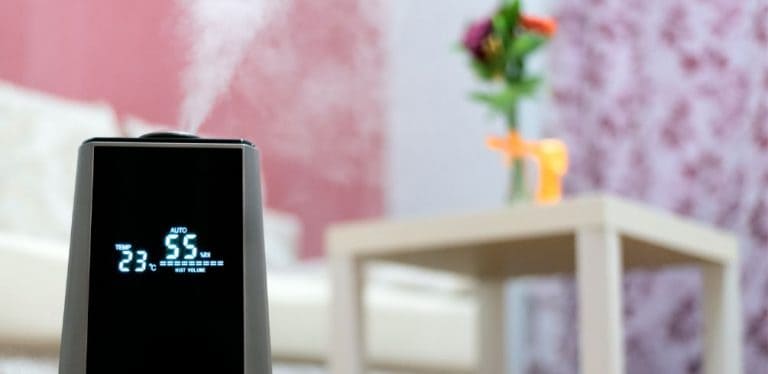
Use a hygrometer, a small digital meter that shows humidity and temperature. Put it in the room you care about most, away from the humidifier, the kitchen and the bathroom, so the reading isn’t skewed.
Many humidifiers have a built-in humidistat, but it reads the air right next to the machine. A separate hygrometer across the room tells you what you are actually breathing.
How Do You Raise Humidity in Winter?
- A room humidifier for the bedroom or living room. Our guide to where to put a humidifier in your bedroom covers placement.
- A whole-house humidifier on the furnace if every room is dry. See the whole-house humidifier pros and cons.
- Small everyday moisture: drying laundry indoors, leaving the bathroom door open after a shower, or simmering a pot of water.
Set the humidifier to a number, not to high. Our guide to setting a humidifier’s humidistat walks through it.
What Happens If Humidity Is Too High?
Above about 60 percent, mold, mildew and dust mites start to thrive, which is why the EPA advises keeping humidity below that. In winter, the first sign is usually water running down the windows in the morning.
If you see that, turn the humidifier down or off, run the bathroom and kitchen fans, and check again the next day.
Frequently Asked Questions
Is 30 percent humidity too low in winter?
No, 30 percent is fine and often the right target on cold days. Below that, many people start to feel dry skin and static, so a humidifier helps.
Should I run a humidifier all winter?
Run it when your hygrometer reads below your target, and let the humidistat switch it off. Clean it as often as the manual says, so it doesn’t grow mold or bacteria.
Does humidity make a room feel warmer?
A little. Moist air feels slightly warmer than dry air at the same temperature, which we cover in does a humidifier make a room warmer.
Start at 30 to 40 percent, measure it with a hygrometer, and go lower when the windows sweat. Next, read hot or cold water in a humidifier.

Please be careful and use at your own risk
None of the authors, contributors, administrators, or anyone else connected with Wild Fog, in any way whatsoever, can be responsible for your use of the information contained in or linked from these web pages.