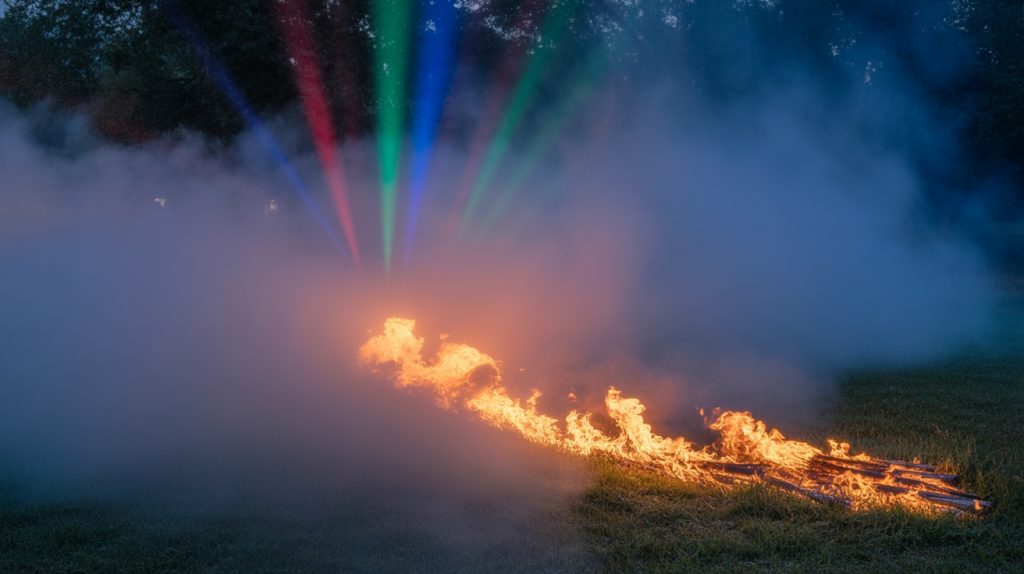
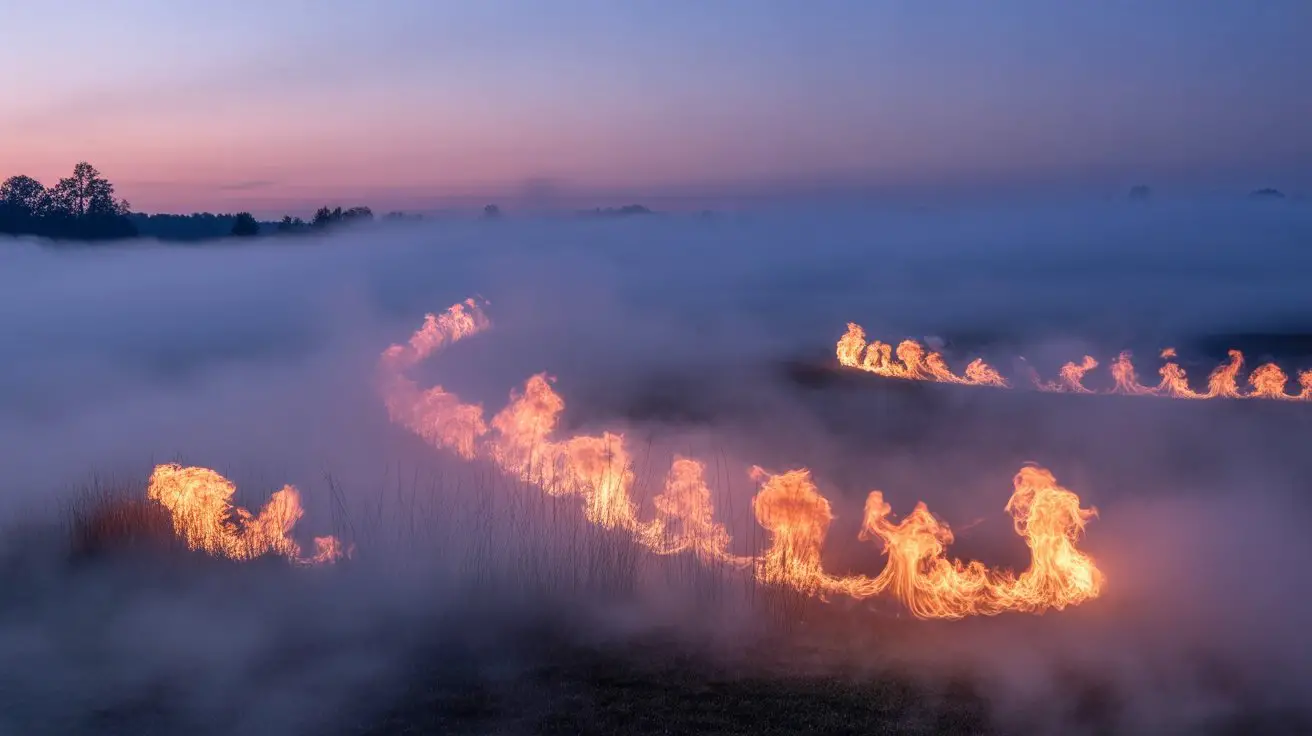
Fire and fog effects can make an outdoor event unforgettable, from flame bursts at a concert to low fog rolling across a wedding lawn. Fog is something most planners can run themselves.
Flame effects and pyrotechnics are different: they’re a job for licensed professionals, with permits from your fire marshal. Here’s how to plan both safely.
Essential Safety Protocols for Outdoor Fire and Fog Effects
The first rule is simple: hire licensed pyrotechnic or special effects (SFX) professionals for any flame effects or pyro. In the U.S., these effects fall under NFPA 1126 (pyrotechnics) and NFPA 160 (flame effects), plus state and local rules.
Your SFX company will set safety distances from the audience, structures and trees based on their equipment and your site. They’ll also bring the extinguishers and fire watch the permit requires.
On your side, keep exits and walkways clear, and make sure fog never hides exit signs or emergency lighting. Agree in advance on who can stop the show if wind or weather turns.
Permits and Legal Requirements for Outdoor Special Effects
Most places require a permit for flame effects and pyrotechnics, usually from the local fire marshal or fire department. Large events may also need a special event permit from the city.
Contact the fire marshal early, since lead times vary. Your SFX company usually handles the application, with site plans, equipment details and operator licenses.
Ask about insurance, too. Venues and permit offices often require proof of liability coverage, and your SFX company should carry its own.
Fog-only effects usually need less paperwork, but some venues and parks have rules about them. Ask before event day.
Weather Considerations and Environmental Impact Planning
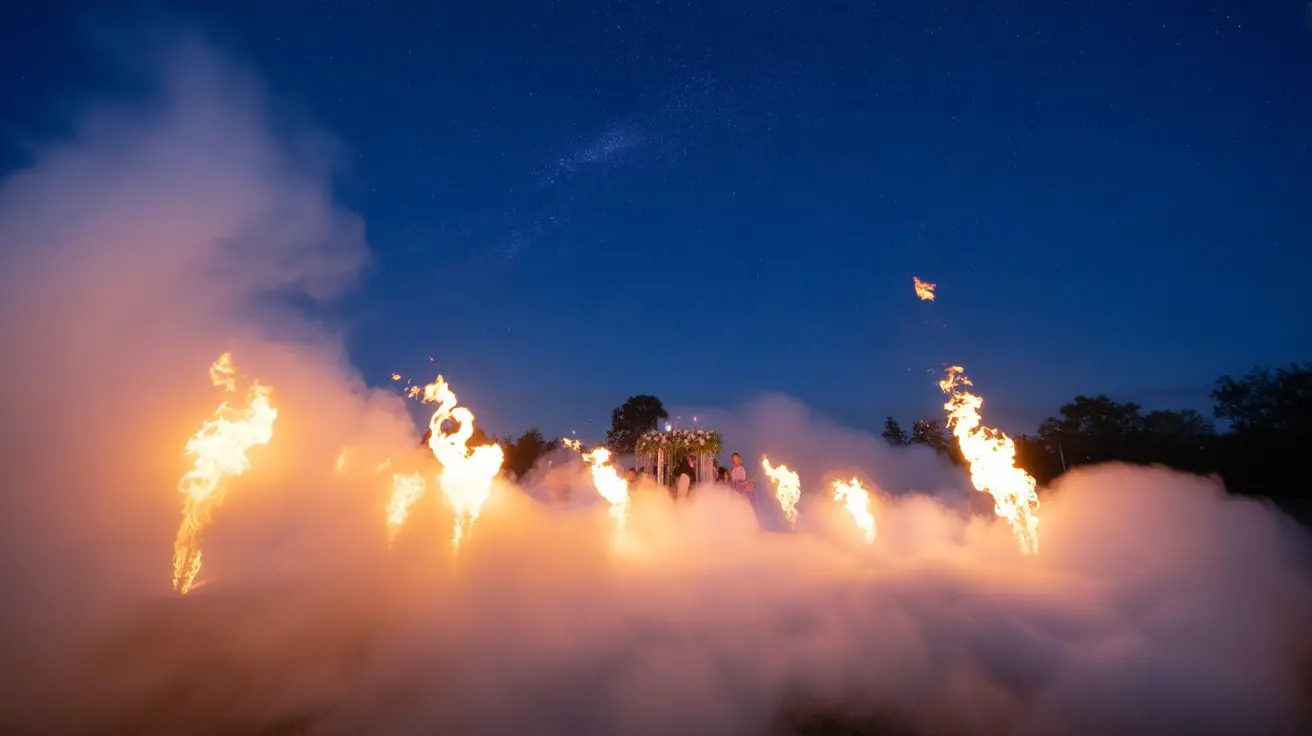
Wind is the big variable outdoors. It carries fog away, pushes flames and can carry sparks, so your SFX crew will set wind limits for their equipment and stop if those limits are hit.
Rain and wet grass add electrical risk. Run every fog machine on outdoor-rated cords and GFCI-protected power, and keep machines covered and off the ground.
Dry weather raises fire risk. Check for burn bans and red flag warnings, which can cancel flame effects outright.
Think about where fog will drift, too. Keep it off nearby roads, and consider the chemical makeup of fog fluids if you’re near ponds or wildlife areas.
Fire Effect Equipment Selection for Outdoor Venues
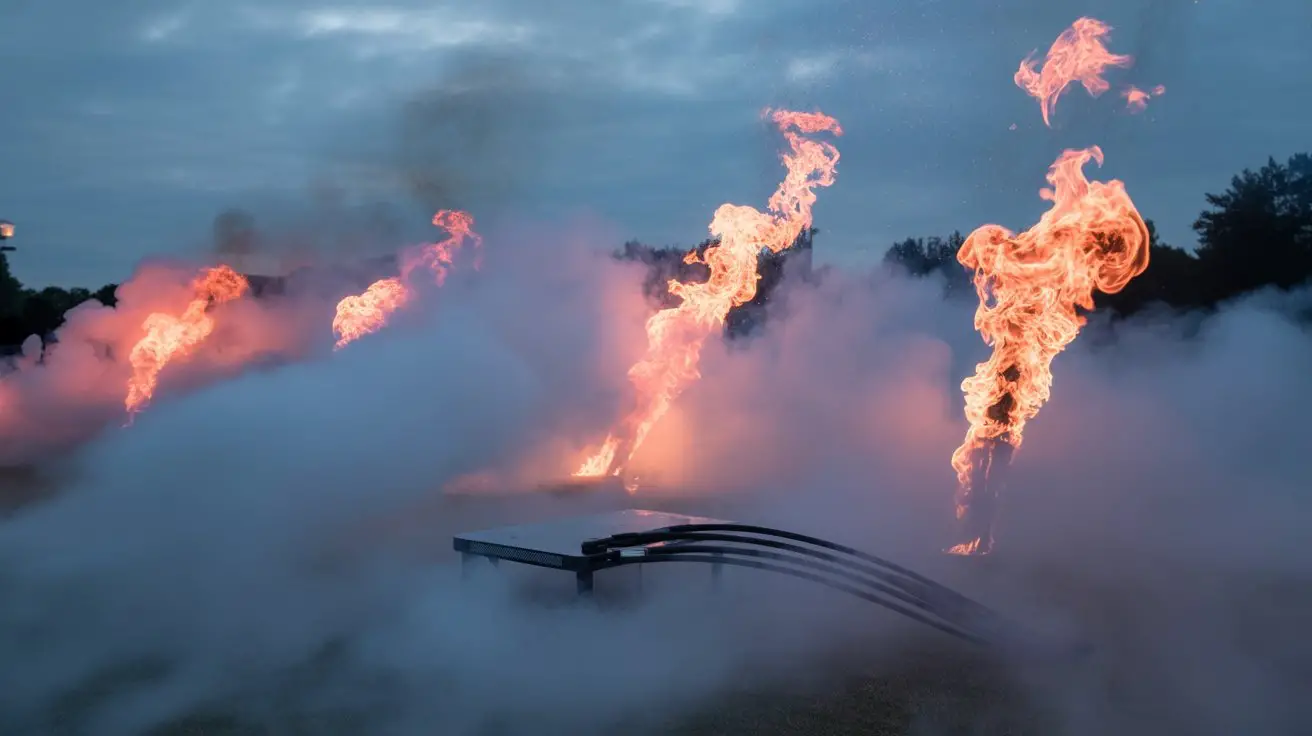
Flame projectors, fire bars and pyrotechnics should come with the licensed crew that runs them. Renting a flame unit to run yourself is a bad idea, and in many places it isn’t legal without a license.
When you talk to SFX companies, ask what safety systems their units have, such as flame-failure shutoff and emergency stop. Ask how they handle wind, fuel storage and audience distance on your site.
If real fire isn’t allowed, there are other options. Flame-look LED fixtures and water-vapor flame effects need no flame, and cold spark machines are popular, though venues and fire marshals often have rules for those too.
Fog Machine Types and Outdoor Performance Capabilities
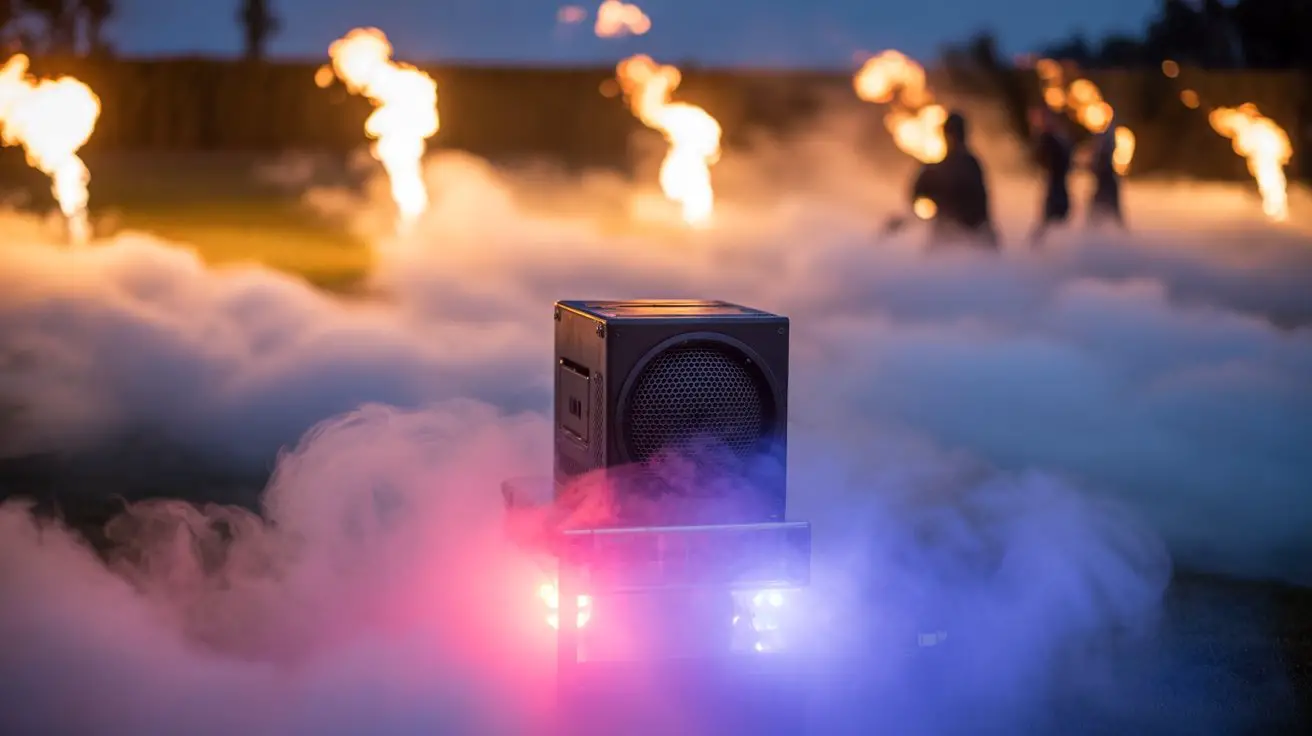
Outdoors, fog disappears much faster than indoors, so plan for more output and more machines. Water-based fog machines are the usual choice, and higher-wattage units keep up better in open air.
For fog that hugs the ground, use a low-lying fog machine or a dry ice fogger. Low fog works best on calm nights and in sheltered spots.
CO2 jets fire short white plumes that vanish within seconds. CO2 can build up in low, sheltered spots, so keep jets away from pits, trenches and enclosed areas, and leave them to a trained operator.
Haze machines spread a thin, even layer that shows off light beams. Outdoors, haze needs calm air to show up at all.
Wind Management Strategies and Positioning Techniques
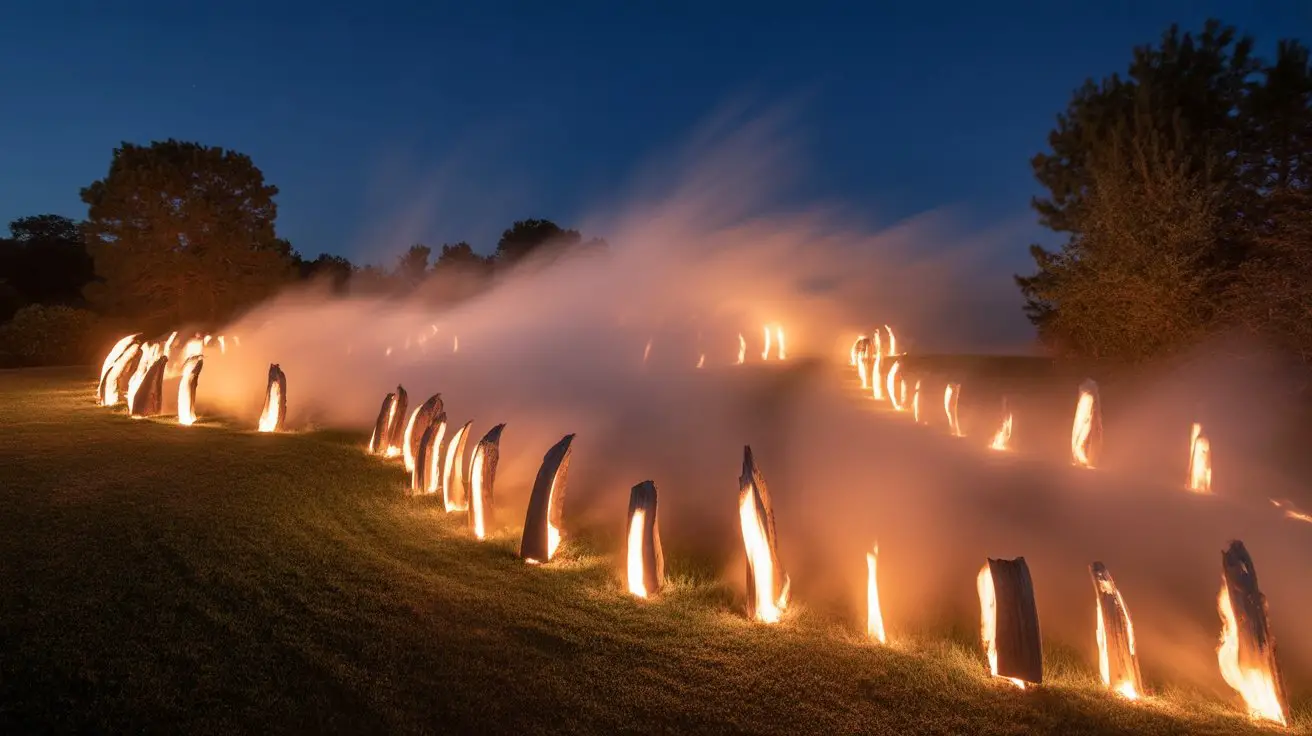
Work with the wind, not against it. Place fog machines upwind of the area you want covered, so the breeze carries fog toward it.
Use stage sets, walls, tents or terrain to block the wind and hold fog in place. Several smaller machines spread around the area usually beat one big one.
Watch the wind during the event with a simple wind flag or handheld meter, and adjust machines as it shifts. Keep fog away from exits, walkways and safety lighting.
Audience Safety Zones and Emergency Procedures
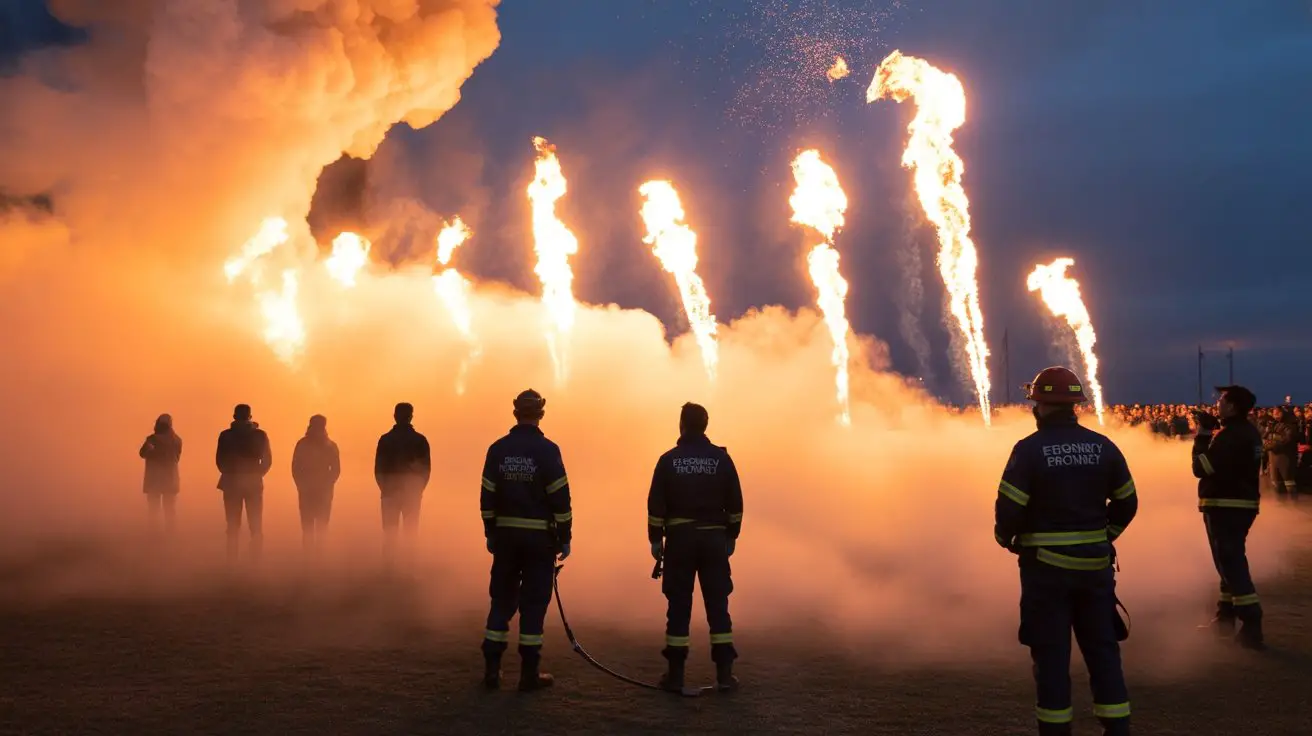
Your SFX crew and the fire marshal will set the audience distance for flame effects. Mark it with barriers, and keep crew at the edges so nobody wanders in.
Have a plan to stop all effects at once if something goes wrong. Make sure everyone knows the exits and that they stay visible through the fog.
Watch fog density near the crowd, since heavy fog can irritate some people’s eyes and throats. Ease off if guests are coughing, and see our guide on symptoms of overexposure.
Professional Crew Requirements and Training Standards
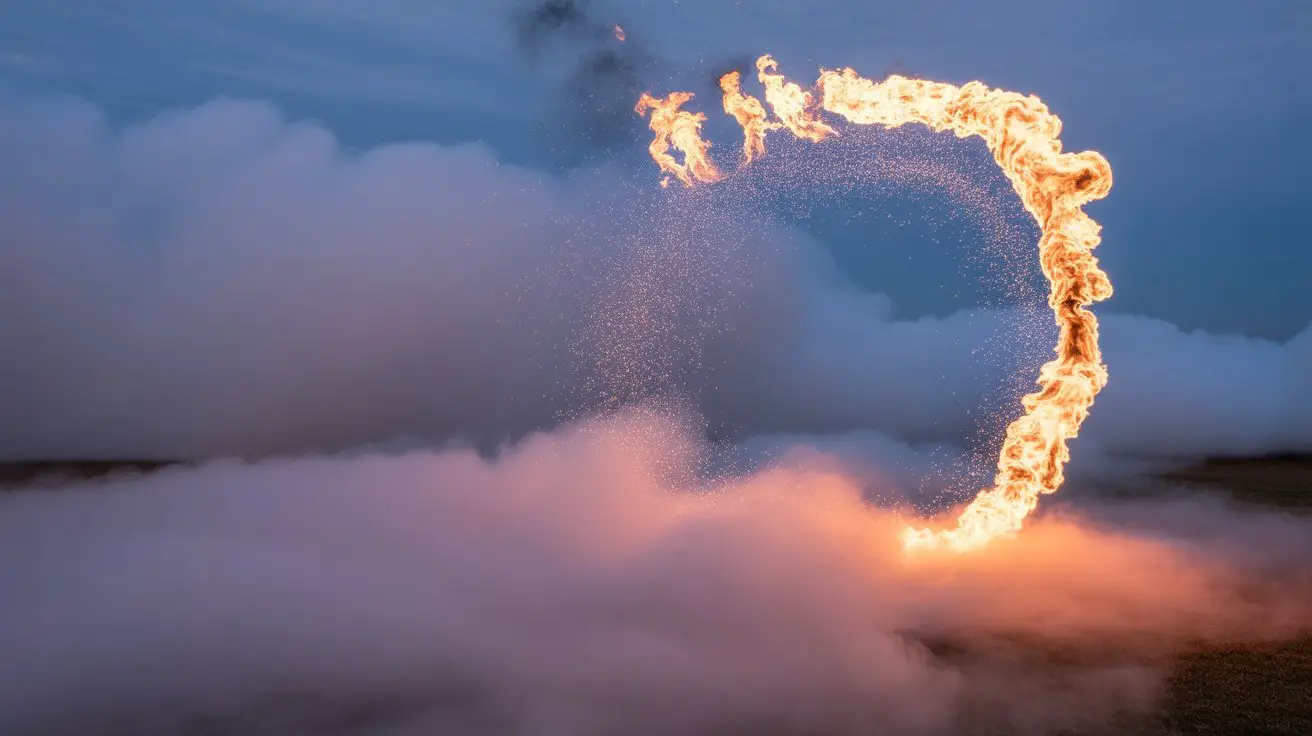
Flame effects and pyrotechnics need operators licensed under your state’s rules. Requirements vary by state and city, so ask the fire marshal what applies and ask each company for proof of license and insurance.
A typical crew has a licensed lead operator for the flame or pyro effects, someone running fog, and spotters with extinguishers. The fire marshal may send an inspector, but they work for the city, not for your crew.
Fog machines don’t need a license, but whoever runs them should know the machines and the site. Walk everyone through the emergency plan before the show.
Integration With Sound and Lighting Systems
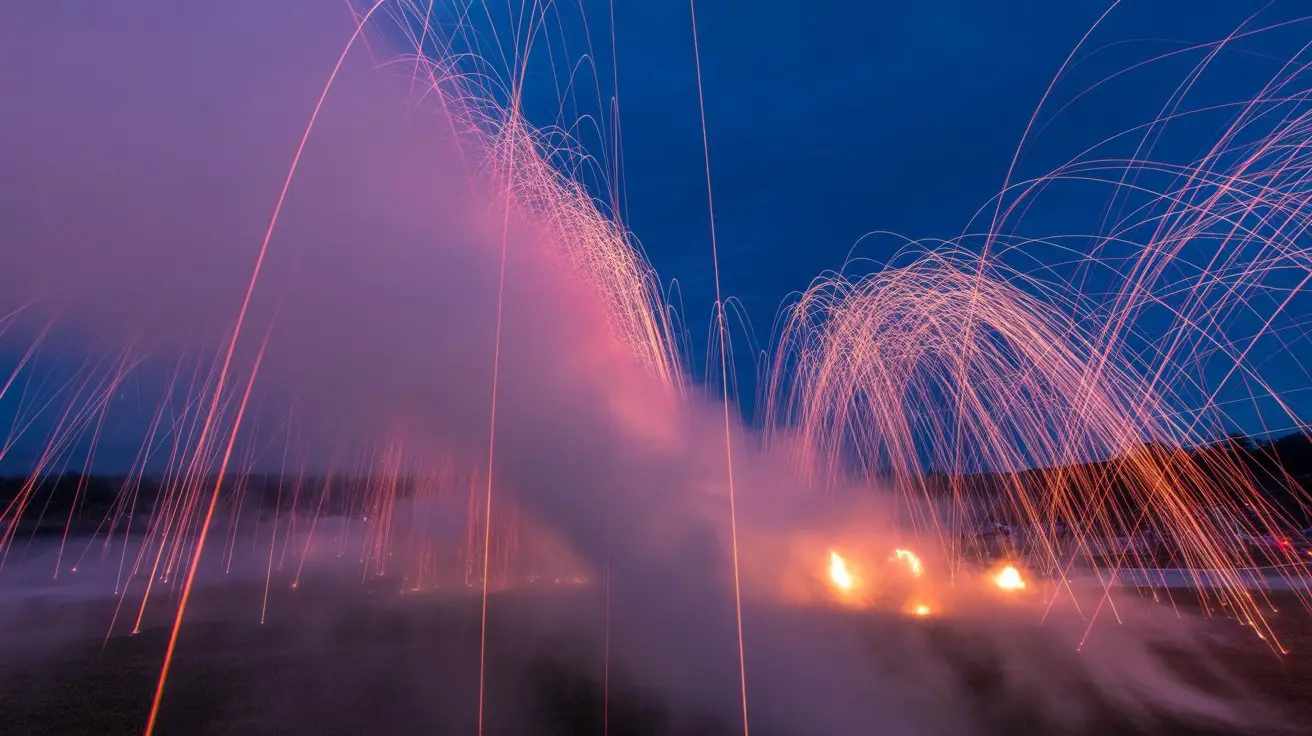
Fog makes lighting pop, so plan them together. DMX control lets the lighting desk trigger fog machines on cue.
Backlighting fog creates silhouettes, while side lighting shows its texture. Outdoors, test your cues at rehearsal, since wind changes how long fog hangs.
Fog machine heaters draw a lot of power, so give them their own circuits rather than sharing with audio. If you’re under a tent or near a building, fog can set off fire alarms, so check with the venue first.
Budget Planning and Equipment Rental Considerations
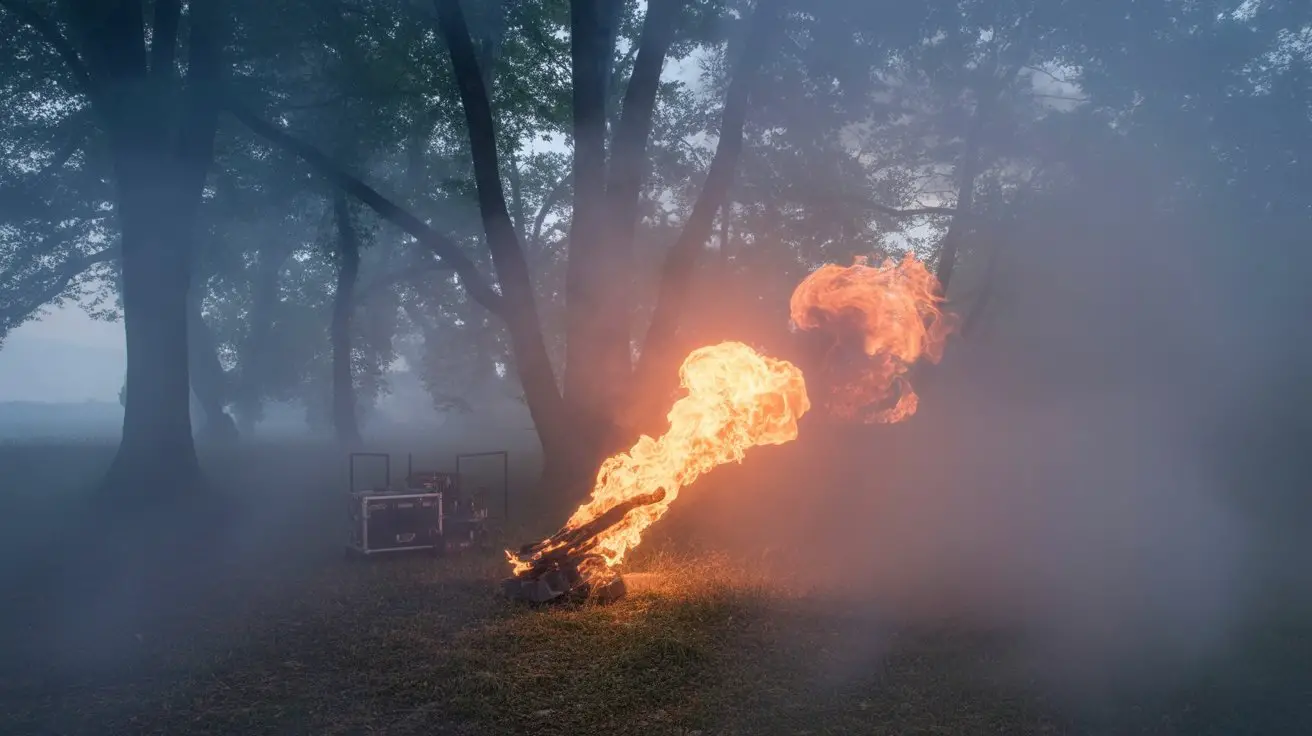
For one-off events, renting usually makes more sense than buying. Prices vary widely by region and season, so get several quotes.
Flame effects are normally booked as a package with the licensed crew. Ask what’s included, such as permits, insurance, fuel and travel, so you aren’t surprised later.
Fog machines are easy to rent on your own, and renting gets you reputable machines without a long-term investment. Buying starts to pay off if you run events often.
Frequently Asked Questions
How Long Do Fire and Fog Effects Typically Last During Performances?
Flame bursts are usually short, a few seconds each, as cued by the operator. Fog outdoors may last only moments in a breeze or linger much longer on a still night.
Can Fire and Fog Effects Be Used Simultaneously Without Interference?
Yes, with planning. Your SFX crew will want to know where the fog will be, so it doesn’t hide flame zones, exits or their view of the audience.
What Backup Plans Exist if Effects Malfunction During the Event?
Ask your SFX company how they handle a malfunction, since pros have emergency stops and set procedures. For fog, a spare machine and extra fluid are cheap insurance.
How Far in Advance Should Fire and Fog Effects Be Booked?
As early as you can, especially in peak season. Permits can take weeks, so ask your fire marshal and SFX company about their lead times.
Are There Specific Color Options Available for Both Fire and Fog?
Fog takes on the color of your lights, so colored LEDs give you almost any color. Colored flames exist as specialty effects, but leave those to your licensed SFX crew.
Conclusion
Outdoor fire and fog effects are worth the effort when they’re planned right. Hire licensed pyro and SFX pros for anything with a flame, get permits through your fire marshal early, and plan your fog around the wind.
Do that, and your guests will remember the show for the right reasons.