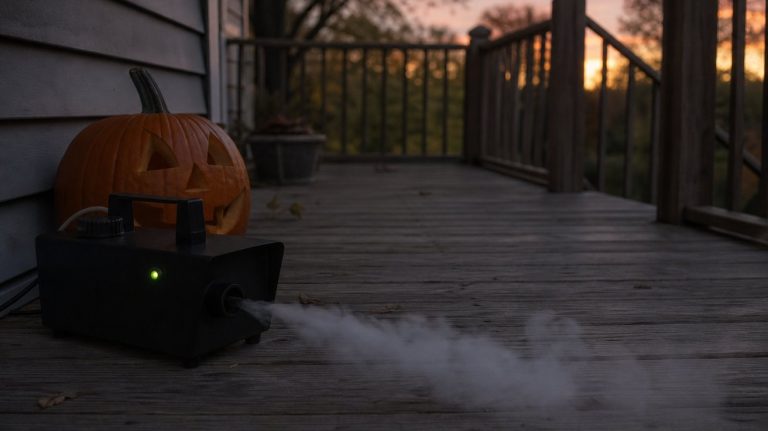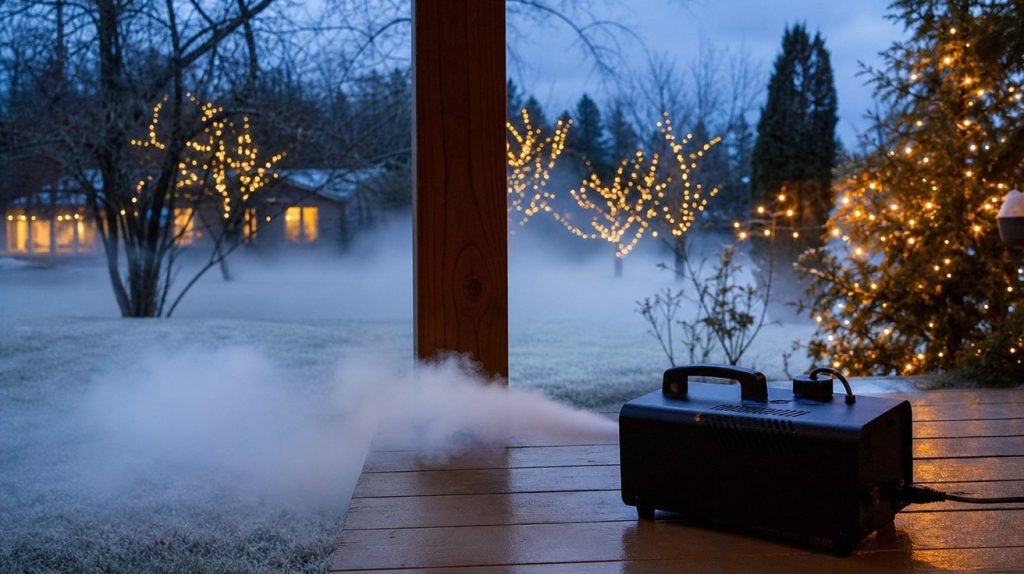
Yes, you can use a fog machine in cold weather. The heater inside does the work, so it still makes fog on a cold night, and cool, still air often keeps the fog low and visible for longer. Keep the fluid from freezing, keep the machine dry, and expect a longer warm-up.
That makes winter a good time for fog at a Christmas light display or a New Year’s party. The things that go wrong are cold fluid, wet electrics and wind.
Does a Fog Machine Work in the Cold?
It does. A fog machine pumps fluid through a heated block and pushes out vapor, and that happens inside the machine no matter what the air outside is doing.
The heater has to work harder when the metal starts out cold. Expect the first warm-up and the pauses between bursts to run longer than they do indoors. Our guide on how long a fog machine takes to heat up has the normal times to compare against.
Check your manual for an operating temperature range. If the maker lists a minimum, stay above it.
Does Fog Look Different in Cold Air?
Often it looks better. Fog thins out as warm air lifts and spreads it, so on a cold, still night it tends to stay lower and last longer.
Wind matters more than temperature. A steady breeze clears fog in seconds in any season, so put the machine where a wall, hedge or fence blocks the wind.
If you want fog that hugs the ground, a chiller or a low-lying machine is still the reliable way to get it. Start with low-lying fog machines vs regular fog machines.
Can Fog Fluid Freeze?
Water-based fog fluid is mostly distilled water mixed with glycol or glycerin. The glycol lowers the freezing point, but a bottle left in an unheated garage or a car trunk in hard-freezing weather can still thicken, turn slushy or freeze.
Store fluid indoors at room temperature, and bring it out when you set up. If a bottle did freeze, let it thaw fully indoors and shake it before you use it, and replace it if it stays cloudy or separated.
Don’t leave fluid sitting in the tank outside overnight in freezing weather. Empty the tank back into the bottle and take both inside. More on shelf life in does fog juice expire.
How Do You Set Up a Fog Machine Outside in Winter?
- Keep it dry. Most party fog machines are not waterproof. Put the machine under a porch roof or a cover that leaves the nozzle and vents open, and keep it off snow and wet ground.
- Use the right power. Plug into a GFCI-protected outdoor outlet and use an extension cord rated for outdoor use.
- Warm the fluid, not the machine. Start with room-temperature fluid from indoors. Never heat fluid on a stove or add anything to it.
- Give it time. Switch the machine on early and wait for the ready light before the first burst.
- Block the wind. Aim the fog along a wall or into a sheltered corner.
- Keep clear of the nozzle. It gets hot enough to burn, even when the air is freezing.
For machines built for outdoor use, see our best outdoor fog machine picks.
What Should You Do With the Machine After a Cold Night?
Let it cool, empty the tank and bring it inside. A cold machine carried into a warm house can collect condensation, so let it reach room temperature before you plug it in again.
Don’t store it in a freezing shed with fluid in the tank or lines. Here is how to store a fog machine between uses.
Frequently Asked Questions
Can I leave my fog machine outside all winter?
No. Most are not weatherproof, and fluid left inside can freeze. Bring it in after each use.
Does cold weather make fog thicker?
The machine makes the same amount of fog. Cool, still air just lets it hang around longer, so it can look thicker.
Will a fog machine melt snow or ice around it?
The nozzle and the fog right in front of it are hot, so snow next to the nozzle can melt. Keep the machine on a dry, raised surface so meltwater can’t reach it.
Can I use a fog machine in the rain or snow?
Only if the machine stays completely dry under cover. Water and a mains-powered heater don’t mix.
Cold weather is no reason to pack the fog machine away. Keep the fluid warm and the machine dry, and next, read how to use fog machines with backyard Christmas lights.

Please be careful and use at your own risk
None of the authors, contributors, administrators, or anyone else connected with Wild Fog, in any way whatsoever, can be responsible for your use of the information contained in or linked from these web pages.