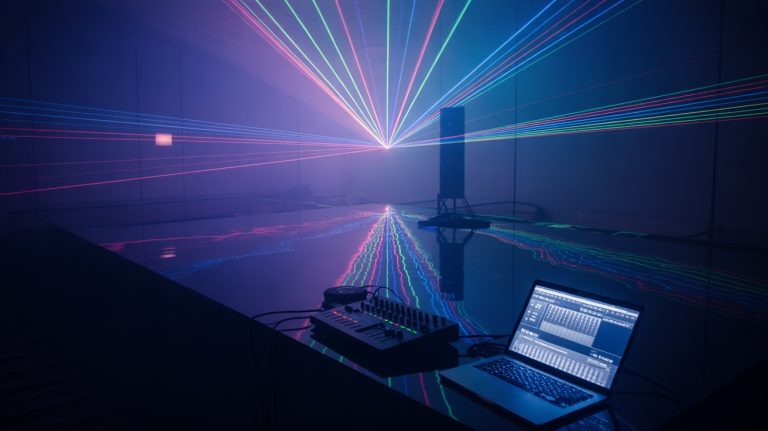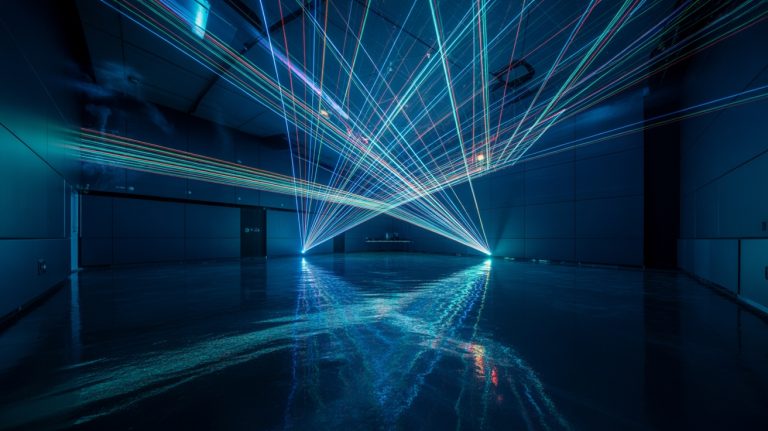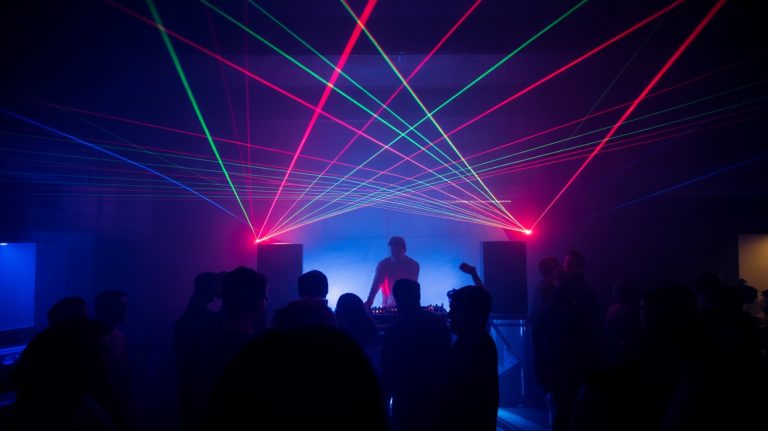
Most people don’t realize that fog machines generate their best light-scattering effects when positioned at specific angles relative to your illumination sources. You’ll need to reflect on the interaction between particle density, beam trajectory, and ambient temperature to achieve that ethereal glow that transforms ordinary Christmas displays into cinematic experiences. However, there’s a critical timing element that determines whether your fog enhances or completely obscures your carefully planned lighting design.
Choosing the Right Fog Machine for Outdoor Christmas Displays
When selecting a fog machine for outdoor Christmas displays, you’ll need to prioritize weather-resistant models with IP65 or higher ingress protection ratings to withstand moisture, temperature fluctuations, and precipitation.
Consider output volume specifications measured in cubic feet per minute (CFM) to guarantee adequate coverage for your display area. Ground fog machines produce low-lying effects that won’t obscure your lights, while standard fog machines create atmospheric density at various heights.
Look for units with remote control capabilities and timer functions for automated operation. DMX-compatible models offer precise synchronization with lighting sequences.
Select fog fluids formulated for outdoor use with slower dissipation rates. Calculate power requirements and guarantee adequate electrical supply, considering extension cord gauge ratings for safe outdoor operation distances. Additionally, ensure the fog machine has built-in overheating protection to prevent any safety hazards during extended use.
Safety Considerations for Operating Fog Machines in Cold Weather
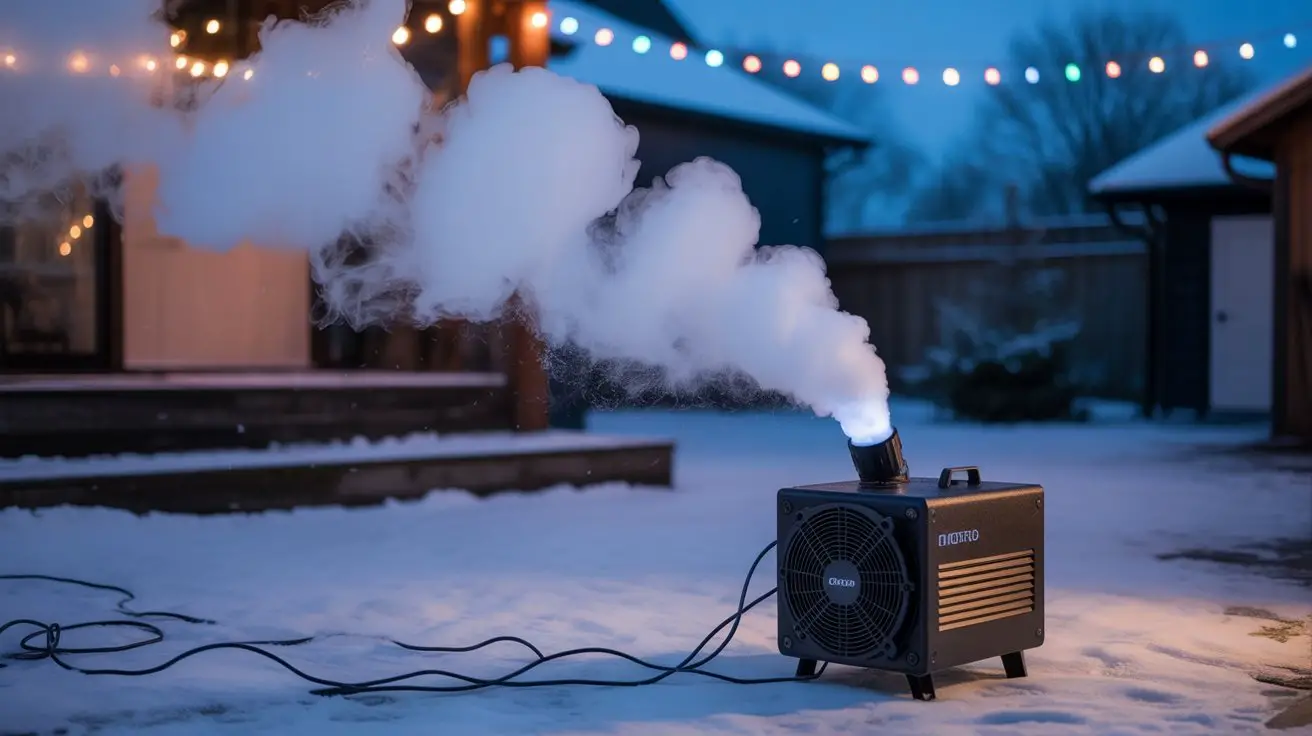
Operating fog machines in freezing temperatures requires critical adjustments to standard procedures, as cold air greatly affects fluid viscosity, heating element performance, and fog dispersion patterns.
You’ll need to implement specific protocols to maintain peak functionality and prevent equipment damage.
- Pre-warm your fog fluid indoors before loading it into the machine’s reservoir to guarantee proper viscosity and atomization.
- Extend warm-up periods by 50-75% to compensate for reduced heating element efficiency in sub-zero conditions.
- Position machines in wind-protected areas to prevent rapid fog dissipation and maintain consistent output density.
- Monitor power consumption closely as heating elements draw additional amperage during cold-weather operation.
- Store backup fluid containers in heated environments to prevent crystallization and maintain chemical stability throughout extended displays.
Additionally, it’s important to ensure adequate air circulation in the area of use to prevent high concentration inhalation of fog, which can trigger respiratory issues.
Optimal Placement Strategies for Maximum Light Enhancement

Strategic fog machine placement transforms ordinary Christmas light displays into enchanting three-dimensional spectacles by creating depth layers that amplify luminous intensity and visual drama. Position your fog machines at ground level, approximately 6-8 feet from primary light installations. This distance guarantees ideal fog density without overwhelming illumination sources. Deploy units upwind from display areas, allowing natural airflow to distribute fog uniformly across your lighting array. Additionally, understanding fog machine functionality can greatly enhance your overall design strategy.
| Placement Zone | Distance from Lights | Fog Density Level | Beam Angle | Effect Type |
|---|---|---|---|---|
| Ground Level | 6-8 feet | Medium | 45° upward | Volumetric enhancement |
| Behind Trees | 10-12 feet | High | 30° forward | Backlighting drama |
| Pathway Edges | 4-6 feet | Low | 60° wide | Ambient diffusion |
| Structure Base | 8-10 feet | Medium | 20° narrow | Architectural accent |
| Open Lawn | 15-20 feet | Variable | 90° dispersed | Atmospheric foundation |
Avoid placing machines directly beneath lights, which creates oversaturation and reduces visibility.
Timing Your Fog Effects With Light Sequences
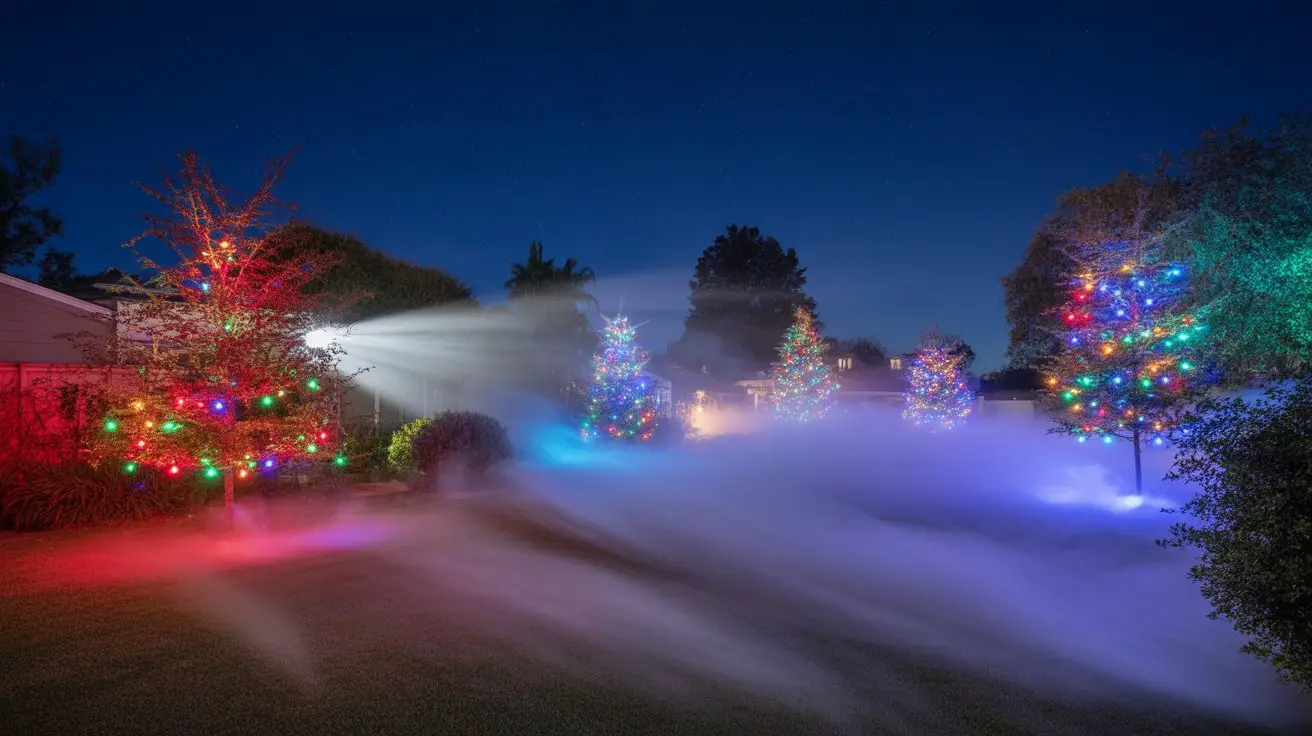
Since fog dispersal requires 8-12 seconds to achieve ideal density, you’ll need to activate your machines before each light sequence begins to guarantee perfect synchronization.
This temporal offset guarantees peak atmospheric enhancement when your illumination patterns commence.
Coordinate your fog deployment using these timing techniques:
- Pre-sequence activation: Trigger fog machines 10 seconds before light changes
- DMX controller integration: Program automated fog bursts synchronized with lighting cues
- Manual remote timing: Use wireless controllers for real-time fog deployment adjustments
- Wind compensation protocols: Extend activation periods during breezy conditions to maintain density
- Layered fog intervals: Stagger multiple machine outputs for sustained atmospheric effects
Monitor ambient conditions continuously, adjusting activation timing based on temperature and humidity fluctuations. Fog machines do not trigger sprinkler systems, allowing for creative use without the risk of water activation.
Cold air retains fog longer, requiring shorter burst durations, while warmer temperatures necessitate extended output cycles for consistent visual impact.
Weather-Resistant Setup and Equipment Protection
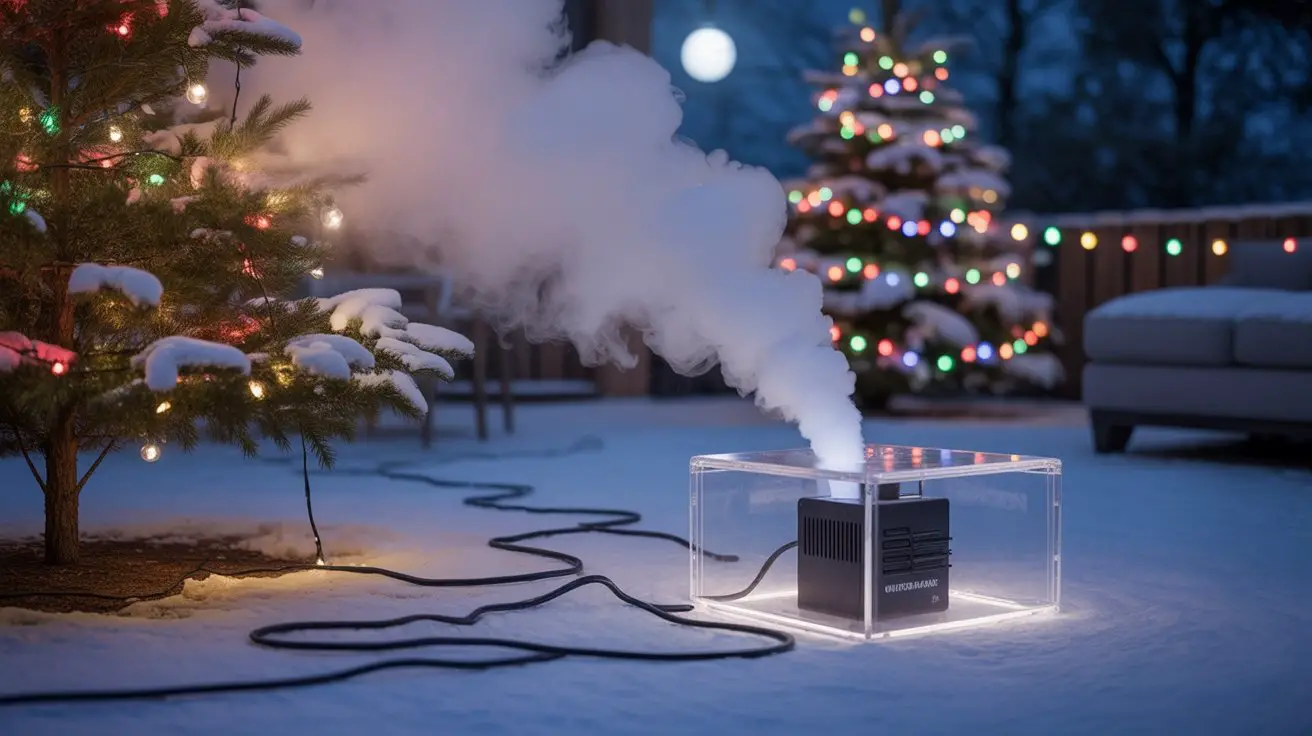
Protecting your fog machines from moisture, temperature extremes, and debris directly impacts their performance reliability throughout the holiday season.
Position units under covered areas or install weatherproof enclosures specifically designed for fog equipment. Seal electrical connections with marine-grade silicone and use outdoor-rated extension cords with GFCI protection.
Install drain plugs to prevent fluid freeze-up in sub-zero conditions, and use glycol-based fog fluid rated for your climate zone.
Mount machines on stable platforms elevated above ground moisture and snow accumulation. Cover air intake vents with fine mesh screens to block debris while maintaining airflow.
Store backup fluid containers in heated spaces to prevent crystallization. Implement remote monitoring systems to track internal temperatures and fluid levels, enabling proactive maintenance before equipment failure compromises your synchronized light-fog displays. Additionally, ensure you are aware of the differences between low-lying fog machines and regular fog machines to choose the best option for your setup.
Fog Fluid Types and Their Impact on Light Diffusion

Different fog fluid formulations produce distinct optical characteristics that dramatically alter how Christmas lights interact with atmospheric effects.
Your fluid selection directly influences particle density, suspension duration, and scattering properties.
Water-based formulations create fine particles that enhance light diffusion while maintaining atmospheric clarity. Oil-based fluids are made only for oil-based hazers, so never pour them into a standard water-based fog machine.
You’ll achieve ideal results by matching fluid viscosity to your ambient temperature conditions.
- Low-density fluids create subtle hazing effects ideal for accent lighting enhancement
- Medium-density formulations provide balanced opacity for dramatic silhouetting effects
- High-density fluids generate opaque clouds for complete light transformation
- Glycol-based mixtures offer extended hang-time in cold weather applications
- Professional theatrical fluids deliver consistent particle distribution for uniform illumination
Consider environmental factors when selecting formulations for sustained visual impact.
Creating Layered Fog Effects Throughout Your Yard
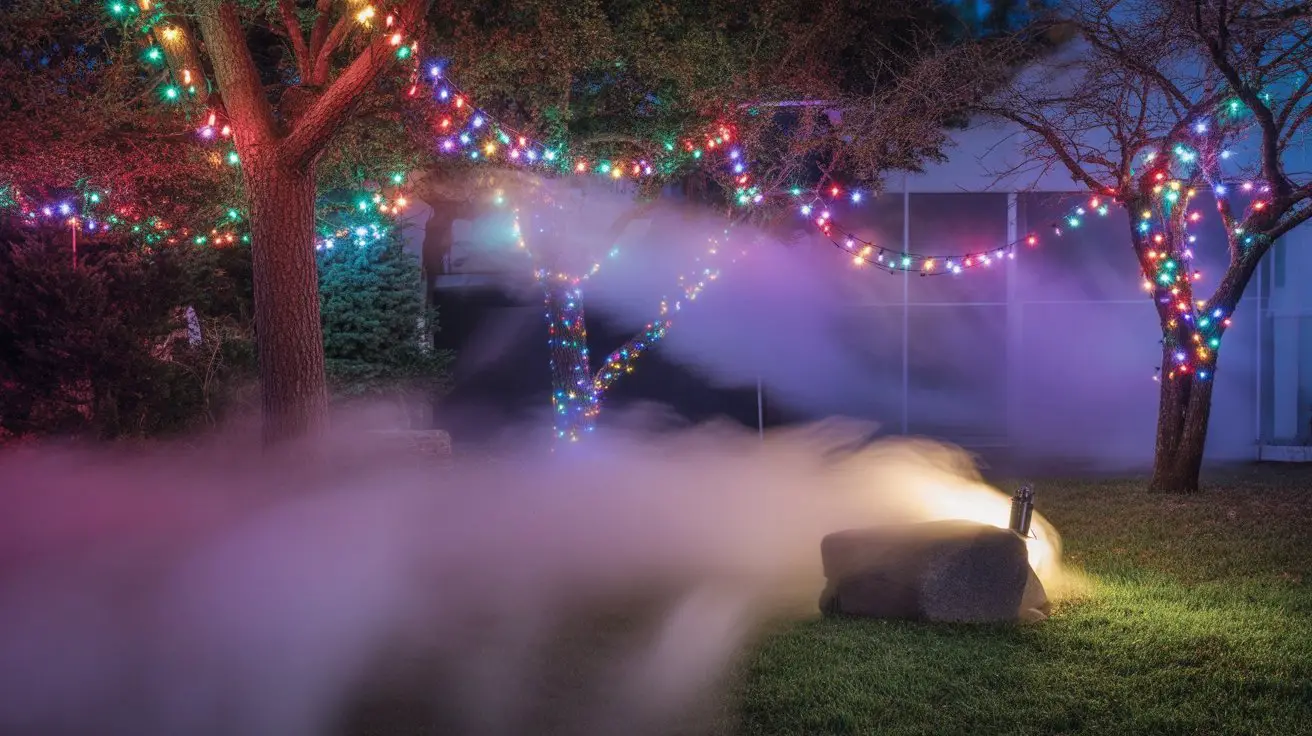
When positioning multiple fog machines across your landscape, you’ll establish distinct atmospheric zones that create dimensional depth and visual hierarchy throughout your display.
Deploy primary units at ground level near focal points, utilizing terrain variations to control fog pooling and flow patterns. Position secondary machines at elevated locations—steps, planters, or platforms—to generate cascading effects that interact with your primary fog layers.
Strategic placement creates natural fog boundaries between illuminated sections. Space machines 15-20 feet apart to prevent oversaturation while maintaining continuous coverage.
Configure timer sequences with staggered activation cycles: foreground machines operating continuously, mid-ground units pulsing intermittently, and background machines providing subtle ambient density.
This orchestrated approach produces dynamic fog movement that enhances light penetration angles and creates compelling visual shifts between decorated zones.
Maintenance and Storage Tips for Holiday Season Use
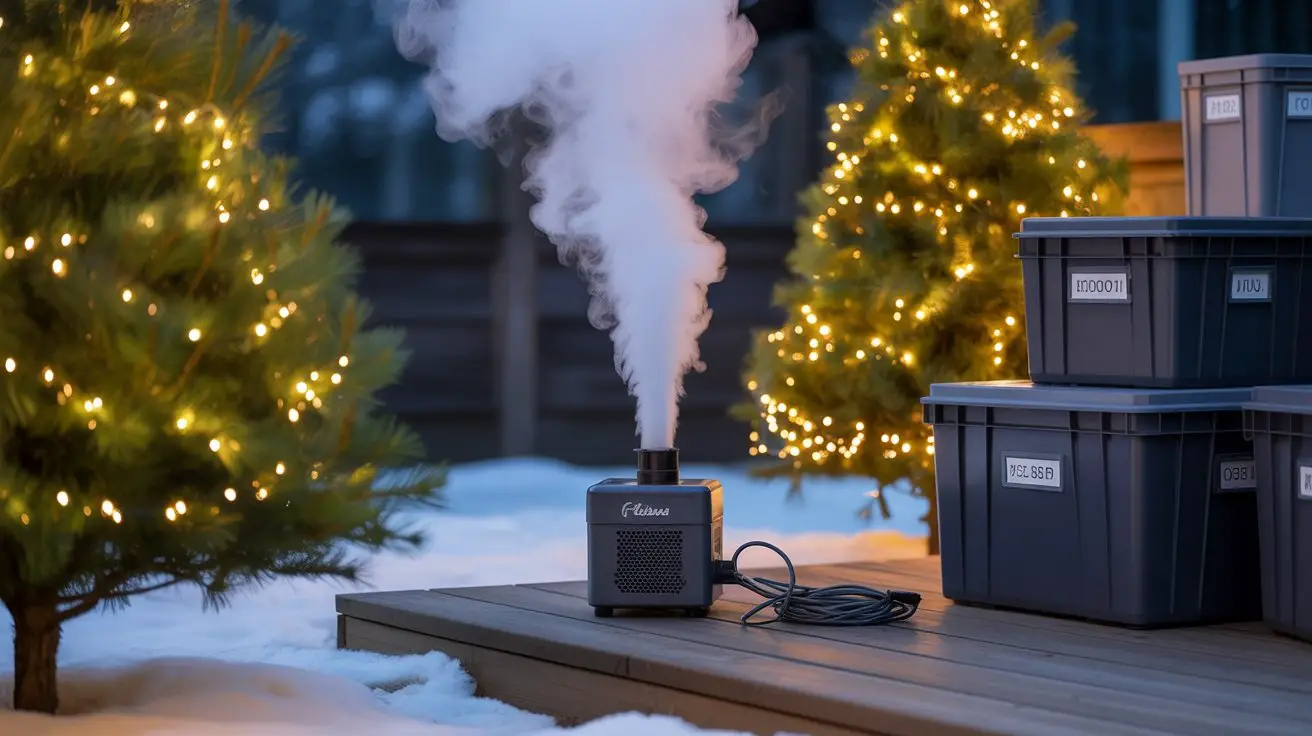
Once your fog machines have delivered their atmospheric magic throughout the holiday season, proper maintenance protocols guarantee peak performance and equipment longevity.
You’ll need systematic cleaning procedures to prevent fluid residue buildup and component degradation.
Essential maintenance procedures include:
- Purge remaining fog fluid through complete system cycles using distilled water
- Disassemble removable components for thorough cleaning with manufacturer-approved solutions
- Inspect heating elements for mineral deposits or corrosion damage
- Lubricate moving parts according to manufacturer specifications
- Store in climate-controlled environment with original packaging materials
You should document maintenance dates and store units in moisture-free conditions.
Proper winterization prevents freeze damage to internal mechanisms.
Clean storage containers with desiccant packets maintain ideal humidity levels, ensuring your equipment’s ready for next season’s installations.
Troubleshooting Common Fog Machine Issues in Winter Conditions
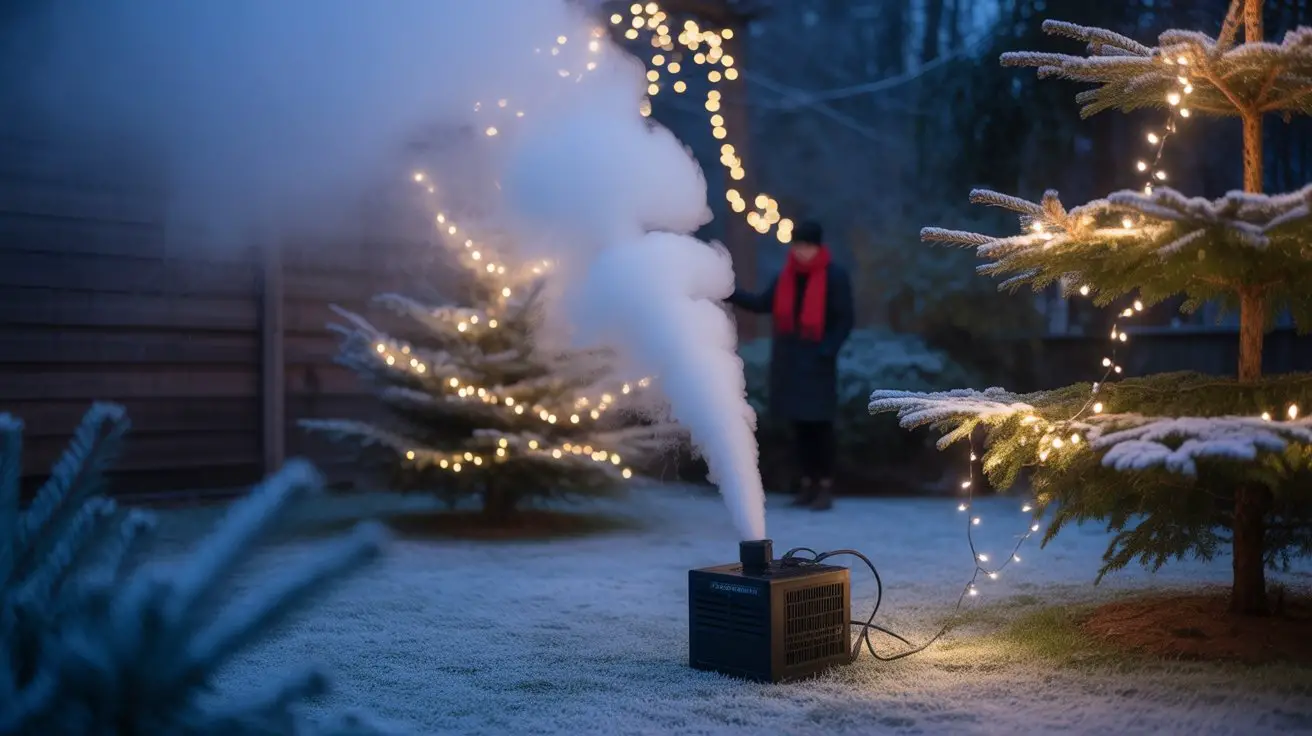
Cold temperatures create specific operational challenges that can compromise your fog machine’s performance during winter holiday displays.
When your machine produces thin, dissipating fog, verify the fluid hasn’t thickened due to cold exposure. Store fog juice at room temperature and allow proper warm-up time before operation.
If your machine won’t heat properly, check for ice formation in fluid lines or heating elements.
Condensation inside electrical components causes intermittent operation—ensure weatherproof housing and adequate ventilation.
When fog output appears irregular, examine the pump mechanism for cold-induced sluggish operation.
Temperature fluctuations trigger thermal protection shutdowns.
Position your machine in sheltered areas away from direct wind exposure.
If persistent issues occur, relocate the unit to warmer microclimates or consider heated enclosures for consistent performance.
Frequently Asked Questions
Can Fog Machines Damage Christmas Lights or Electrical Connections?
Fog machines can’t directly damage well-sealed Christmas lights, but excessive moisture accumulation may compromise poorly protected electrical connections. You’ll want weatherproof fixtures, GFCI protection, and proper drainage to prevent water infiltration issues.
How Much Does It Cost to Run a Fog Machine Throughout December?
Like winter’s breath consuming resources, you’ll spend $15-45 monthly running fog machines continuously. Calculate wattage consumption, fluid replacement costs, and operational duration. Higher-output units demand premium glycol-based solutions, greatly impacting your December electricity expenditure.
Will Fog Machines Disturb Neighbors or Violate Local Noise Ordinances?
You’ll generate minimal noise since most fog machines operate at 40-50 decibels, equivalent to quiet conversation. However, check municipal regulations regarding atmospheric effects, as some jurisdictions classify fog output under special event ordinances requiring permits.
Do Fog Machines Work Effectively With LED Versus Incandescent Christmas Lights?
LED lights produce cooler color temperatures and sharper beam definition through fog, creating more dramatic light scattering effects. You’ll achieve superior visual contrast compared to incandescent bulbs, which generate warmer tones with softer atmospheric diffusion patterns.
Can I Use Homemade Fog Fluid Instead of Commercial Products?
Like Icarus flying too close to the sun, you’ll risk damaging your fog machine’s heating element and pump system. Commercial fog fluids contain precise glycol ratios and purified water—homemade substitutes lack proper viscosity specifications.
Conclusion
You’ll transform your property into a luminous winter wonderland where ethereal fog veils drift through prismatic light beams, creating dimensional depth across your landscape. Your synchronized timing mechanisms will orchestrate cascading vapor clouds that amplify chromatic intensity while diffusing harsh LED edges into softened aureoles. The stratified fog layers you’ve engineered will undulate through your display matrix, producing cinematic atmospheric effects that elevate your installation from simple decoration to immersive sensory experience.