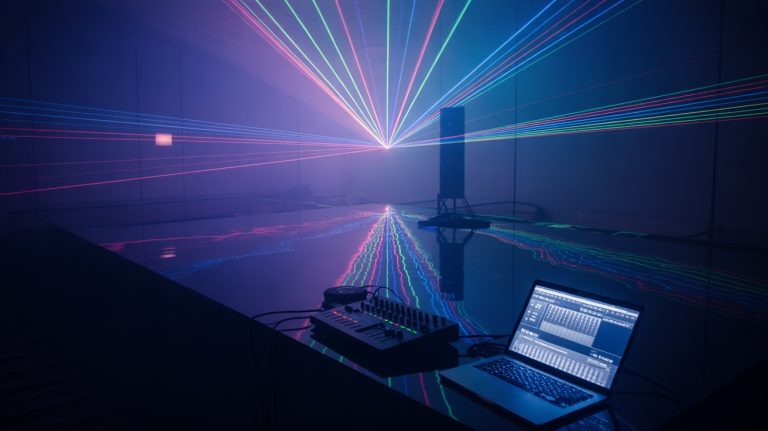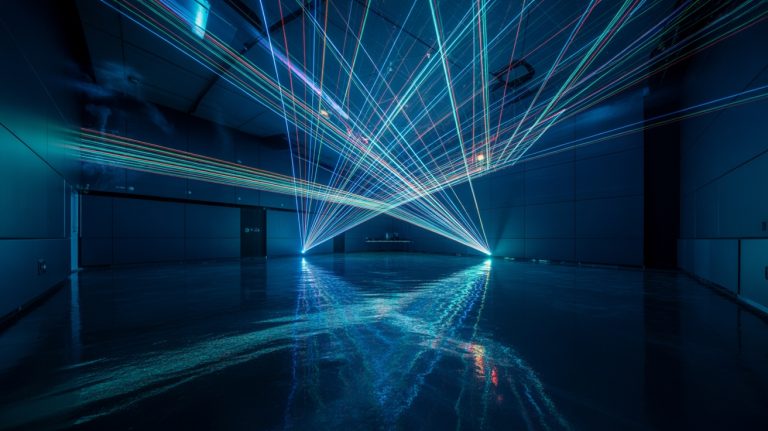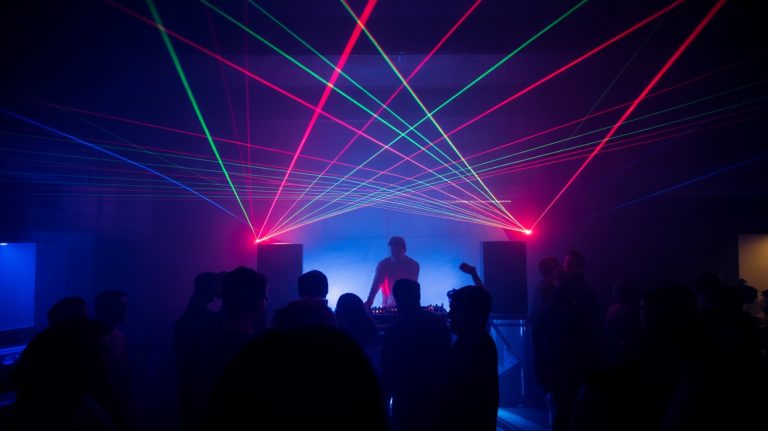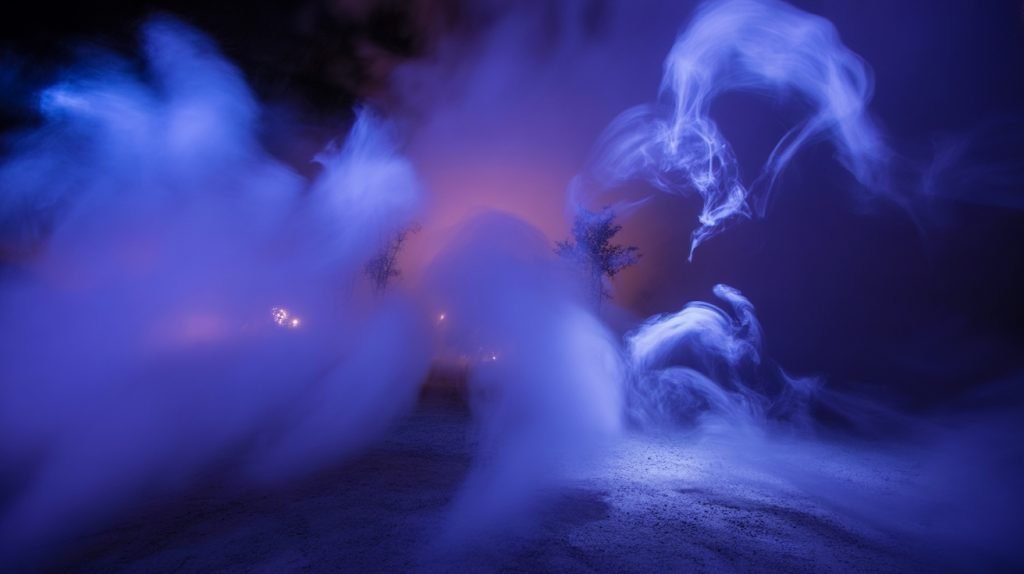
Fog and black lights are a classic pairing for haunted houses, Halloween parties and glow events. The fog catches the light and gives the room a purple haze, while anything UV-reactive in the space glows bright.
Here’s how the effect actually works and how to set it up so it looks great and stays safe.
Understanding the Science Behind UV Light and Fog Interaction
Why does fog look purple under a black light? Mostly, it’s scattering.
Black lights give off UV plus some visible violet light. The tiny fog droplets scatter that light back toward your eyes, the same way fog shows a flashlight beam.
Standard glycol fog barely fluoresces on its own. The real glow comes from fluorescent materials like white fabric, UV paint and UV-reactive props, which turn invisible UV into bright visible light.
So the fog shows the beams and fills the air with haze, while UV-reactive materials supply the glow. Some makers also sell UV-reactive fog fluids for a stronger effect; just make sure one is approved for your machine.
Essential Equipment and Gear Selection
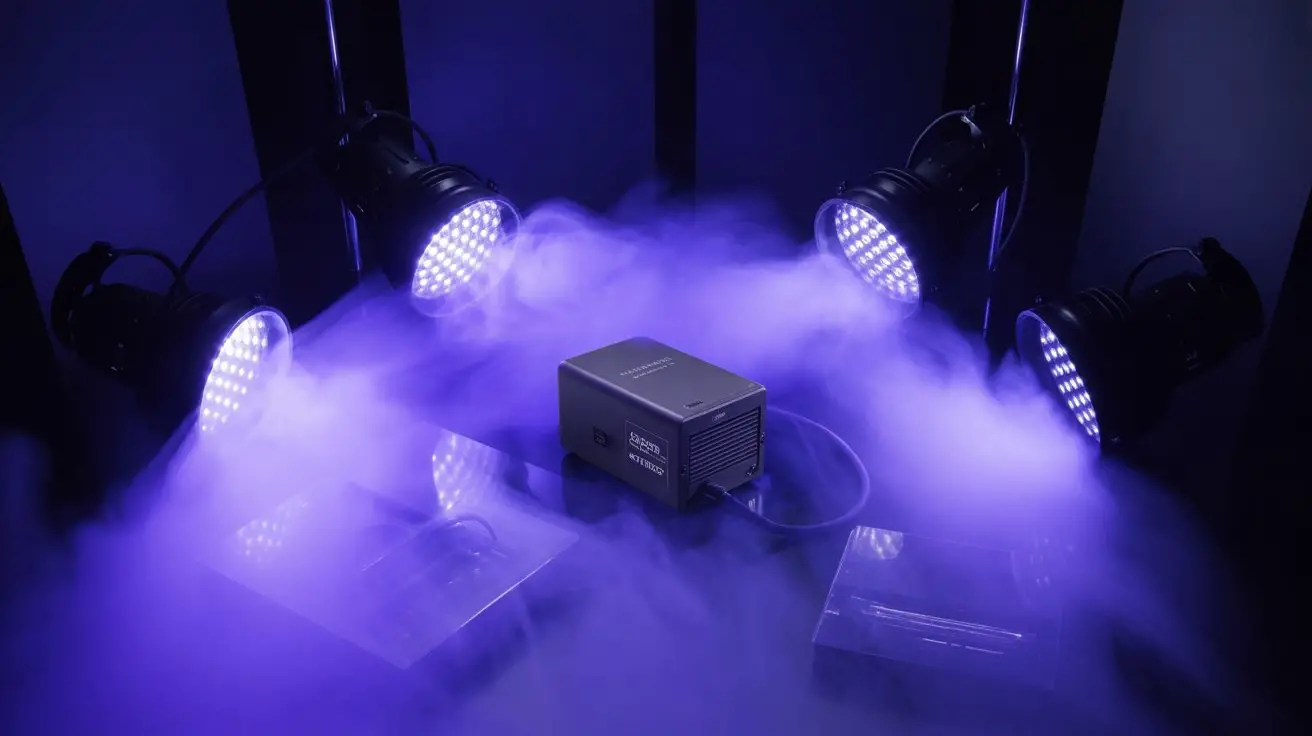
Any decent water-based fog machine works. A unit with adjustable output or a timer helps you keep a light, even haze instead of a white wall.
For black lights, you have a few choices:
- LED UV bars and floods run cool and are the easiest choice for most rooms.
- Fluorescent black light tubes spread even light over a wide area and are cheap for small spaces.
- Spot-style UV fixtures throw beams you can see cutting through the fog.
Wavelength makes a small difference. Many budget LED black lights are around 395nm, which looks more purple in fog, while 365nm fixtures make UV-reactive items pop with less purple wash.
Use the fog fluid your machine is designed for, then add UV paint, tape or props for the real glow.
Optimal Placement and Positioning Strategies
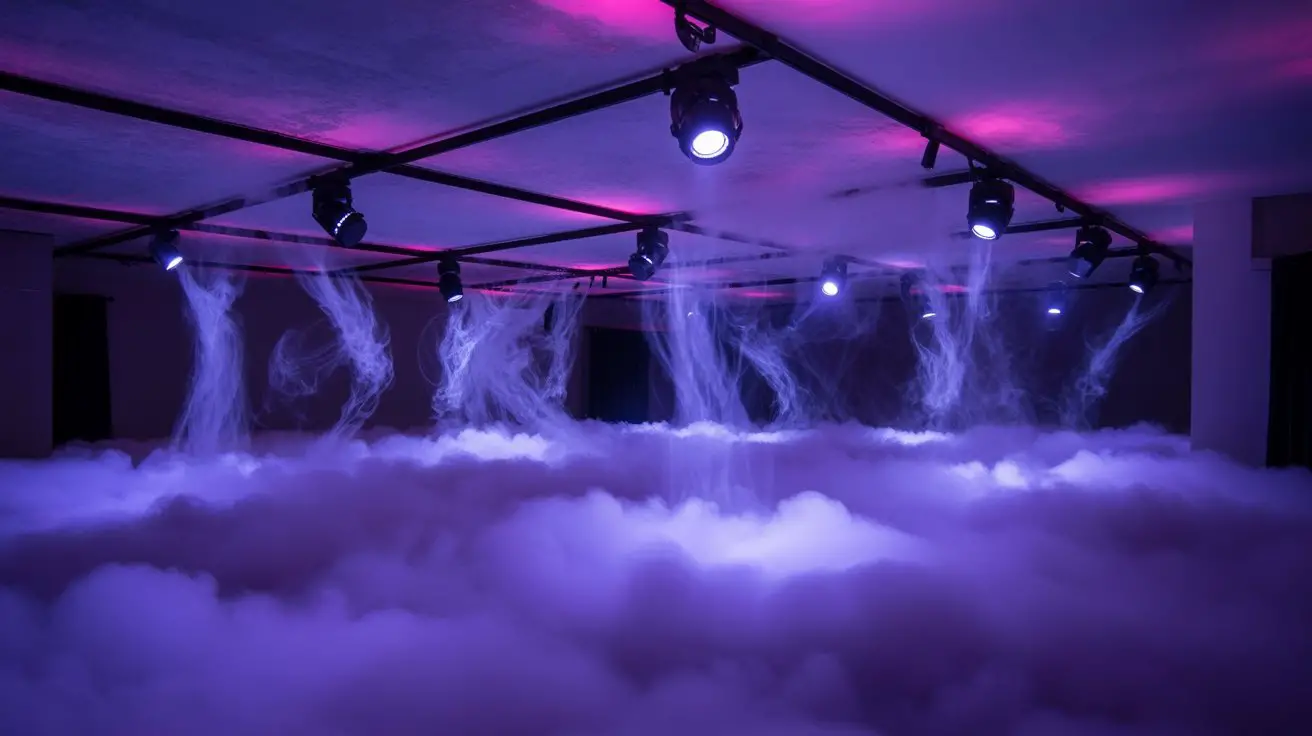
Put the fog machine low and out of sight, behind props or a wall, so the fog rolls into the space. Mount black lights above head height and aim them so they don’t shine straight into guests’ eyes.
Light from more than one direction to avoid dark shadows, and put UV-reactive decorations where the light hits them. A few beams cutting through light fog look better than a room so dense nobody can see.
Drafts carry fog away fast, while still air holds it longer. For ground-hugging fog under black light, a fog chiller keeps the fog low.
Timing Your Effects for Maximum Visual Impact
Start the fog a little before you switch on the black lights, so there’s haze in the air when the reveal happens. How long depends on your machine and room size.
A few timing ideas:
- Short bursts between scares or songs keep the haze light and steady.
- A slow build, adding fog while bringing up the lights, works well for an entrance.
- A blackout reveal, fogging in darkness and then hitting the black lights, gets a big reaction.
Keep in mind that fog machines do not set off sprinkler systems, though they can still set off smoke detectors and the fire alarm.
Safety Considerations and Ventilation Requirements
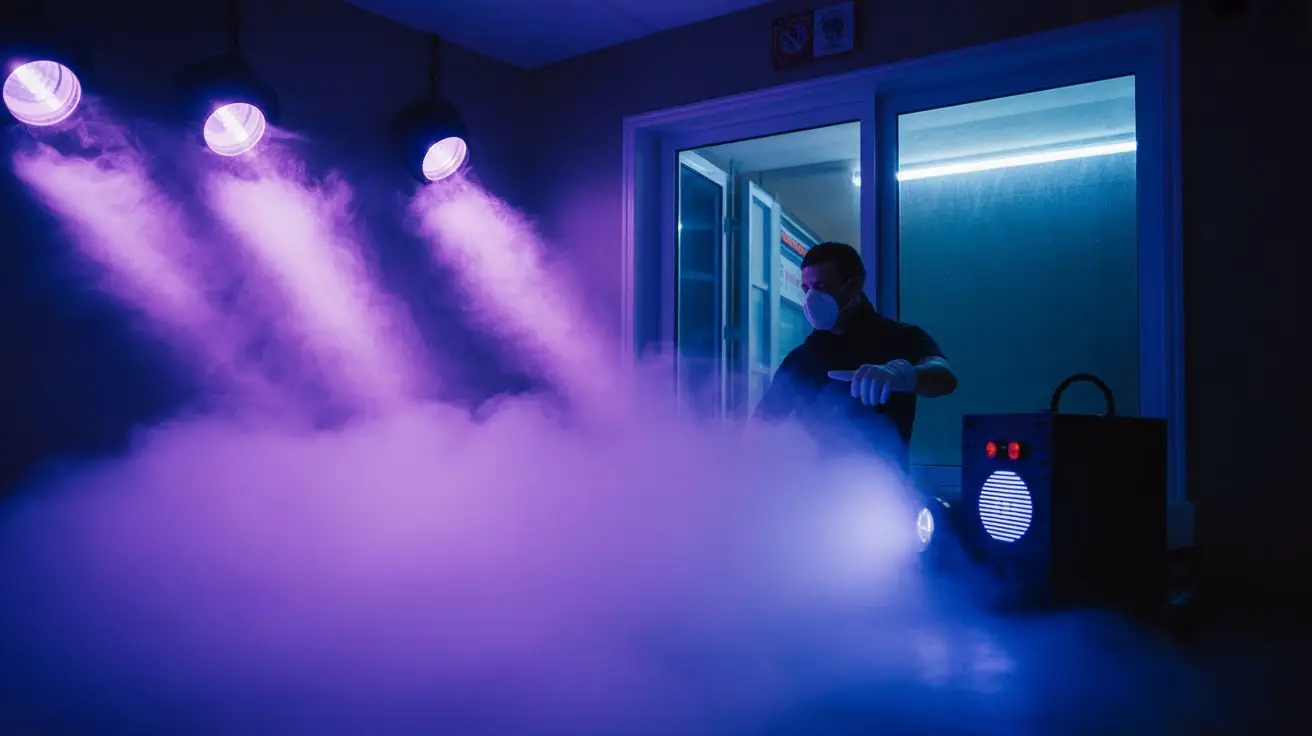
Keep the fog light enough that people can see where they’re walking, and keep exits and exit signs visible. Air the room out between sessions so fog doesn’t build up.
Use fog fluid made for your machine. Some people find heavy fog irritating, so read up on prolonged exposure if guests will be in it for hours.
Party black lights are UV-A, but bright UV LEDs still shouldn’t be stared into up close. Ask the venue how its smoke detectors handle theatrical fog, and never cover or disable a detector yourself.
Troubleshooting Common Setup Problems
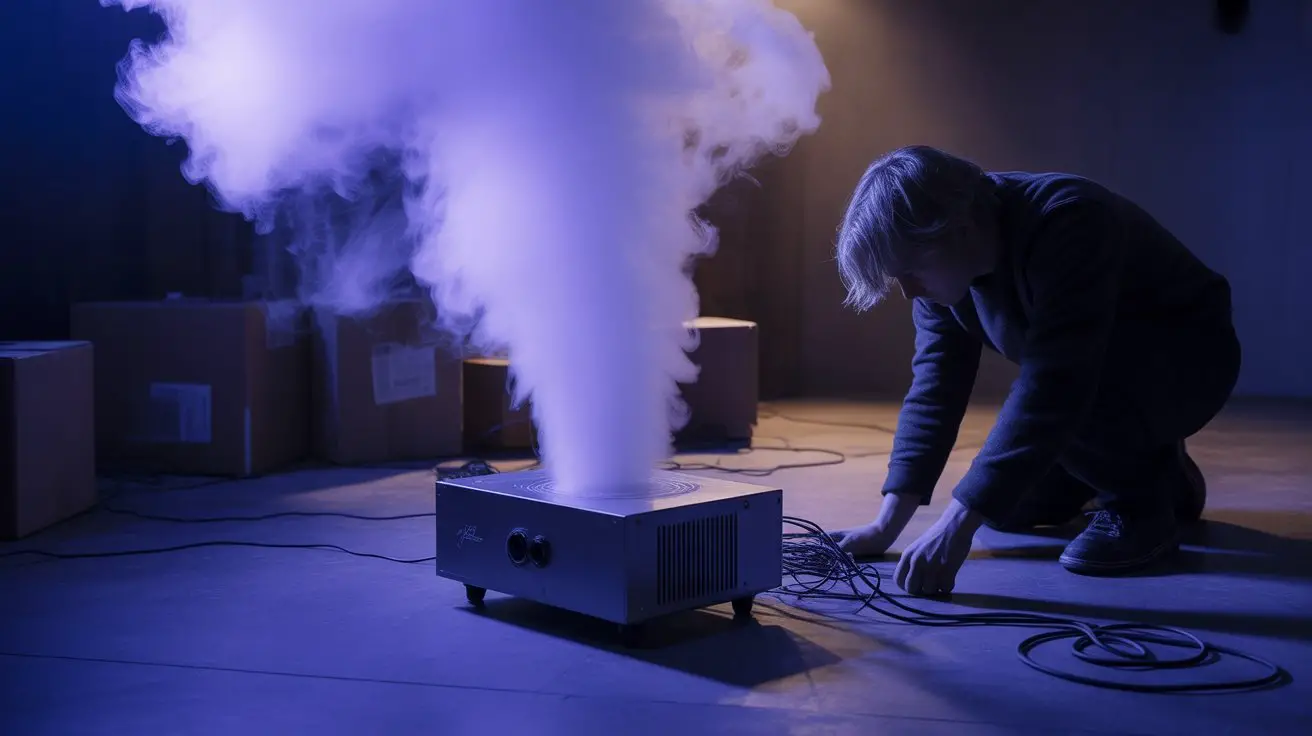
Most problems come down to too little fog, too little UV, or expecting the fog itself to glow.
- Fog looks dim – Add black lights or move them closer, aim beams through the fog, and darken the room.
- Nothing really glows – Add UV-reactive paint, tape, fabric or props, since those make the bright glow.
- Uneven light – Add fixtures or re-aim them so their coverage overlaps.
- Fog disappears fast – Close doors, turn off fans, and run short bursts more often. Using the proper fluid for your machine helps too.
Advanced Techniques for Different Event Types
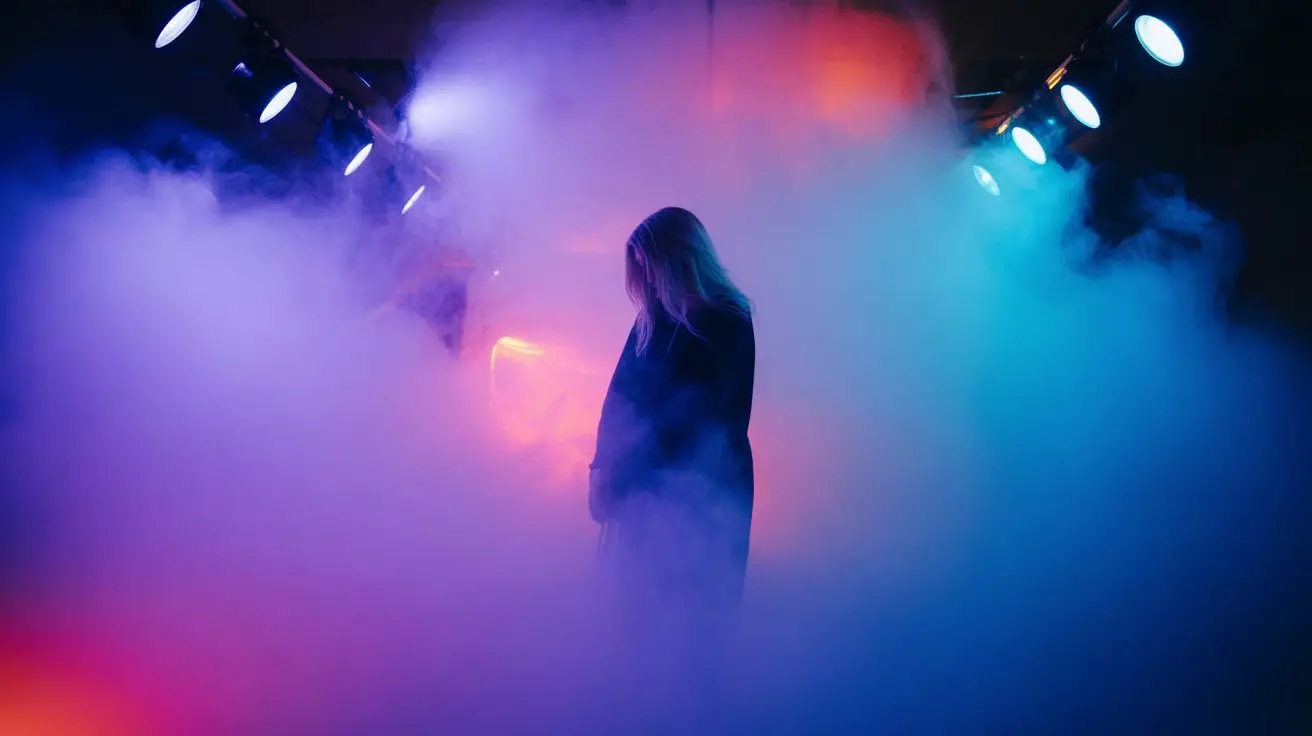
Different events call for different looks:
- Haunted houses and Halloween: thick low fog, UV-reactive props and blackout reveals. See more on fog machines for haunted houses.
- Glow parties and DJ sets: light haze with UV bars and UV-reactive decor around the dance floor.
- Theater: fog on cue, with UV effects for scene changes.
- Weddings: a little low fog and a few UV accents, kept subtle.
Maintenance and Storage Best Practices
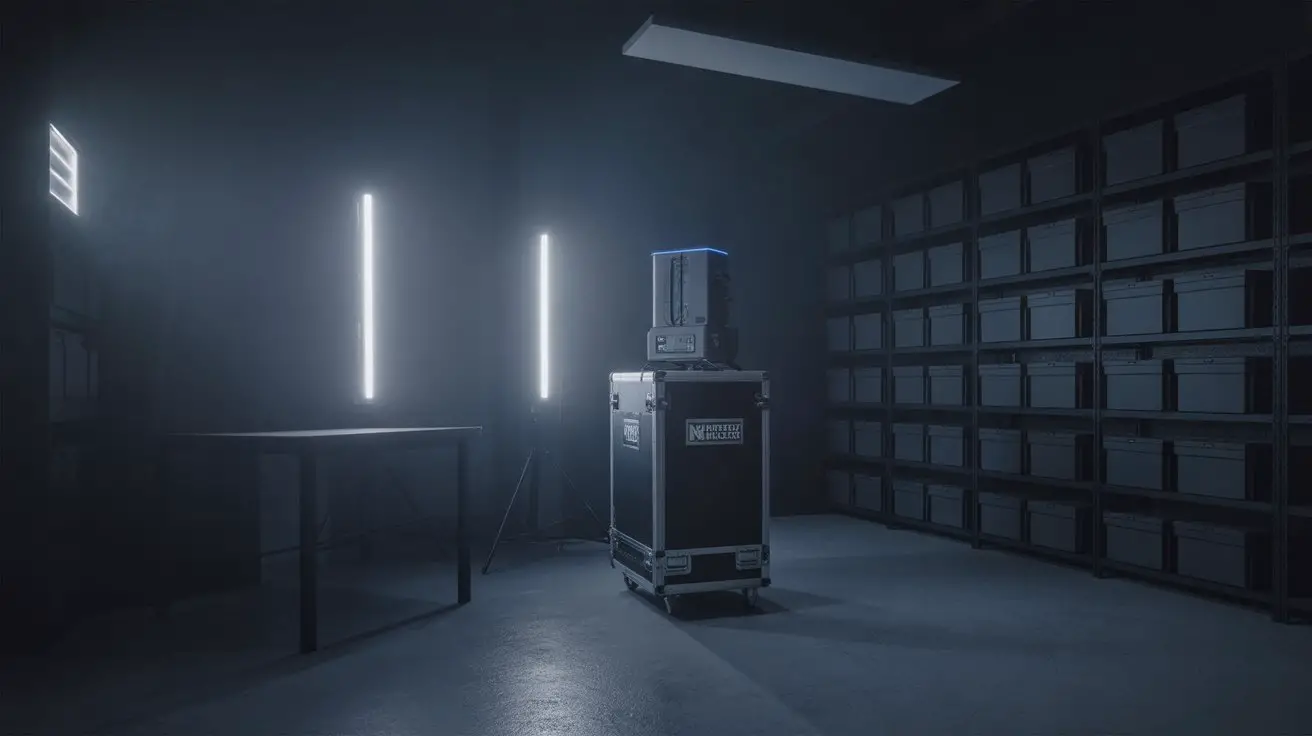
Clean your fog machine as the manual directs, using the maker’s cleaning fluid if it recommends one. Store it in a cool, dry place.
For black lights, unplug them and wipe fog film off the lenses or tubes with a soft cloth. Store fixtures in padded cases so tubes and LEDs don’t get knocked around.
Frequently Asked Questions
Can I Use Homemade Fog Juice With Black Lights?
Yes, if it’s a properly made fog juice that suits your machine, though store-bought fluid is more consistent. It looks about the same under UV, since fog mainly scatters the light.
Do Colored Fog Fluids Work Better Than Clear Ones Under UV?
Fog takes its color from the lights, so dyes don’t help, and food coloring can clog a machine. For a stronger glow, look for a UV-reactive fluid made for your machine.
Will Black Lights Damage My Fog Machine Over Time?
No. Long UV exposure can fade some plastics over time, like sunlight does, but black lights won’t harm the machine’s workings.
Can I Combine Multiple Fog Machine Brands in One Setup?
Yes. Use the right fluid in each machine, and set their outputs so the fog looks even.
Do LED Black Lights Work as Well as Traditional UV Bulbs?
Yes, good LED black lights work as well or better and run cooler. 365nm LEDs make UV-reactive items glow with less purple, while 395nm LEDs give off more visible purple light.
Conclusion
Fog and black light work as a team: the fog shows the beams and fills the room with haze, and UV-reactive materials bring the glow.
Keep the fog light, the exits clear and the lights aimed away from eyes, and you’ll get a great effect every time.