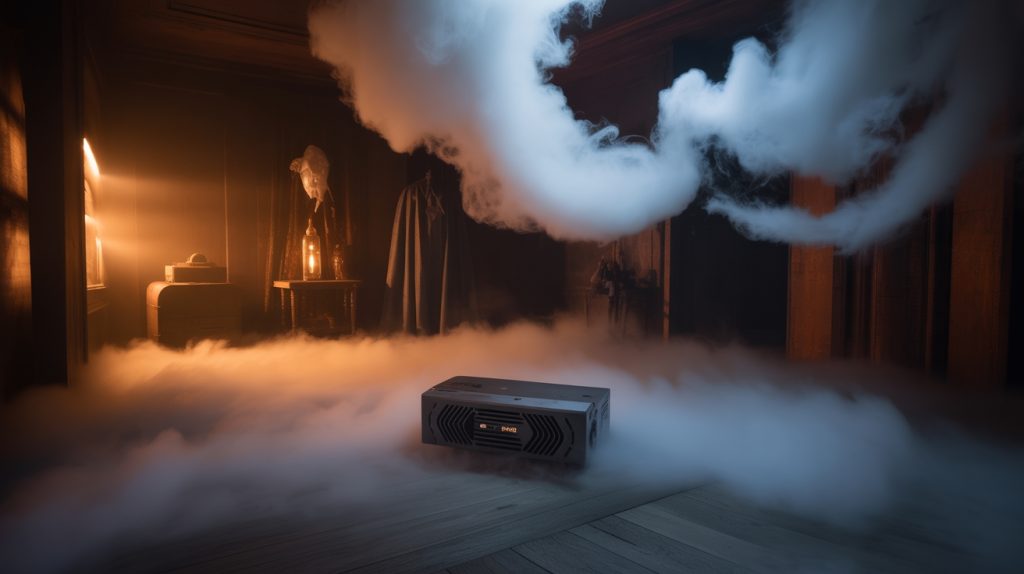
Dense, ghostly tendrils creep across the floor as unsuspecting victims step into your carefully orchestrated nightmare. You’ll need to understand that fog machines aren’t just decorative accessories—they’re precision instruments requiring specific fluid types, proper ventilation calculations, and strategic placement protocols. Whether you’re operating water-based hazers or dry ice units, each system demands different safety parameters and timing sequences. Master these technical fundamentals, and you’ll transform simple atmospheric effects into psychological weapons that leave visitors questioning what’s real.
Types of Fog Machines and Their Capabilities
Three primary fog machine categories dominate the haunted house market, each offering distinct output characteristics and operational requirements.
Water-based fog machines produce dense fog that fills rooms and hangs for a while, and with a chiller it stays low for ground-level effects. You’ll find these units work best in temperatures below 70°F and require glycol-based fluid for peak density.
Oil-based machines generate persistent, billowing fog that fills entire rooms quickly. However, you must guarantee proper ventilation since oil residue can create slippery surfaces and respiratory irritation.
Dry ice machines create dramatic, fast-sinking fog without chemical fluids, but you’ll need continuous dry ice supplies and must handle them with extreme caution due to carbon dioxide risks. Additionally, fog machines can be modified to produce haze effects using fans, which can enhance the overall atmosphere of your haunted house.
Selecting the Right Fog Fluid for Maximum Effect
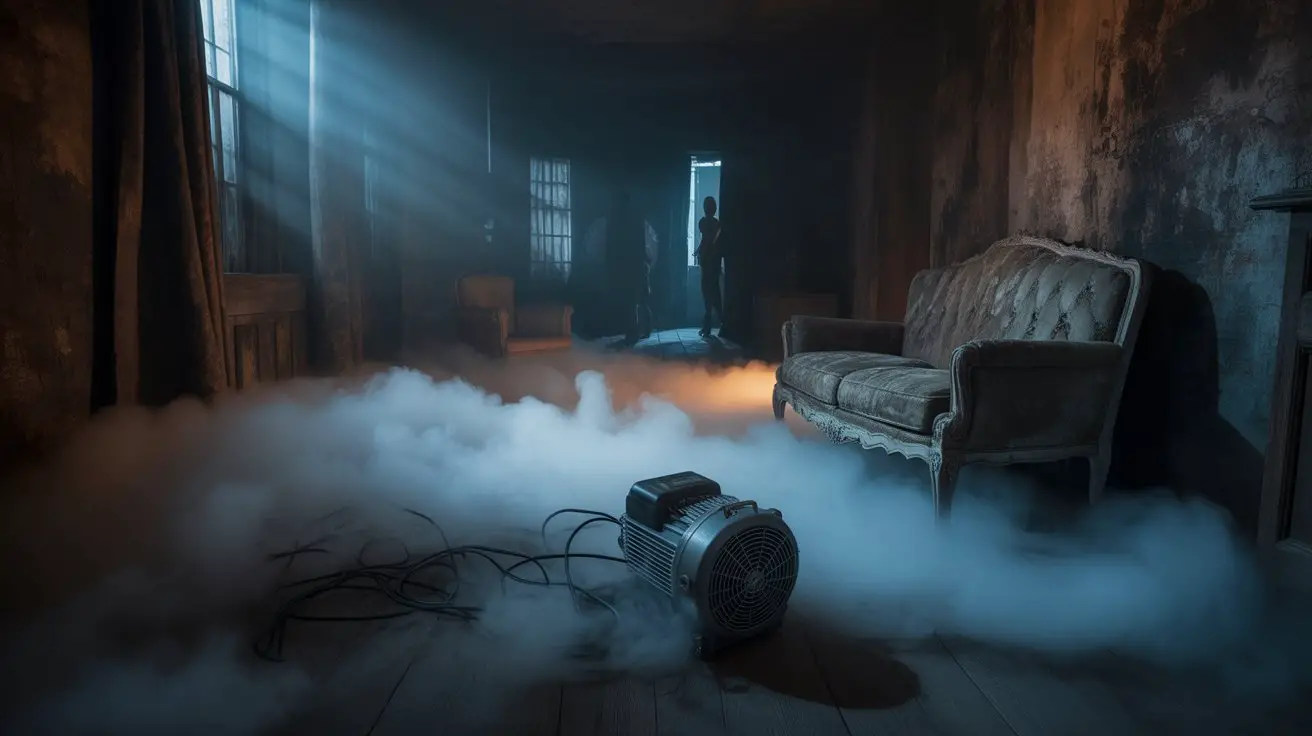
Your fog fluid selection directly determines both the visual impact and safety profile of your haunted house atmosphere.
Water-based fluids produce dense fog that stays low once chilled, ideal for ground effects and tombstone scenes. Oil-based fluids create longer-lasting, atmospheric haze but require proper ventilation due to residue buildup.
Medium-density fluids balance hang time with visibility, perfect for corridor scenes where you need sustained atmosphere without completely obscuring actors.
Choose glycol-based formulations for indoor haunts—they’re non-toxic, but they can still set off smoke detectors, so plan alarm coverage with your fire marshal. Avoid petroleum-based fluids in enclosed spaces.
High-output machines require thicker fluids to prevent pump damage, while small foggers work efficiently with standard water-based solutions.
Always verify your fluid’s compatibility with your specific machine model to prevent equipment failure during peak operating hours. Additionally, using fog machines can create visibility without straining the audience’s eyes, enhancing the overall experience.
Strategic Placement for Optimal Scare Impact
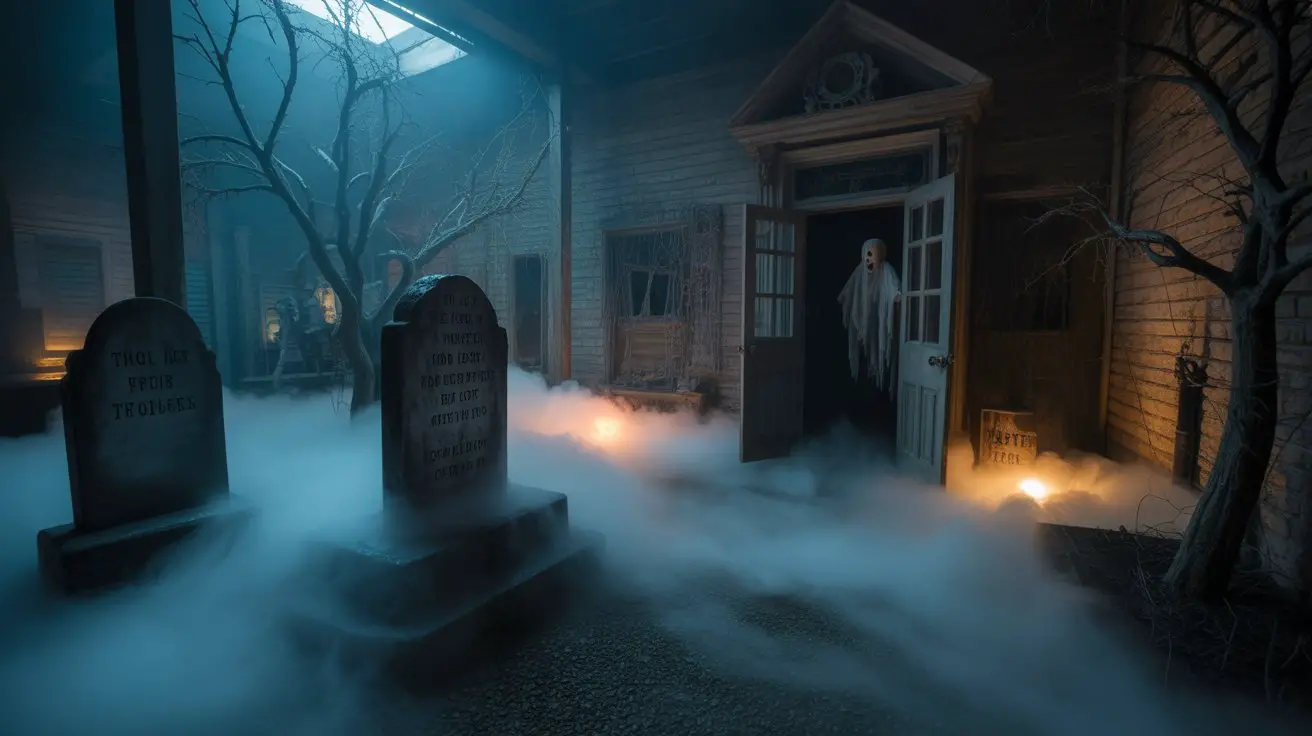
Where you position fog machines determines whether guests experience spine-tingling atmosphere or stumble through ineffective haze.
Mount units at floor level for ground-hugging effects that obscure ankles and create uncertainty about footing. Position machines behind concealed barriers—walls, props, or fabric panels—to hide equipment while directing fog toward guest pathways.
Install units in corners and alcoves where fog accumulates naturally, avoiding direct airflow from HVAC systems that’ll disperse effects prematurely. Place machines before narrow passages and doorways to maximize disorientation as guests shift between rooms.
Use multiple smaller units rather than single large machines for better coverage control.
Ensure electrical connections remain elevated and protected from moisture accumulation.
Test sight lines from guest perspectives to verify fog creates intended visual barriers without completely eliminating emergency exit visibility. Additionally, consider the use of different types of fog machines for varied atmospheric effects that enhance the overall experience.
Timing and Control Techniques for Perfect Atmosphere
When should you trigger fog machines to achieve maximum atmospheric impact without overwhelming your haunted attraction? Master timing through strategic activation sequences that build tension gradually.
Pre-program your machines with DMX controllers or wireless systems to synchronize with audio cues and animatronics. Deploy 5-10 second bursts rather than continuous output to maintain visibility while creating dense pockets of atmosphere.
Control techniques require precise timing coordination:
- Anticipatory activation – Trigger fog 3-5 seconds before guests enter zones to establish eerie ambiance
- Reaction-based deployment – Use motion sensors to release fog bursts when victims approach key scare points
- Layered atmospheric building – Combine low-lying and mid-level fog at different intervals for dimensional depth
Monitor ventilation patterns and adjust output intensity based on guest flow rates to prevent safety hazards. Additionally, ensure proper ventilation precautions are taken to maintain air quality and safety within the haunted house environment.
Creating Low-Lying Ground Effects
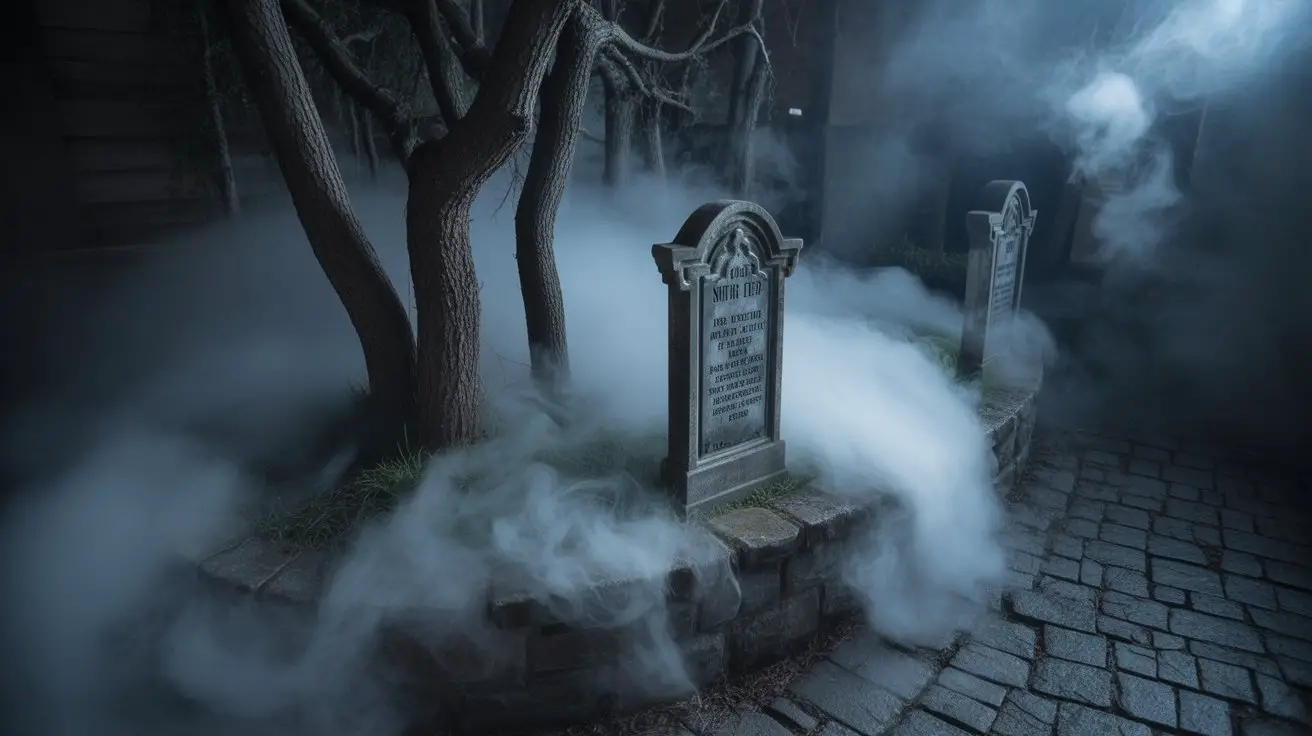
Although standard fog machines produce atmospheric haze that rises and disperses, you’ll need specialized chilling techniques to create authentic ground-hugging effects that crawl across floors like supernatural mist.
Install a chiller unit or dry ice compartment downstream from your fog machine’s output nozzle. The rapid temperature drop causes fog particles to become denser and sink to floor level. A DIY fog chiller can be constructed using styrofoam materials to effectively cool the fog.
Position your fog output at least 18 inches above ground to allow proper cooling distance. Use insulated ducting to maintain cold temperatures during transport. Guarantee adequate ventilation in confined spaces when using dry ice systems, as carbon dioxide displacement poses suffocation risks.
Direct the chilled fog through flexible tubing hidden beneath flooring or behind walls. This creates mysterious tendrils that emerge from unexpected locations, enhancing your haunted house’s otherworldly atmosphere.
Safety Considerations and Ventilation Requirements
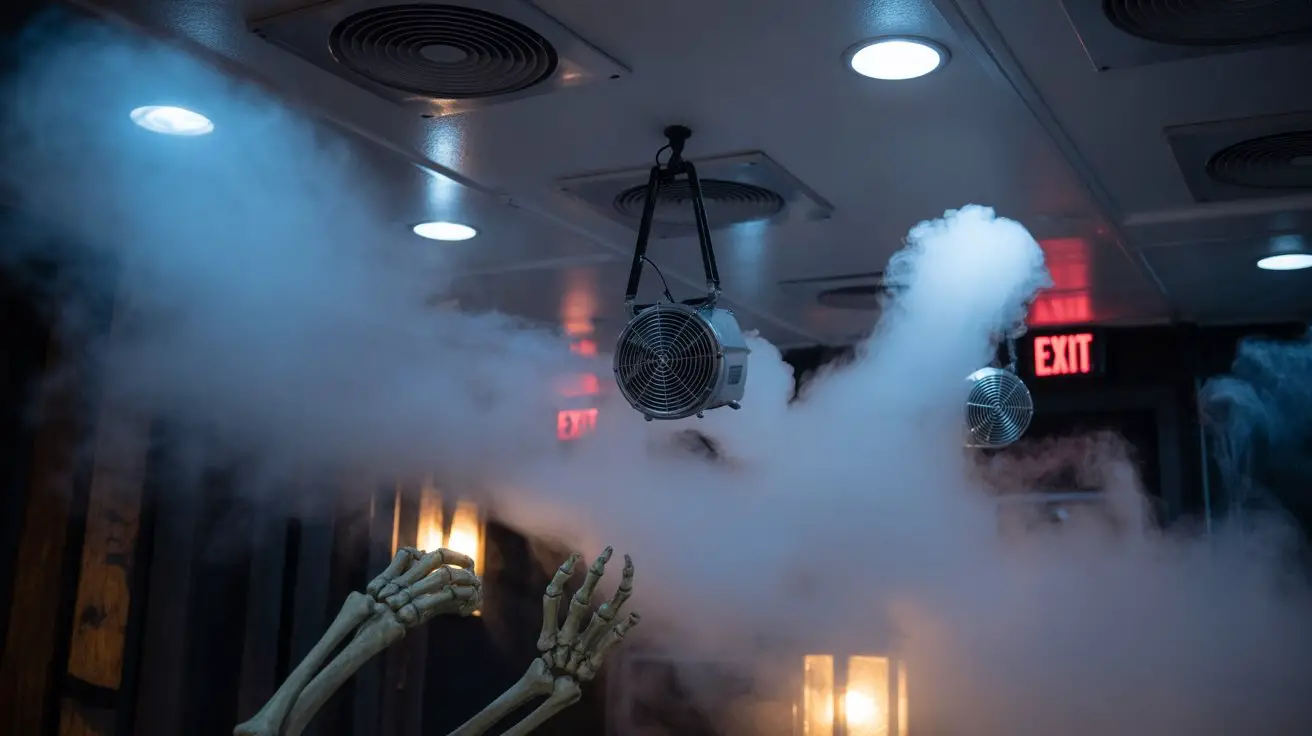
While creating dramatic fog effects enhances your haunted house atmosphere, proper safety protocols protect both operators and visitors from potential hazards.
You must guarantee adequate ventilation to prevent fog accumulation that reduces visibility below safe levels. Install exhaust fans rated for your venue’s cubic footage, positioning intake vents near floor level where heavy fog settles. Monitor CO2 levels if using dry ice machines, as carbon dioxide displaces oxygen in enclosed spaces.
Essential safety measures include:
- Emergency evacuation routes must remain clearly visible – guests shouldn’t stumble blindly through panic-inducing darkness
- Respiratory protection for staff – prolonged exposure to theatrical fog causes throat irritation and breathing difficulties
- Fire detection systems require fog-compatible sensors – standard smoke detectors trigger false alarms from theatrical haze
Maintain fog fluid MSDS sheets on-site and train operators on proper handling procedures.
Maintenance and Troubleshooting Common Issues
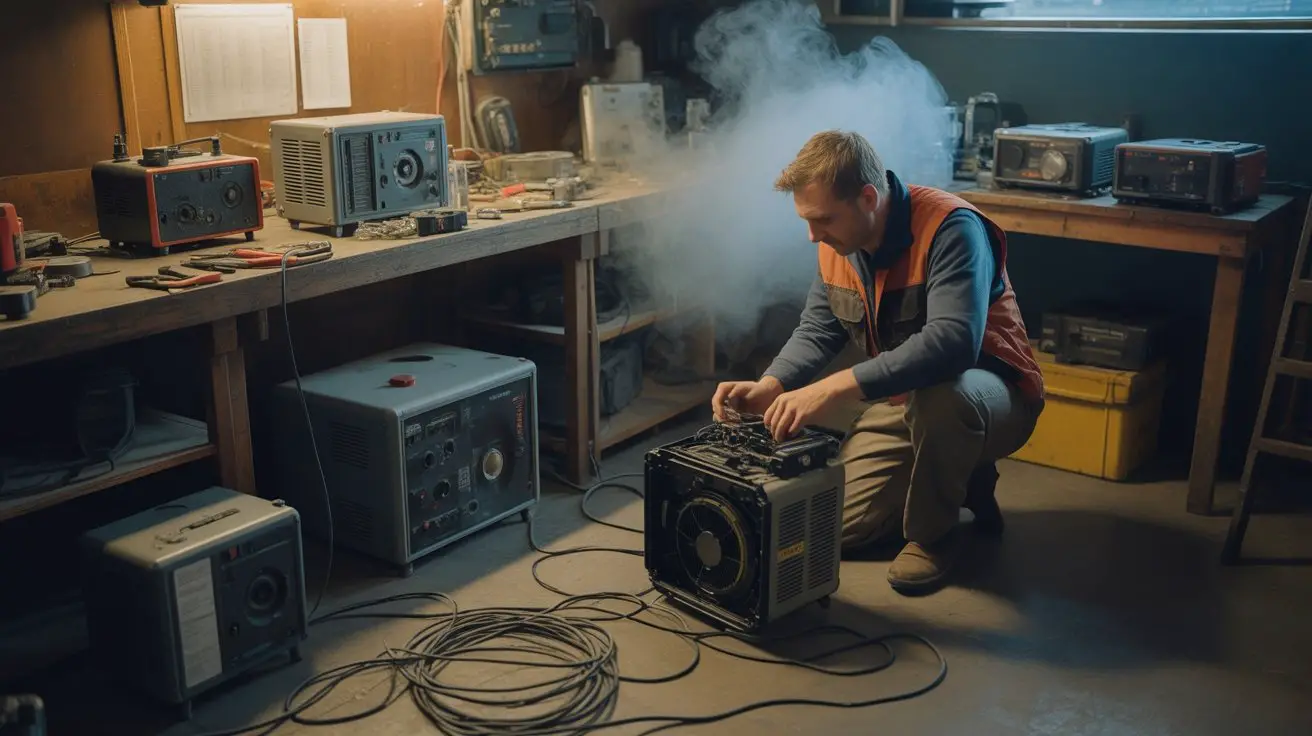
Regular maintenance prevents 90% of fog machine failures during critical haunted house operations.
Clean your machine’s heating element weekly using distilled water to prevent mineral buildup. Replace worn fluid lines immediately—cracked tubing causes pressure drops and inconsistent output.
When troubleshooting weak fog production, check fluid levels first, then inspect the pump for clogs.
If you’re getting no fog output, verify power connections and test the heating element’s temperature with a multimeter. Intermittent fog indicates a failing thermostat or blocked nozzle.
Store machines in dry locations between uses.
Use only manufacturer-approved fog fluids—substitutes damage internal components and void warranties.
Clean residual fluid from tanks after each event to prevent bacterial growth and corrosion.
Advanced Fog Effects and Professional Tricks
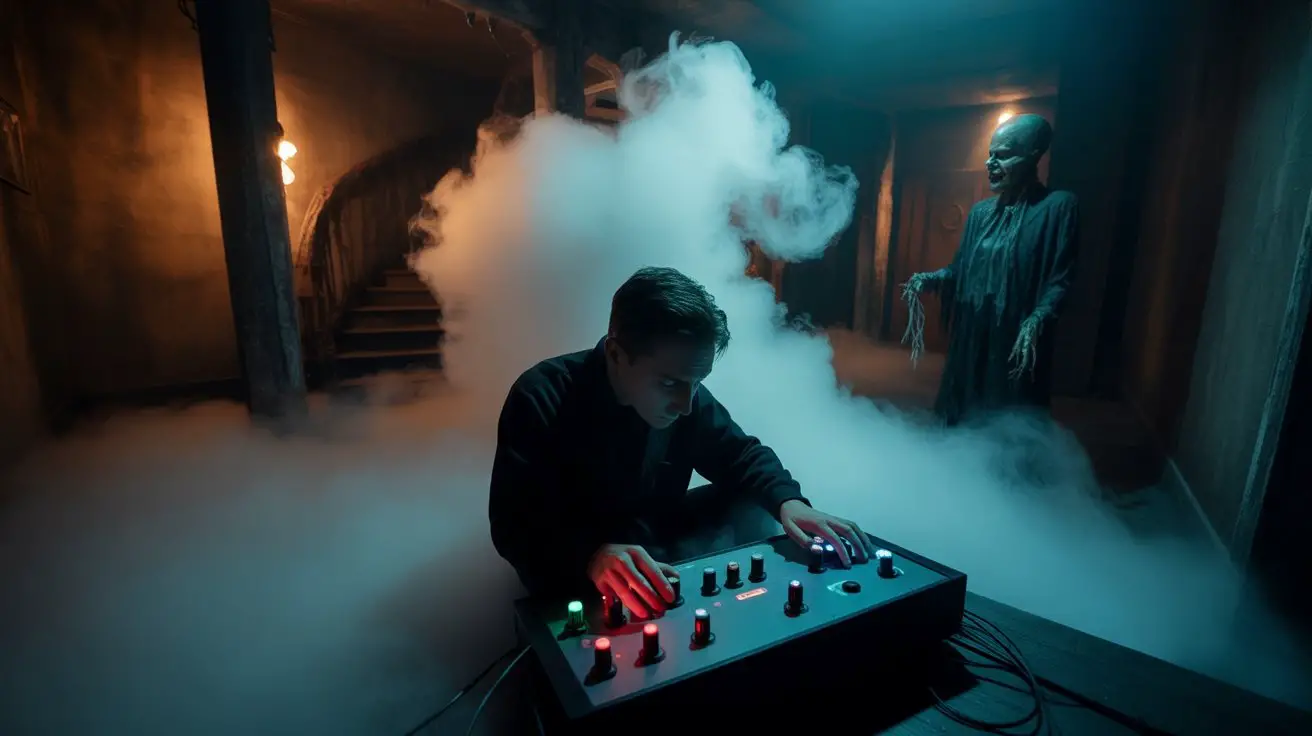
Professional haunted house operators employ layered fog deployment techniques to create immersive, theatrical atmospheres that standard single-machine setups can’t achieve.
You’ll need synchronized multi-machine configurations with precise timing controls to execute these advanced effects. Deploy ground-hugging fog using chiller units positioned at floor level, while simultaneously running standard machines at elevated positions for overhead coverage.
Install DMX controllers to coordinate fog bursts with lighting changes and sound cues. Use ducting systems to channel fog through hidden pathways, creating unexpected appearances from walls or floors.
Key emotional triggers include:
- Sudden fog walls that block the view ahead (never the exit routes), inducing claustrophobia
- Creeping ground fog that hides the floor (keep it free of real trip hazards), heightening anxiety
- Directional fog streams targeting specific guests for personalized scares
Always maintain clear emergency pathways and monitor visibility levels with infrared cameras.
Frequently Asked Questions
How Much Do Fog Machines Typically Cost for Haunted House Operations?
You’ll spend $150-500 for basic fog machines, while high-output units cost $800-3,000. Professional-grade chillers and hazers range $2,000-8,000. Factor in fluid costs, maintenance schedules, and backup units for continuous operation requirements.
Can Fog Machines Be Rented Instead of Purchased for Seasonal Use?
You can rent fog machines from party supply stores, theatrical equipment companies, and AV rental services. They’ll typically include fluid, but verify voltage requirements, output capacity, and heat-up times match your specific venue’s operational needs.
What Permits or Licenses Are Required to Operate Fog Machines Commercially?
Coincidentally, you’ll need identical permits whether you’re operating fog machines indoors or outdoors commercially. You must obtain fire department permits, electrical permits, and venue-specific safety certifications before deploying any glycol-based fog equipment systems.
How Long Does Fog Fluid Last During Typical Haunted House Operating Hours?
You’ll consume approximately 1-2 liters of fog fluid per hour during continuous operation. Monitor your fluid reservoir levels hourly, as high-output machines burn through glycol-based solutions faster during peak haunted attraction hours.
Are There Noise Levels That Might Interfere With Haunted House Audio Effects?
You’ll encounter 40-60 decibel noise levels from fog machine fans and pumps. Position units away from speakers, use quieter heating-element models, or install sound dampening materials around compressor-based foggers to prevent audio interference.
Conclusion
You’ve now mastered the craft of atmospheric wizardry, transforming ordinary spaces into spine-chilling domains. Like a conductor orchestrating a symphony of shadows, you’ll wield your fog machines as instruments of terror. Remember—your equipment’s your lifeline, safety’s your shield, and precision’s your sword. Monitor temperatures, check connections, and respect ventilation like gospel. When guests enter your territory, they won’t just walk through—they’ll descend into your carefully crafted nightmare, where every wisp tells your haunting story.